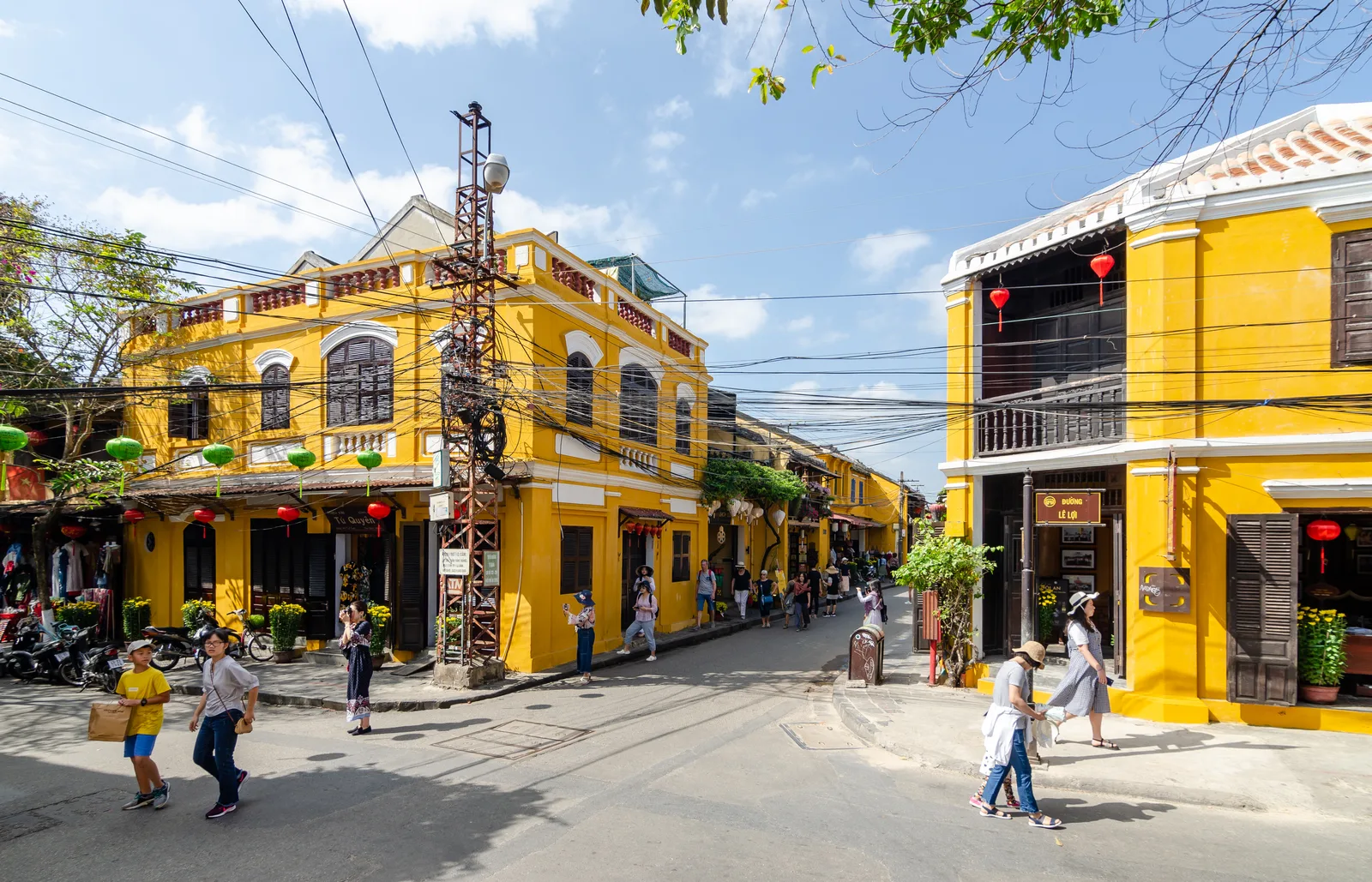
Three slow days: the Ancient Town on foot with the Japanese Covered Bridge, the assembly halls, cao lau and the lanterns on the Thu Bon, then the Cham towers of My Son at dawn and an afternoon at An Bang beach, then a bicycle out to Tra Que, Thanh Ha and the Cam Thanh basket boats.
Got Waystop on this phone? The button drops the whole plan straight into the app. On a laptop, copy it now and paste it into Import later. Opening a plan in the app uses a little credit, and the $3 you start with covers a first try.
Checked November 17, 2026. That’s the day we last confirmed the hours, prices and closed days.
February to April is the easy window: dry, warm and mostly below 90°F (32°C). May to August is hot, often 95°F (35°C) by midday, so start early and rest after lunch. October to December is the flood season. Typhoons and the monsoon swell the Thu Bon, and in most years the river spills into the waterfront streets for a day or several; boats replace motorbikes on Bach Dang, some shops shut, and My Son and the beach can be off. If you come then, keep the dates loose, book a hotel away from the river and check the local news before each day.
Where to base yourself
Sleep just outside the Ancient Town, in the lanes north of Tran Hung Dao or across the bridge on An Hoi, so you walk in and out without a ride and the lanterns are ten minutes away after dark. An Bang and Cua Dai are beach bases about 5 km out, quieter and a bicycle or Grab ride from town. In flood season, the riverside streets and An Hoi are the first to go under.
Getting around
Walk the Ancient Town; the core is about a kilometer across and closed to motorbikes during the day and evening. Hotels lend or rent bicycles for a few tens of thousands of dong a day, and the flat lanes out to the vegetable villages, the pottery village and the beach are made for them. Use Grab for My Son, the airport and anything after dark beyond town.
Buy the Ancient Town ticket at any booth or kiosk on the edge of the old streets: ₫120,000 covers the bridge or Quan Cong Temple, one museum and three more sites of your choice, and ₫80,000 covers the bridge or the temple and two more. Go to the bridge first, before the tour groups; it reopened in August 2024 after its restoration.
A merchant's house of dark jackfruit wood, with the living quarters at the front and the river door at the back; the family still lives upstairs. Check the list at the booth for which old houses take a coupon.
The Chinese merchant halls run along Tran Phu: the Fujian hall with its incense coils and dragon fountain, then Quan Cong Temple at number 24 if you did not use that coupon on the bridge. Each takes 20 to 30 minutes; tear one coupon per site.
Cao lau is the town's own noodle: thick, chewy, with pork, greens and crisp crackers in a little broth. Eat it at the cooked-food stalls inside the Central Market on Tran Phu for around ₫35,000 to ₫50,000, or queue at Banh Mi Phuong, 2B Phan Chau Trinh, for a pork banh mi.
The old streets are hottest and fullest after lunch. Go back to the hotel, or order a tailor fitting now so the clothes are ready by day 3; most shops need two fittings over 24 to 48 hours.
Use the museum coupon on the trade ceramics house on Tran Phu: shards from the shipwrecks that made Hoi An's fortune. The ticket includes the folk music show at the Traditional Art Performance House, 66 Bach Dang, at 3:15 p.m. and 4:15 p.m.; take the later one.
The lanterns come on at dusk. Rowing boats leave from the Bach Dang waterfront for about 15 to 20 minutes on the river with a paper lantern to float; agree the price per boat, not per person, before you step in.
Cross the footbridge to the night market on Nguyen Hoang for grilled skewers and banh xeo. If you want a sit-down plate, com ga, Hoi An's turmeric chicken rice, is the dish to order in the old streets before you cross.
About 40 km west, roughly an hour by car. Book a car the night before and agree the waiting time; a group sunrise tour is the cheaper alternative, but check whether it includes the entry ticket.
Brick Cham temple towers from the 4th to the 13th century in a jungle valley, many scarred by bombing in 1969. The gate opens at 6 a.m. and the tour buses arrive around 9 a.m., so the first two hours are cool and quiet; an electric cart runs from the gate to the first towers.
A short Cham dance show plays on the stage near the towers on most mornings, and the small exhibition hall near the gate explains what you just walked through. Leave by 10 a.m. before the heat.
Turmeric noodles with shrimp, pork, peanuts and a sesame cracker, in a spoonful of rich broth: the Quang Nam dish, at any mi Quang shop on the streets north of the Ancient Town for around ₫35,000 to ₫50,000.
Five kilometers north of town, 20 minutes by bicycle along the lanes or 10 by Grab. The beach bars rent loungers for the price of a drink; swim between the flags, since the current is strong, and not at all when the red flag is up in the fall.
The seafood places at the top of the beach sell by weight from the tanks: point at the clams, prawns or squid and say how you want them cooked. Ask the price per kilo before they weigh it.
Three kilometers north of town on the road to An Bang: herb and lettuce beds fertilized with seaweed from the lagoon. Go early while the farmers water; the village ticket is ₫35,000 and some families run a short farming and cooking session if you want one.
Ride back through town and west along the river, about 3 km: kilns, red clay and families throwing pots on kick wheels. The village ticket is ₫35,000, and the potters will put you on a wheel for a small tip.
Back in town on the way east: crisp rice-flour pancakes and lemongrass pork skewers that you roll in rice paper with herbs and dip in peanut sauce, at the small family places on the streets behind the Central Market.
Four kilometers east of town: water coconut palms in the tidal channels and round bamboo basket boats spun by the boatmen. The coconut forest ticket is ₫30,000 and the boat ride is paid on top; agree the price per boat and the length of the ride before you get in, and decline the paid extras on the water if you do not want them.
Collect the tailoring from day 1 and use any coupons left on the ticket for another old house or the Hoi An Museum. Motorbikes are kept out of the old streets from 9 a.m. until 9 p.m. or 9:30 p.m., so the bicycle is fine.
Banh bao banh vac, the translucent shrimp dumplings with fried shallots, are a Hoi An dish served in restaurants across town. Order them with a plate of cao lau and a Larue at a lantern-lit table on Nguyen Thai Hoc.
Loading the map…
Pins are approximate. Tap one for the stop; the directions links open Google Maps.
The practical bits
From the airport
Fly into Da Nang (DAD), about 30 km north; Hoi An is now part of Da Nang city since the 2025 merger with Quang Nam, but the airport is still a 45 to 60 minute drive. Grab is the simple option at around ₫300,000 to ₫400,000 for a car, with the price shown in the app; a shared shuttle is cheaper per seat, and the public bus needs a change in central Da Nang. Flights from Hanoi and Ho Chi Minh City take about an hour and twenty minutes and run many times a day, so Hoi An sits easily between the two.
What a day costs
About ₫600,000 to ₫1,000,000 a day per person for meals, tickets, boats and Grab rides. Street meals are ₫35,000 to ₫60,000, the Ancient Town ticket ₫120,000 for the whole stay and My Son ₫150,000; the Grab to My Son and back and a seafood dinner on the beach push day 2 toward the top.
Where to stay
Ancient Town
The old merchant streets between Tran Phu and the river: the bridge, the halls and the lanterns. Walking only for most of the day, and lively until about 10 p.m.
An Hoi
The island across the footbridge with the night market and riverside hotels. Lantern views at night, and the first place to flood.
An Bang and Cua Dai
The beaches 4 to 5 km out, with guesthouses and beach bars. Quiet at night, a bicycle or Grab ride from the old town.
Got a day to spare?
Cu Lao Cham
The island marine park off Cua Dai, about 20 minutes by speedboat, with snorkeling and a fishing village. The sightseeing ticket is ₫70,000 plus a ₫20,000 island fee, and boats stop in rough seas, which is most of the flood season.
Da Nang and the Marble Mountains
Limestone hills with caves and pagodas, about 30 minutes north by Grab, then the Dragon Bridge and My Khe beach in the city. Easy to fold into the airport day.
Hue
The Nguyen imperial citadel and the royal tombs, about three hours north by road over or through the Hai Van pass. Better as an overnight than a long day trip.
Worth knowing
Buy one Ancient Town ticket and keep it for the whole stay: it is valid up to three days, and each site tears off one coupon. Children under 16 do not need one.
Put My Son first thing on the coolest morning you have. The gate opens at 6 a.m. and the heat and tour buses arrive together around mid-morning; Waystop's hours check will flag a tower visit placed after closing.
October to December is flood season. Keep a free day in the plan, sleep away from the river and watch the Thu Bon forecast: when it rises, the riverfront streets go under first.
Download Grab before you land. It prices the ride in the app, which ends the airport and My Son haggling, and it works for the beach and the villages too.
Agree every boat price per boat, in dong, before you board: the lantern boats on the Thu Bon and the basket boats at Cam Thanh both quote low and add extras on the water.
Things you can ask once it’s in the app
Plans change. Ask Chat and it proposes a reshuffled day you can apply, or just answers the question.
The river is flooding on our day 1, what can we still do in Hoi An?Is it worth taking a sunrise tour to My Son or a private Grab?Which Ancient Town sites should we spend our five coupons on?Can we fit the tailor's two fittings into three days?Could we add a day in Hue and fly out of Da Nang?
Questions
Is three days enough for Hoi An?
Yes: one day for the Ancient Town, one for My Son and the beach, one for the villages by bicycle. A fourth day buys Cu Lao Cham island or a day in Da Nang and the Marble Mountains.
Which day works in the rain?
Day 1: the assembly halls, old houses, the ceramics museum and the performance house are all under a roof, and the tailors are indoors. Skip the boats and the beach, and save My Son for a dry morning.
Should I avoid Hoi An in flood season?
Not necessarily, but plan for it. Between October and December the Thu Bon floods the riverside streets in most years, usually for a day or a few days. Keep the dates flexible and stay away from the river.
Do I need cash?
Yes, for street food, the village tickets, boats and the market. Hotels, tailors and the bigger restaurants take cards, and the new ticket kiosks in the Ancient Town accept international cards.
From waystop.app/trips/hoi-an-3-days. Hours, prices and closed days checked November 17, 2026.
Your version
Now make it fit your trip.
Add your dates, your hotel and who’s coming, then ask Chat to change anything: it proposes the edit and you tap Apply. Want a long lunch instead of a museum? Just ask. Every place is checked against Google Maps before it lands on your day, and Chat can tell you when to leave for the next stop. Going on to another city? Build a multi-city trip.