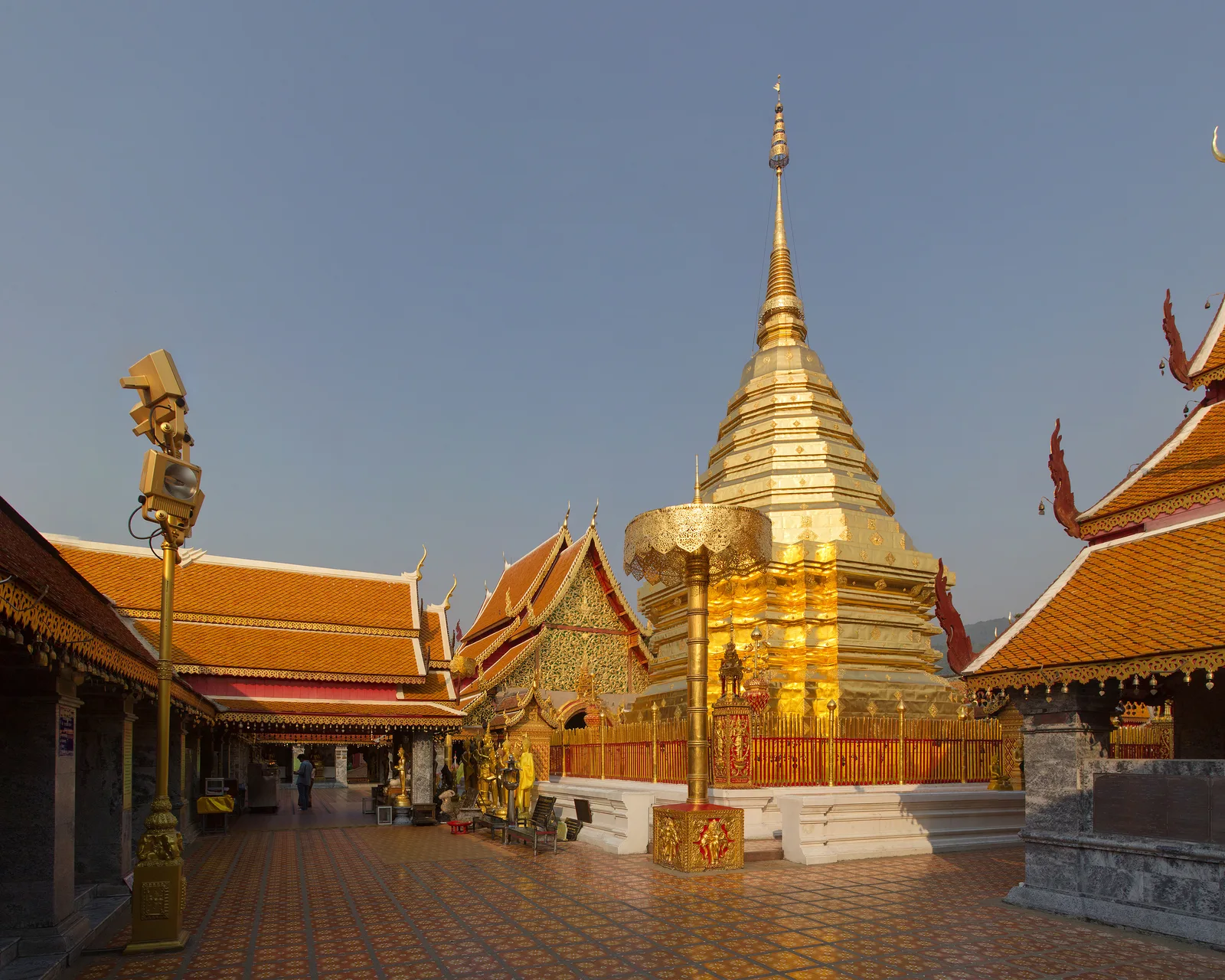
Three days in the north: the Old City temples on foot with khao soi for lunch and a night market after dark, Doi Suthep by red songthaew in the morning with Nimmanhaemin and the tunnels of Wat Umong after, then a half day at an observation-only elephant sanctuary and an evening Thai cooking class on a farm.
Got Waystop on this phone? The button drops the whole plan straight into the app. On a laptop, copy it now and paste it into Import later. Opening a plan in the app uses a little credit, and the $3 you start with covers a first try.
Checked November 17, 2026. That’s the day we last confirmed the hours, prices and closed days.
November to February is the cool, dry season and the best time: mornings can drop near 59°F (15°C) and afternoons sit around 86°F (30°C). Roughly February to April is burning season, when crop fires fill the valley with smoke and the air quality is often poor; check an AQI app before you book and skip Doi Suthep views on bad days. Yi Peng and Loy Krathong fall in November; in 2026 the lantern nights are around November 24 and 25, the Old City is packed and hotels cost more. May to October brings afternoon rain.
Where to base yourself
Inside the Old City moat for temples on foot and the Sunday Walking Street at the door. Nimmanhaemin for cafes, newer hotels and the songthaew stop for Doi Suthep. Around Tha Phae Gate and the Night Bazaar for the river, Warorot market and the most choice in every price range.
Getting around
The Old City is about 1.5 km a side and flat, so walk it. Red songthaews (rot daeng) are shared trucks you flag down: say where you are going and agree the fare before you get in; a ride inside town is usually a few dozen baht. Grab and Bolt cover the rest, and most sanctuaries and cooking schools pick you up at your hotel.
Start at the west end of Ratchadamnoen Road while it is cool. The grounds are free to walk; foreigners pay a small fee to enter the Viharn Lai Kham with the Phra Singh Buddha, and shoulders and knees must be covered.
A 10-minute walk east on Ratchadamnoen and Phra Pokklao Road to the ruined brick chedi, broken by an earthquake in the 1500s. Foreigners pay a small entry fee at the gate; the monk chat tables by the side lane are free.
Next door to Wat Chedi Luang: a teak hall built from an old royal residence, free to enter. Take off your shoes on the steps and look up at the carved gable over the door.
A lunch-only stall on Sripoom Road by the north moat, open from about 10 a.m. until the pot runs out in early afternoon and closed on Sundays. Order khao soi gai, curry noodle soup with chicken, and add the pickled mustard greens and lime; on a Sunday go to Khao Soi Mae Sai instead.
Go back to the hotel or a cafe for two hours; the markets do not get going until late afternoon. Book the day 3 sanctuary and cooking class now if you have not.
On a Sunday, the Walking Street runs the length of Ratchadamnoen Road from Tha Phae Gate from late afternoon to about 10 p.m.; on a Saturday, cross the south moat to the Wualai Road market. Any other night, walk to the Night Bazaar on Chang Klan Road. Eat as you go: sai ua sausage, grilled pork skewers and mango sticky rice.
Shared trucks wait at the front gate of Chiang Mai University on Huay Kaew Road and leave when they fill; agree the price for the ride up before you get in, and agree the ride down with the same driver or find the queue at the top. The road climbs about 30 minutes.
Climb the 306 steps of the naga staircase or take the tram beside it for a small fee. Foreigners pay about ฿30 at the top; cover shoulders and knees (wraps are lent at the entrance) and take your shoes off at the inner terrace around the gold chedi.
Ask to be dropped at the university gate or the top of Nimmanhaemin Road. If the air is hazy, skip the viewpoint stops on the way; the city view is mostly smoke in burning season.
Northern Thai food in an open-sided house. Order nam prik ong (pork and tomato chili dip) with vegetables, grilled pork neck and sticky rice; at peak hours there is a short queue.
Walk the numbered sois off Nimmanhaemin for cafes, small design shops and One Nimman. It is all shade and air conditioning, which is the point at this hour.
A 10 to 15 minute Grab south to a forest temple with brick tunnels from the 1300s. Entry is free or by donation; walk the tunnels quietly, because monks and lay people meditate there.
Grab back to the Old City for northern dishes at a family restaurant. Order gaeng hang lay (pork belly curry) and the sai ua sausage, and come before 7:30 p.m. when it fills.
Hotel pickup is between 7:30 and 8 a.m. for ฿2,500, booked online at least 24 hours ahead; you walk with staff among rescued elephants and there is no riding. ChangChill's half-day morning visit (฿1,900, pickup 8 to 8:30 a.m.) is an observation-only alternative farther out.
Pickup is 3 to 3:30 p.m. for ฿1,200, with a market stop, a walk round the organic farm about 17 km out of town, five dishes you cook and eat for dinner, and a return around 9 p.m. If that is too tight after the elephants, walk Warorot market by the river instead for dried sausages, chili pastes and northern snacks, then eat at the Night Bazaar.
฿1,200
Loading the map…
Pins are approximate. Tap one for the stop; the directions links open Google Maps.
The practical bits
From the airport
From Bangkok, flights to Chiang Mai International take a little over an hour from both Suvarnabhumi and Don Mueang, and the airport is a short Grab from the Old City. The overnight sleeper is the slow, good alternative: evening trains leave Krung Thep Aphiwat Central Terminal and arrive the next morning after about 11 to 13 hours, and second-class berths sell out days ahead in the cool season, so book on the State Railway of Thailand's D-Ticket site.
What a day costs
About ฿1,000 to ฿2,000 a day per person on days 1 and 2, hotel excluded: temple fees are small, khao soi is around ฿60 to ฿80 a bowl, and songthaews and Grab rides are cheap. Day 3 adds about ฿3,700 for the sanctuary half day and the cooking class, both with transport and a meal included.
Where to stay
Old City
Temples on every block inside the moat, guesthouses at every price and the Sunday Walking Street. Quiet late at night.
Nimmanhaemin
Cafes, bars and newer hotels by the university, close to the songthaews for Doi Suthep.
Tha Phae Gate and the river
Between the Old City and the Ping River, with the Night Bazaar and Warorot market. The easiest base for walking everywhere.
Got a day to spare?
Chiang Rai and the White Temple
About three hours each way by road, so it is a long day. Green Bus runs from Arcade bus station, or book a tour that covers Wat Rong Khun and the Blue Temple.
Doi Inthanon
Thailand's highest mountain, around two hours southwest, with the twin royal chedis and waterfalls. It is a national park with an entry fee, and the summit is cold before dawn.
Pai
A small valley town about three hours away on a road of hundreds of bends. Better as two or three nights than a day trip; take a motion sickness tablet before the minivan.
Worth knowing
Cover shoulders and knees for every temple, and carry a light scarf. Doi Suthep lends wraps at the entrance, but the Old City temples expect you to arrive dressed.
Plan day 1 around the market: the Walking Street is Sunday only and the Wualai Road market is Saturday only. Khao Soi Khun Yai is closed on Sundays, which is the day you most want the Old City.
In burning season, roughly February to April, check an air quality app each morning. On a bad day swap Doi Suthep for the cooking class and keep a mask in the bag.
Pick a sanctuary where you watch elephants walk, feed and bathe themselves, with no riding, no bathing with them and no shows. Waystop's Chat can compare two operators' half days on price, pickup time and drive.
At Yi Peng and Loy Krathong, book rooms early, expect the moat and Tha Phae Gate to be crowded, and float a krathong on the Ping River. The large sky lantern releases are ticketed events outside town, such as the one TAT lists at CAD Cultural Center Lanna in Mae On on November 24 and 25, 2026.
Things you can ask once it’s in the app
Plans change. Ask Chat and it proposes a reshuffled day you can apply, or just answers the question.
Which night of my trip has a walking street market?Swap the cooking class for a morning class on day 2Is the air quality bad for Doi Suthep in March?Add a day trip to Chiang Rai and the White TempleFind a vegetarian khao soi near the Old City
Questions
Is three days enough for Chiang Mai?
For the city, Doi Suthep and one elephant visit, yes. Add a fourth day for Chiang Rai or Doi Inthanon, or a few nights in Pai.
Which day works in the rain?
Day 3. The sanctuary visit runs in rain with ponchos, and the cooking class is under a roof. Day 1 is all walking between temples, and the view from Doi Suthep disappears in cloud.
Should I go for Yi Peng?
Go if you want the lanterns and candles and do not mind crowds and higher prices. In 2026 the main nights are around November 24 and 25; the big ticketed lantern releases are outside the city and sell out early.
Is it worth going in burning season?
It can be unpleasant. From roughly February to April smoke often pushes the air quality into unhealthy levels, views from the mountain vanish and people with asthma should think twice. November to January is the better window.
From waystop.app/trips/chiang-mai-3-days. Hours, prices and closed days checked November 17, 2026.
Your version
Now make it fit your trip.
Add your dates, your hotel and who’s coming, then ask Chat to change anything: it proposes the edit and you tap Apply. Want a long lunch instead of a museum? Just ask. Every place is checked against Google Maps before it lands on your day, and Chat can tell you when to leave for the next stop. Going on to another city? Build a multi-city trip.