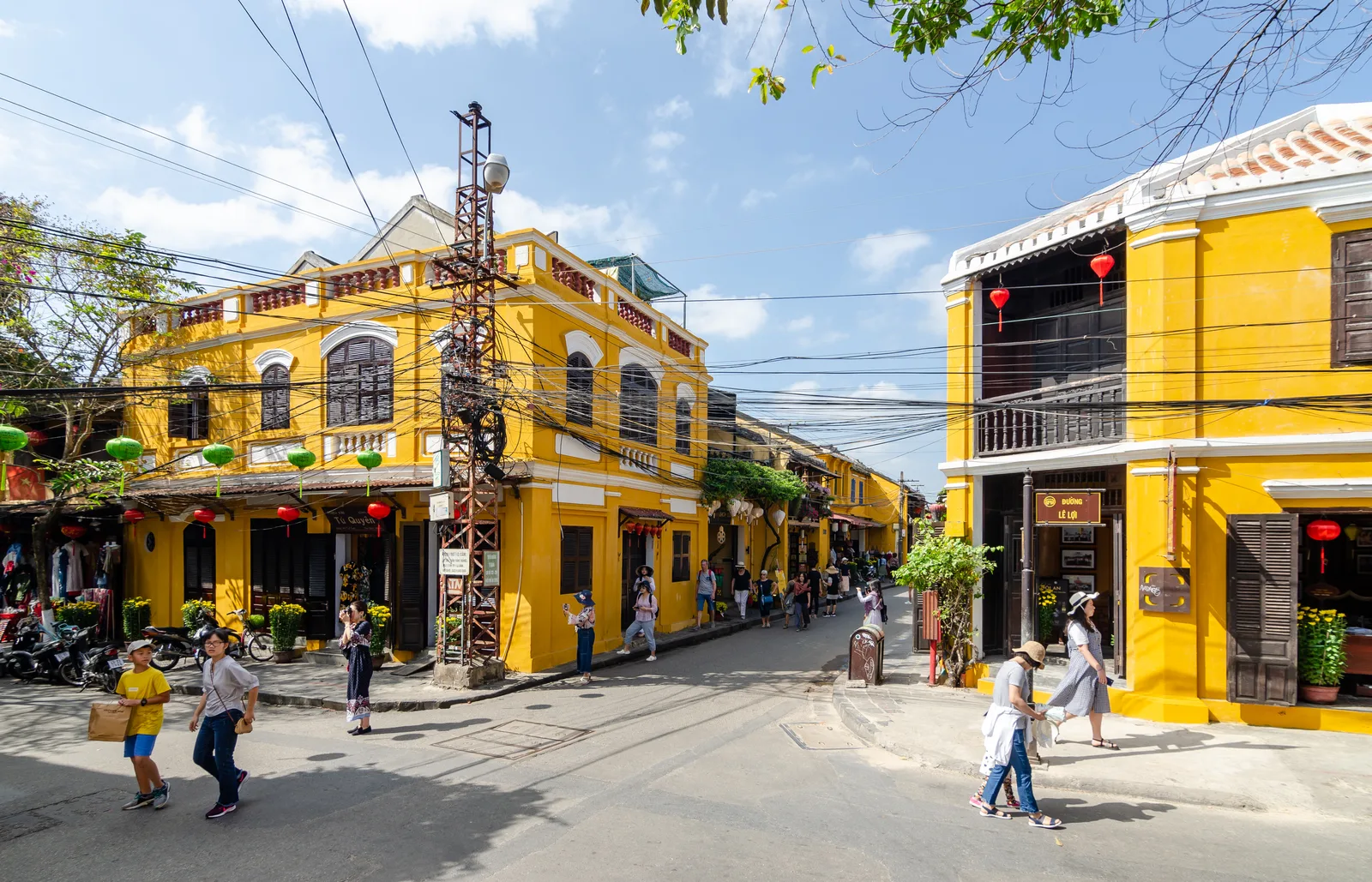
What the ticket covers
The Hoi An Center for Cultural Heritage Management and Preservation, which runs the old town, set out the current ticket in a notice dated January 28, 2026. There are two:
| Ticket | Price | What it includes |
|---|---|---|
| Five sites | ₫120,000 | The old town landscape, the Japanese Covered Bridge or Quan Cong Temple, one site in the museum system, three more sites of your choice |
| Three sites | ₫80,000 | The old town landscape, the Japanese Covered Bridge or Quan Cong Temple, two more sites of your choice |
Every ticket also buys the old town’s cultural program. The folk music and dance show at the Traditional Art Performance House, 66 Bach Dang, plays at 10:15 a.m., 3:15 p.m. and 4:15 p.m. daily. The Japanese tea ceremony at the Japanese Culture Gallery, 6 Nguyen Thi Minh Khai, is at 9:30 a.m. and 4:30 p.m. In the evening, ticket holders can join the Night Town activities: bai choi, the sung card game, folk games and street performances.
The “sites of your choice” are the old houses, assembly halls, family chapels and small museums on the list at the booth. The notice does not print the list, so read it when you buy and pick the ones you want before you start; Tan Ky Old House, the Fujian Assembly Hall and the Museum of Trade Ceramics are the usual choices.
Price for foreigners and for children
Here the two official sources do not say the same thing. The heritage center’s notice presents ₫80,000 and ₫120,000 as two tickets with different numbers of sites, open to anyone. The Da Nang city tourism portal’s 2026 price list, published a week earlier, gives the same two figures as the Vietnamese and the international price. In practice, plan on ₫120,000 per foreign adult, which is also the ticket with the most in it.
On children, the operator’s notice is clear: under 16 is free. The tourism portal lists a ₫50,000 child rate by height instead. The center’s notice is the later and the operator’s own, so go by it, and carry a passport photo on your phone if your teenager looks older.
Also exempt: people with severe disabilities, journalists, researchers, and members of the Vietnam Heritage Association. Groups of eight or more who buy together get a free guide.
Where to buy and where it is checked
Tickets are sold at booths on the roads into the old town, and since February 9, 2026 at 12 self-service kiosks run with the heritage center. The kiosks take international cards, print the ticket on the spot and give a QR code for an audio guide in nearly 20 languages. The staffed counters still sell too, for cash.
The coupons are torn at each site. Inspectors at the bridge and the monuments will ask for the ticket, and at busy times staff at the street entrances do too. The notice asks visitors to buy before entering the town, so do not plan on walking the core streets without one.
Hours and the evening
The heritage notice does not print booth or monument hours. The Da Nang tourism portal gives 8 a.m. to 5 p.m. for the old town’s sites, so use your coupons in daylight. The streets themselves stay open: the old town is a walking and cycling zone from 9 a.m. to 9:30 p.m. in summer and 9 p.m. in winter, with Phan Chau Trinh joining it from 5:30 p.m. Lanterns, the river boats and the Night Town program are what the evening is for, not the houses.
What changed in 2025 and 2026
Hoi An is no longer a city in Quang Nam province. Since the 2025 merger it is part of Da Nang city, split into Hoi An, Hoi An Dong and Hoi An Tay wards, which is why the heritage site now sits under danang.gov.vn. The ticket notice was reissued in January 2026, the kiosks arrived in February, and sales were paused over Tet. The Japanese Covered Bridge reopened in August 2024 after its long restoration.
On the day
Buy the ticket first thing and walk to the bridge before 9 a.m., ahead of the groups. Spend the museum coupon on the ceramics or the Hoi An Museum, and keep two coupons for the afternoon. Catch the 4:15 p.m. show on Bach Dang, then stay for the lanterns. Carry the ticket the whole stay, folded flat in your phone case, and expect to show it again on day two or three. In the October to December flood season, ask at the booth before you start: when the Thu Bon rises, the riverside streets and some sites close for the day.