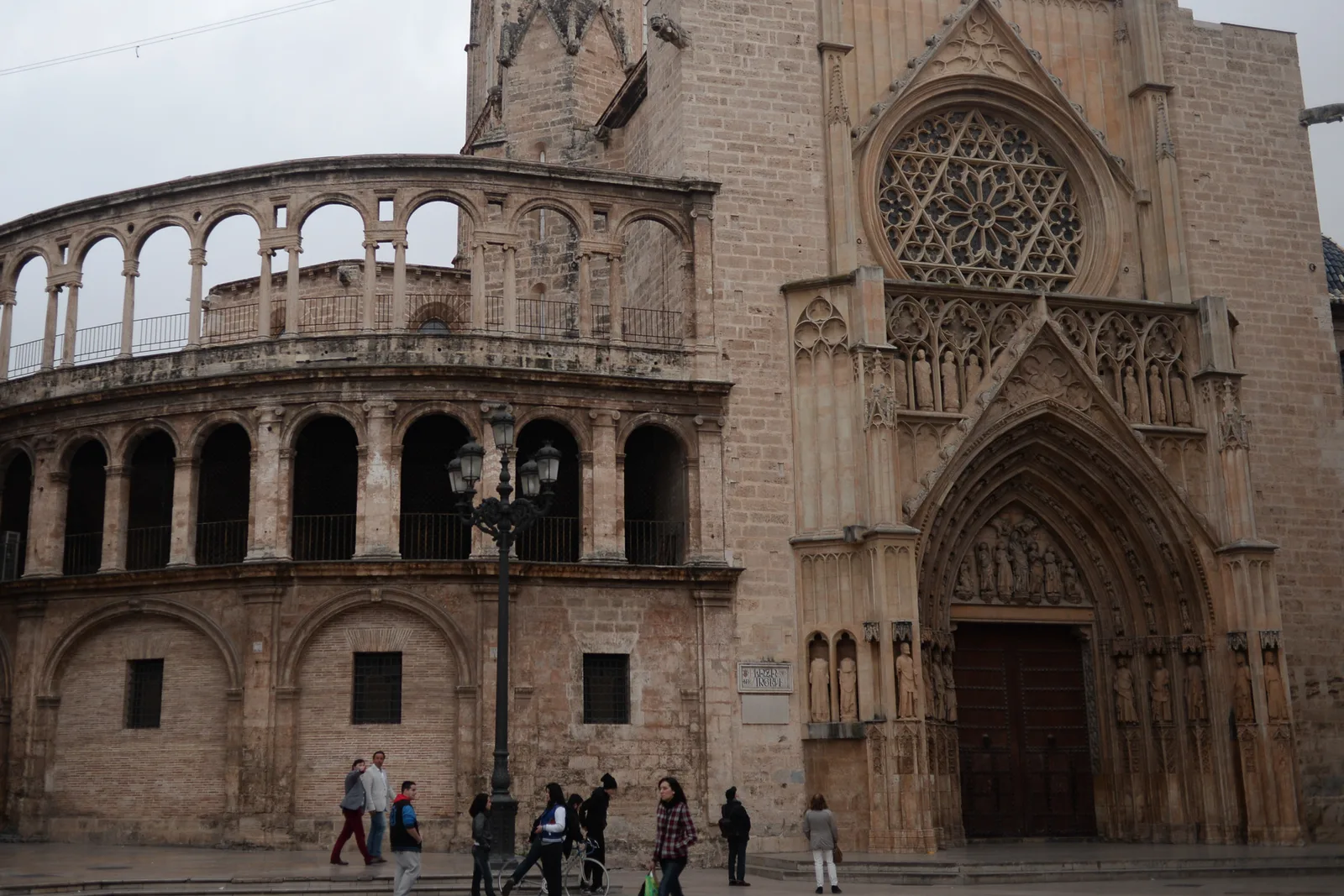
Three days split by part of the city: the old town on foot with the market, the silk exchange and the cathedral tower; the Turia gardens down to the City of Arts and Sciences with a wood-fired paella lunch by the beach; then the museums and a boat on the Albufera at sunset.
April to June and late September to October are warm, dry and quiet enough to eat outside. July and August are hot and humid but the beach and the Turia at dusk make up for it. Fallas runs March 1 to 19, with the big days 15 to 19: the city is a street party with fireworks at 2 p.m. every day, hotels sell out months ahead and prices double, and the cathedral closes on March 19. Go for it on purpose or avoid it on purpose.
Where to base yourself
Ciutat Vella (El Carmen, around the Mercado Central or Plaza de la Reina) puts day 1 at your door and the Turia a five-minute walk away. Ruzafa is the restaurant quarter, ten minutes south of the station, and good for anyone who wants to eat late. El Cabanyal by the beach is cheaper and lovely in summer, but 25 minutes by tram from the center.
Getting around
Walk the old town; it fits in a kilometer. EMT buses are €2 a ride and take a contactless bank card at the validator by the front door, with a free transfer for about an hour when you paid by card. The metro and tram need a SUMA card from a machine (around €1 for the card, €1.50 a single in zone A, a 10-trip SUMA for zones AB around €12) because bank cards do not work at the gates. The Turia gardens are the city's bike highway: Valenbisi or a day rent covers the 7 kilometers from the Torres de Serranos to the City of Arts and Sciences in under half an hour. Taxis are metered and cheap for three or four people.
Open Monday to Saturday 7:30 a.m. to 3 p.m., closed Sunday. Come before 10 while the stalls are being set up for Valencia oranges, jamón and the fish hall, and have a bocata and coffee at Central Bar (Ricard Camarena's counter, no reservations).
Across the square from the market, open Monday to Saturday 10 a.m. to 7 p.m. and Sunday 10 a.m. to 2 p.m.; €2, free on Sundays. The twisted columns in the contract hall are what to look at, and 40 minutes is enough.
Climb the Miguelete first: 207 steps up the bell tower, €3, capped at 50 people on the terrace. Then the cathedral visit (€12 with audio guide and museum), where the chapel of the Holy Chalice and the Goya paintings are the two things to find.
Out of the cathedral's Apostles' Door into the square: the basilica, the Turia fountain and the Water Tribunal, which has met at this door every Thursday at noon for a thousand years. The glass floor of the Almoina next door shows the Roman forum beneath.
An old tiled bar on Calle Moro Zeit in El Carmen, open daily 12:30 p.m. to 11:30 p.m., serving clóchinas, the small local mussels, since 1917. Clóchinas run from about May to August; out of season order the patatas bravas and esgarraet at the bar.
Horchata is an afternoon drink here, so this is the right hour. The tiled horchatería on Plaza Santa Catalina opens daily 8:15 a.m. to 9:30 p.m.; order a horchata and fartons, the long sugared buns you dunk in it, around €6 for both.
Walk north through the Carmen lanes: Calle Moret, Calle Alta and Calle Baja, Plaza del Tossal and the Portal de Valldigna. The murals change every few months, so this is a walk, not a list.
The 14th-century city gate at the top of El Carmen, open Monday to Saturday 10 a.m. to 7 p.m. and Sunday 10 a.m. to 2 p.m.; €2, free on Sundays. Climb to the top terrace for the late light over the Turia gardens and the old town roofs.
Bus or a 25-minute walk south of the station to the restaurant quarter. Do a crawl: esgarraet (roast red pepper and salt cod) and a caña at one bar, titaina and clóchinas at the next, then a cremaet, the flamed rum coffee; Canalla Bistro on Calle Maestro José Serrano is the sit-down option, so reserve.
The old riverbed, drained after the 1957 flood, is now a 9-kilometer park. Pick up a Valenbisi or a rental bike by the Torres de Serranos and ride downstream under the old bridges to the City of Arts and Sciences, 6 kilometers and 30 minutes at a dawdle.
Europe's largest aquarium, open from 10 a.m.; do the Arctic dome and the shark tunnel first, before the school groups. Buy the three-venue ticket online (€46 to €51, valid three consecutive days), which adds the Hemisfèric and Science Museum for about €8.
The eye-shaped IMAX dome across the pools from the aquarium, with films of about 45 minutes on the combined ticket; take whichever session is next. Then walk the complex for the Calatrava views: the Palau de les Arts, the Science Museum's white ribs and the Umbracle walkway.
Paella is a lunch dish; locals do not eat it at night. Casa Carmela cooks it over orange wood on the beach at Malvarrosa, open Monday to Saturday 1 to 4 p.m. only, and you reserve and order the paella valenciana when you book; expect €25 to €35 a head with wine.
The old fishermen's quarter one block behind the beach: narrow streets of tiled houses, Modernista facades and a market hall at the center. The grid between Calle de la Reina and Calle del Progreso has the best tiles; half an hour is enough.
A kilometer of wide sand with the Paseo Marítimo behind it; swim from May to October, and in winter walk the promenade south toward the marina with a drink at a chiringuito. Sunset is behind you, not over the sea.
A bodega in El Cabanyal open since 1836, barrels and all; the wine list is the draw, with anchovies, clóchinas, tortilla and michirones to go with it. Book a few days ahead, then take the tram back to the center.
Free, open Tuesday to Sunday 10 a.m. to 8 p.m., on the north bank of the Turia, five minutes from the Torres de Serranos. The Sorolla room, a Velázquez self-portrait, Goya, El Greco and a Bosch; 90 minutes covers it.
Behind the alabaster doorway of the Palacio del Marqués de Dos Aguas on Calle Poeta Querol, 20 minutes' walk back across the old town. Open Tuesday to Saturday 10 a.m. to 2 p.m. and 4 to 8 p.m. (Sunday mornings), €3; be in before 1:30 p.m. and find the tiled Valencian kitchen on the top floor.
The 1916 Modernista market in Eixample, a 10-minute walk, is now bars and cafes rather than stalls. Lunch at Habitual or tapas at Mi Cub downstairs, then a horchata from Daniel, the Alboraya horchatería with a counter here.
EMT lines 24 and 25 run from the center south along the coast road to El Palmar, the rice village on the Albufera lagoon, in a little under an hour for the €2 flat fare. Leave about three hours before sunset; on a Monday, when both museums are shut, swap in the Science Museum on your combined ticket.
A one-street village of paella restaurants and whitewashed barracas between the rice fields and the lake. Walk the canal to the Mirador for the open water; the rice is flooded and green in June, gold in September.
Paseos El Roig on Carrer del Santíssim Crist de la Salut runs electric boats from the end of the village: €5 for the 40-minute daytime trip, €7 for the hour-long sunset one. Book the sunset boat by WhatsApp a day ahead in summer and on weekends, and check the 24 and 25 schedule for the last bus back.
Back in Ruzafa for the last dinner: Ricard Camarena's casual room on Calle Maestro José Serrano, open until late; reserve ahead. The shared menu is the easy order; if you ate here on day 1, the bars on Calle Cádiz do a late tapas round instead.
Loading the map…
Pins are approximate. Tap one for the stop; the directions links open Google Maps.
The practical bits
From the airport
From Valencia airport (VLC), metro lines 3 and 5 run from the Aeroport station under the terminal to Xàtiva (for the station and the old town) and Colón in about 25 minutes. The single fare is €4.80 because the airport sits three zones out; you need a SUMA card from the machine first (around €1), or the Valencia Tourist Card, which covers it. Metrobus 150 is the cheaper, slower alternative, and a taxi to the center is around €25. From Madrid, the AVE reaches Joaquín Sorolla station in under two hours; from Barcelona, the Euromed in about three. Joaquín Sorolla and the old Estació del Nord are a 10-minute walk apart with a free shuttle between them.
What a day costs
About €75 to €110 a day per person. The three-venue City of Arts and Sciences ticket is €46 to €51, the cathedral with the tower €15, the Lonja and the Towers €2 each or free on Sunday, and the museums on day 3 €3 together. A paella lunch is €25 to €35 a head with wine, a tapas dinner €25 to €40, the bus €2 a ride and the Albufera boat €7.
Where to stay
El Carmen
The medieval lanes north of the cathedral: street art, old bars, the Serranos and Quart towers. Loud until late on weekends; right in the middle of day 1.
Ruzafa
The grid south of the station: the restaurants, the bars, the market, the cremaet at midnight. Good hotels and apartments; a 20-minute walk to the old town or a short bus.
El Cabanyal and the beach
Tiled fishermen's houses, Casa Montaña and the Malvarrosa sand. Lovely in summer, far from the old town in winter; the tram takes 25 minutes.
Got a day to spare?
Sagunto
A Roman theater and a kilometer-long hilltop castle 30 minutes north by Cercanías C-6 from the Estació del Nord. Quiet, free to walk, and back for lunch.
Xàtiva
Birthplace of the Borgia popes, with a double castle along a ridge above the town. About an hour by Cercanías C-2; the castle shuts on Mondays and over lunch, so check before you go.
Requena and the Utiel wineries
Bobal wine country an hour west by Cercanías C-3 or by car. The medieval barrio of La Villa sits over cellars you can tour; book a winery for the afternoon and let someone else drive.
Worth knowing
Buses take a bank card at the validator; the metro and tram do not. If you are taking the metro from the airport, buy the SUMA card at the machine or arrive with a Valencia Tourist Card, which covers the airport ride.
Paella is lunch. Book a paella restaurant for 2 p.m., order it when you book, and eat something lighter at night; anywhere serving it at 9 p.m. to tourists is reheating.
The Lonja, the Serranos Towers and the ceramics museum are free on Sundays, and the Mercado Central is shut. The cathedral visit is Sunday afternoon only (2 to 5:30 p.m.) and the cathedral closes on March 19 and October 9, so put markets on a weekday and monuments on a Sunday if the dates let you.
Both day 3 museums close on Monday. The Oceanogràfic combined ticket lasts three days, so keep the Science Museum for a Monday or a rainy hour.
During Fallas (March 1 to 19) buses are rerouted around closed streets, the mascletà at 2 p.m. shakes the Plaza del Ayuntamiento daily and firecrackers go all night. Waystop's hours check flags a stop placed on a day it is closed, such as the cathedral on March 19.
Things you can ask once it’s in the app
Plans change. Ask Chat and it proposes a reshuffled day you can apply, or just answers the question.
Our day 3 is a Monday, what do we do instead of the museums?Is the Valencia Tourist Card worth it for three days with the airport metro?Where should four of us reserve paella on Saturday near the beach?What time is sunset at the Albufera in late October and which bus gets us there?We are in Valencia March 16 to 18, what changes because of Fallas?
Questions
Is three days enough for Valencia?
Yes. The old town, the City of Arts and Sciences with the beach, and the Albufera are the three things, and they fit one a day. A fourth day adds Sagunto's castle or the Requena wineries; a fifth, Xàtiva and the Montesa castle by train.
Is the Valencia Tourist Card worth it?
The 24, 48 and 72-hour versions start from about €17 and include all EMT buses, the metro in zones AB including the airport station, free entry to the Lonja, the Serranos Towers and a dozen smaller museums, and 10 percent off the City of Arts and Sciences. It pays if you arrive by metro from the airport and ride the bus to El Palmar; if you walk everywhere and the Lonja is on a free Sunday, skip it.
Which day works in the rain?
Day 2: the Oceanogràfic, the Hemisfèric and the Science Museum are indoors and your combined ticket covers all three, and lunch at Casa Carmela is under cover. Waystop's rain plan can set the Turia bike ride and the beach aside as a separate version of the day.
Do I need to book anything ahead?
Paella: Casa Carmela and La Pepica only take reservations, and Casa Carmela wants the paella ordered when you book. Casa Montaña and Canalla Bistro fill on weekends. The Oceanogràfic sells online with no line. Nothing else needs a timed slot.
Add your dates, your hotel and who’s coming, then ask Chat to change anything: it proposes the edit and you tap Apply. Want a long lunch instead of a museum? Just ask. Every place is checked against Google Maps before it lands on your day, and Chat can tell you when to leave for the next stop. Going on to another city? Build a multi-city trip.