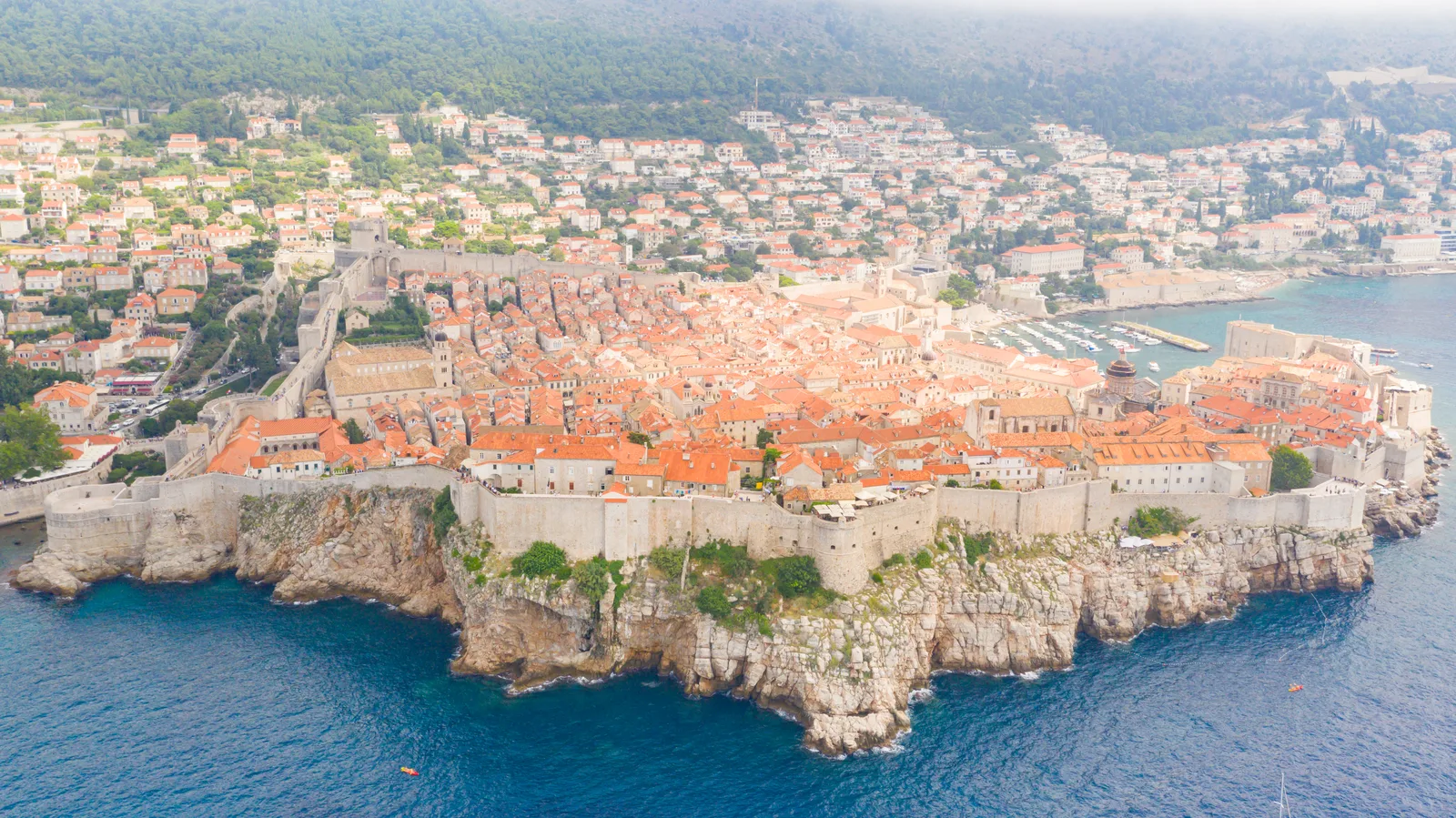
Three days built around the cruise-ship clock: the walls at opening before the heat and the gangways, Lokrum and a swim on the second day, and an island or Montenegro on the third. The old town is small; the trick is to be in it when the ships are not.
May, June and late September to early October are warm enough to swim and the lines are bearable. July and August are hot (90°F, or 32°C, on the walls) and the busiest cruise weeks. November to March is quiet and cheap; the walls drop to €15 but Lokrum, the cable car and several galleries close.
Where to base yourself
Inside the walls is beautiful and loud until midnight, with stairs and no cars; good for two or three nights if you travel light. Ploče, just east of the old town, has the sea views and Banje beach. Lapad is quieter, cheaper and 15 minutes away on bus 6.
Getting around
The old town is on foot; nothing inside the walls is more than ten minutes from anything else. Libertas city buses cost €1.73 for an hour from a kiosk or €2.50 on board, and €5.31 for 24 hours; the Dubrovnik Pass includes them. Boats leave from the Old Port (Lokrum, Cavtat) and ferries from Gruž (the Elaphiti islands).
Be at the Pile entrance when the gate opens at 8 a.m. (April to October); by 10 a.m. the first ships have landed and the walkway is a slow line in full sun. Walk anticlockwise, about two kilometers, ending at Minčeta.
Walk the limestone main street from Onofrio's fountain to the clock tower, then step into the Franciscan monastery by the Pile end: a cloister and a pharmacy that has traded since 1317. Around €8 to €10, free with the Dubrovnik Pass.
The Republic's seat of government, where the rector lived for a one-month term and could not leave. €15, or on the €20 Dubrovnik Museums ticket and the Dubrovnik Pass; open 9 a.m. to 6 p.m. daily in summer.
The fortress on the rock west of Pile, covered by the morning's walls ticket. Allow an hour, then rest or swim at the cove below Pile while the old town is at its fullest.
The lower station is a few steps outside the Buža gate, north of the walls; go up about an hour before sunset and walk down the zigzag path if you still have legs. It stops in strong wind.
A terrace on the Jesuit square at the top of the baroque stairs. The dish is kopun, capon roasted with honey and orange, an old Republic recipe; book a day ahead in summer.
The official boat leaves from the ticket hut at the Old Port; the first goes around 9 a.m., then roughly every half hour. €30 covers the crossing and the reserve, and the island is closed November to March.
Walk to the Benedictine monastery and its gardens first, then swim in the Dead Sea, a sheltered salt lake, before the hot hour. Fort Royal at the top has the view back to the walls; check the last boat back, posted at the dock.
Back on the mainland, a small konoba in the lanes below the south wall near the Buža gap. Grilled squid or a plate of small fried fish; cash is simplest.
Buža is a hole in the south wall with a bar on the rocks below; swim off the ledges and pay in cash. Banje is the pebble beach five minutes east of the Ploče gate, with loungers for rent.
Two floors of war photography on Antuninska, a lane off the Stradun, with a permanent room on the 1991 to 1995 wars. €10; open to 10 p.m. from May to September, shorter in April and October, and closed in winter.
Tables on the Old Port quay beside the fish market. Black risotto or the grilled fish of the day; no reservations, so arrive before 7 p.m. or be ready to wait.
Take bus 1A or 1B from Pile to Gruž (10 minutes), then the 10 a.m. local ferry to Koločep, Lopud and Šipan. Tickets are tied to a sailing, so book on the Jadrolinija app the night before in summer; about €5.40 one way in season.
Twenty minutes over the hill on a paved path, or a golf-cart shuttle from the harbor. Sand, shallow water and two beach bars; one of the few sandy beaches on this coast.
Walk back and sit at any waterfront table facing the boats. Grilled fish by weight, or a plate of octopus salad and bread; eat early enough to catch the afternoon ferry.
The return boats come through Lopud mid-afternoon and early evening; the times change by season, so read the board at the pier when you land. In Gruž, bus 1A or 1B back to Pile.
Seafood street food on Boškovićeva: an octopus burger or shrimp in a bun, eaten on the step. Then a last walk down the Stradun once the lights come on and the day visitors are gone.
Loading the map…
Pins are approximate. Tap one for the stop; the directions links open Google Maps.
The practical bits
From the airport
From Dubrovnik airport (DBV), 20 kilometers south, the Platanus shuttle runs to Pile Gate and the Gruž bus station in 30 to 40 minutes for €10 one way or €15 return; buy online or at the airport desk, not on board. A taxi is a fixed-zone fare of around €35 to €55. By bus from Split, allow four and a half hours with the Neum bypass bridge now open.
What a day costs
About €90 to €140 a day per person for meals, the walls or a pass, one boat and buses. The walls (€40), the cable car (€30) and Lokrum (€30) are the big tickets; a seafood dinner with wine runs €40 to €60 a head inside the walls.
Where to stay
Old Town
Everything in the photos, inside the walls. Stairs, no cars, and noise until the bars close; the early mornings are the quiet part.
Ploče
East of the walls above Banje beach. Hotels with the postcard view back at the old town; ten minutes on foot to the Ploče gate.
Lapad and Gruž
The peninsula west of town with a pedestrian promenade, pebble beaches and the ferry port. Cheaper rooms and the airport shuttle stop; bus 6 or 1A to Pile.
Got a day to spare?
Cavtat
A quiet harbor town with the Račić mausoleum on the hill. Small boats from the Old Port take about 45 minutes for around €10 one way (April to early November), or bus 10 from Gruž; half a day is plenty.
Kotor, Montenegro
A walled bay town two hours south by bus plus the border wait. Take the first departure, climb the fortress steps before the heat, and plan to be back for a late dinner.
Mljet
A national park island of two salt lakes and a monastery on an islet. Summer catamarans from Gruž reach Polače in about 90 minutes; check the sailing day before you count on it.
Worth knowing
Read the port schedule before you plan: the Port of Dubrovnik publishes the year's cruise arrivals as a downloadable list at portdubrovnik.hr (Traffic, Arrivals/Departures). Ships berth at Gruž from about 8 a.m. and passengers are inside the walls from 9:30 a.m. to around 4 p.m.; put the walls, Lokrum or an island on the heavy days.
The Dubrovnik Pass is €40 for 24 hours, €50 for 72 and €60 for 168, and the 1-day pass costs the same as the walls ticket alone. It adds the Rector's Palace, the Franciscan monastery museum, the Maritime Museum and city buses; it starts when you first use it, and it does not cover the cable car or Lokrum (the 3-day version gives 20 percent off Lokrum).
Croatia switched from the kuna to the euro on January 1, 2023 and joined Schengen the same day. Prices are in euros only now; if a menu or blog still quotes kuna, divide by 7.5.
The old town has a Respect the City code: carry your suitcase rather than roll it on the stone in the early morning and late at night, no drinking alcohol in the streets outside a bar terrace (fines reported at €300 and up), shirts on, and do not climb on the monuments.
Bring a reusable bottle and fill it at Onofrio's fountain; the water is drinkable and the walls have no shade.
Things you can ask once it’s in the app
Plans change. Ask Chat and it proposes a reshuffled day you can apply, or just answers the question.
How do we beat the cruise crowds on the walls?Is the Dubrovnik Pass worth it if we skip the museums?Swap day 3 for Kotor, what time do we leave?Where can we swim near the old town that is not Banje?Which Lokrum boat gets us back for dinner at 7 p.m.?
Questions
How do I avoid the cruise crowds?
Check the port's arrivals list for your dates. On a day with two or three ships, do the walls at 8 a.m., be on Lokrum or an island by 10 a.m., and come back to the old town after 5 p.m.. Early morning and evening belong to the people staying there.
Is the Dubrovnik Pass worth it?
If you walk the walls, yes: the 1-day pass costs the same €40 and adds the Rector's Palace, the Franciscan museum and buses. Buy the 3-day version (€50) if you want to spread the sights and ride buses to Gruž and Lapad.
Which day works in the rain?
Day 1 with the order flipped: the Rector's Palace, the Franciscan museum and War Photo Limited are indoors, the Maritime Museum is on the Pass, and the walls themselves are fine with a jacket once the squall passes. Waystop can keep a rain version of this day alongside the main plan, with Lokrum moved to a dry one.
Can we do Kotor in a day from Dubrovnik?
Yes, by the 7:15 a.m. bus or a small-group tour. The timetable says about two hours but the Montenegro border adds 15 to 30 minutes off season and two hours or more in July and August; bring your passport and expect the EU exit check on the way back.
Add your dates, your hotel and who’s coming, then ask Chat to change anything: it proposes the edit and you tap Apply. Want a long lunch instead of a museum? Just ask. Every place is checked against Google Maps before it lands on your day, and Chat can tell you when to leave for the next stop. Going on to another city? Build a multi-city trip.