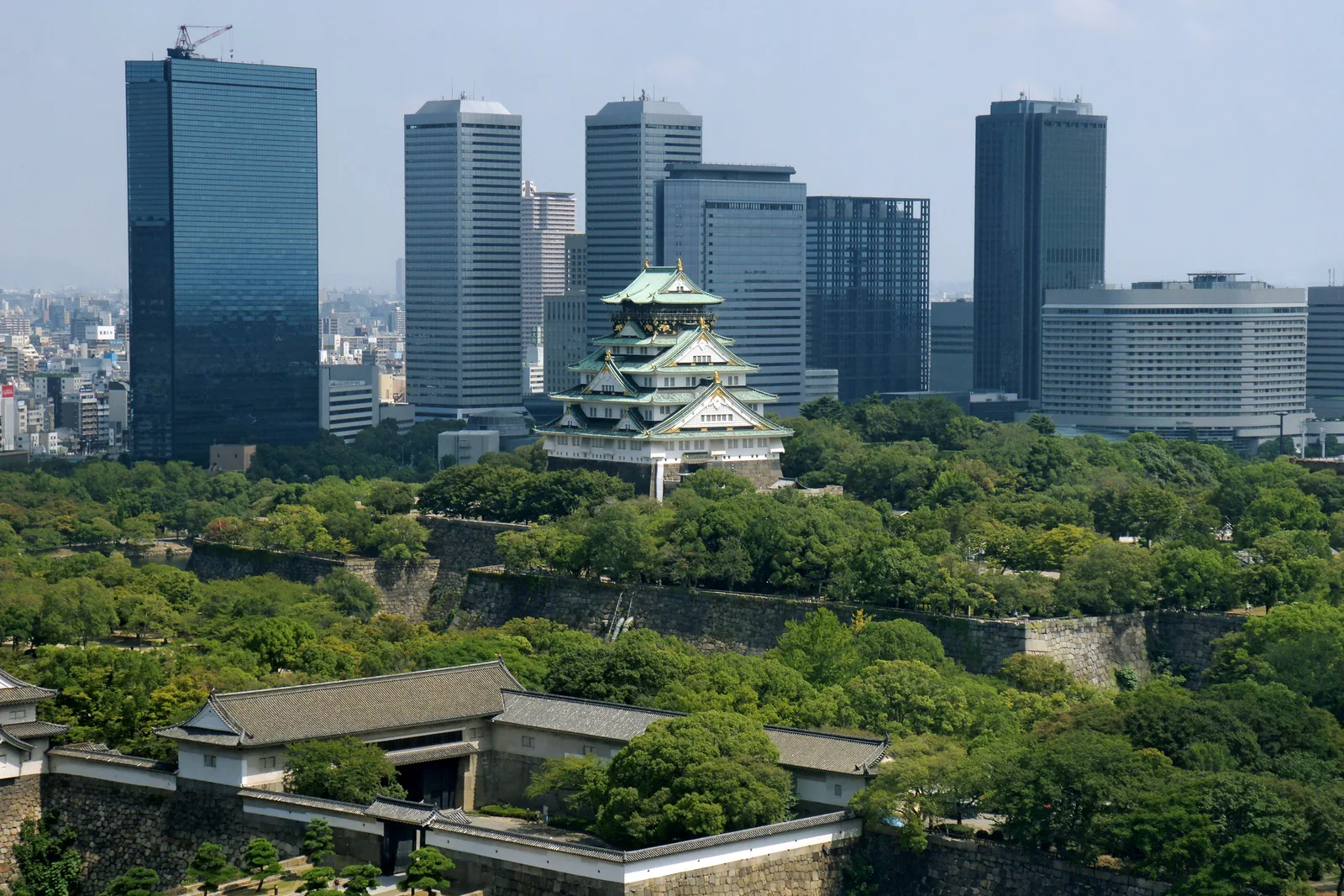
Three days, one district at a time: the castle and a Tenma izakaya night, Namba and Shinsekai for the food and the lights, then the bay aquarium and okonomiyaki in a Showa-era alley. One subway ride a day; the rest on foot.
Late March to early April for blossom in the castle park and October to November for mild days around 59 to 73°F (15 to 23°C). June is the rainy season, July and August sit above 86°F (30°C) and humid, and August to September is typhoon season. The Tenjin Matsuri fills Tenma on July 24 and 25.
Where to base yourself
Namba or Shinsaibashi to walk home from Dotonbori; Umeda for trains to Kyoto, Kobe and the airport buses; Honmachi for quiet between the two. Tennoji and Shinsekai are cheap and well connected but rough at the edges after dark.
Getting around
The Midosuji line is the spine: Umeda, Honmachi, Namba, Tennoji in a row. Osaka Metro starts at ¥190 a ride; tap an ICOCA or Suica on your phone. The JR Loop line reaches the castle and the bay. Last trains run around midnight.
Be at the main tower when it opens at 9 a.m., before the groups. The ticket covers the keep and the stone wall museum; the park and moats are free, and the Nishinomaru garden is only worth its ¥300 in blossom season.
Across the road at Tanimachi 4-chome; start on the tenth floor with the Naniwa Palace hall and the window onto the castle, then walk down. Closed Tuesdays.
Three stops on the Tanimachi line to Minami-morimachi, for big-cut nigiri at a counter, ordered a few pieces at a time. Expect a 20-minute line; usually closed Tuesdays, so swap in a sushi counter either side.
The shrine behind the Tenjin Matsuri, open 9 a.m. to 5 p.m., then a stretch of the 2.6-kilometer covered shopping street: croquette shops, kimono fabric, a hundred-yen store.
Fifteen minutes on foot south across the river to the island between the Dojima and Tosabori. The Nakanoshima Museum of Art and the Children's Book Forest (if you booked a slot) both close Mondays; the rose garden at the east end is free.
Back north to the lanes behind Tenjinbashi 5-chome, where standing bars and tiny izakaya open from 5 p.m. Kushikatsu, sashimi, a highball; point at what the next table has and pay cash.
Nippombashi station, exit 10; go before 11 a.m. while the stalls are stocked and the aisles are clear. Try grilled scallops and tuna at Kurogin; many stalls close on Sundays.
A ten-minute walk south-west: a small shrine with a 12-meter lion head for a stage, its mouth said to swallow bad luck. Free, daylight hours, five minutes is enough.
Okonomiyaki on Dotonbori since 1945, open daily from 11 a.m., with a wait by noon and no reservations. Order the yamaimo-yaki, made with grated mountain yam instead of flour.
The stone lane behind the arcade and the moss-covered Fudo Myoo statue; splash it with water as the locals do. Then the canal and the Glico runner from Ebisubashi, which you will come back to after dark.
Midosuji line two stops to Tennoji, then ten minutes on foot. Japan's oldest official temple, founded in 593: outer grounds free, central pagoda complex ¥300, garden another ¥300; flea market on the 21st and 22nd of each month.
Fifteen minutes west on foot to the Janjan Yokocho arcade of kushikatsu counters and shogi parlours, then the 1956 tower for the view and the Billiken statue. Hours and prices changed in spring 2026; budget around ¥1,200 for the main deck.
Twelve stools and no reservations; be there before 6 p.m. or the wait passes an hour. Skewers of beef, lotus root and quail egg, one dip in the shared sauce and never a second.
Two stops back to Namba. The signs along the canal, takoyaki at Wanaka, then Amerikamura for a bar or Ura-Namba's alleys of small restaurants if you are still hungry.
Chuo line to Osakako, exit 1, five minutes on foot; buy a timed e-ticket and arrive at the 10 a.m. opening. Adult prices move with demand, ¥2,400 to ¥2,700.
Fifteen minutes round the wheel for the bay and the city; ask for a see-through gondola. The Santa Maria cruise leaves hourly from 11 a.m. for ¥1,600 and takes 45 minutes if you would rather be on the water.
Chuo line to Hommachi, Midosuji to Umeda (about 25 minutes), then ten minutes north-east on foot. Pre-war row houses turned into cafes, vintage shops and a secondhand bookshop; most close around 6 p.m.
Fifteen minutes west under the tracks. Ride the glass escalator across the gap between the towers and be on the open roof for sunset; open until 10:30 p.m., last entry 10 p.m.
Down in the same building's basement, a mocked-up Showa-era alley. Kiji's okonomiyaki has perilla leaf in the batter and the modan-yaki with noodles is the one; expect a line, and it closes one weekday, so check the shutter times on the day.
Under the Hankyu tracks by Umeda station: a hundred tiny bars and counters, most with six seats. A last highball, or a bowl of something if the okonomiyaki did not fill you.
Loading the map…
Pins are approximate. Tap one for the stop; the directions links open Google Maps.
The practical bits
From the airport
From Kansai (KIX), the Nankai Rapi:t reaches Namba in 38 minutes for ¥1,670 (¥1,410 as a digital ticket), every 30 minutes until 11 p.m.; the JR Haruka reaches Shin-Osaka in about 50 minutes. From Itami (ITM), the limousine bus to Umeda takes about half an hour. From Kyoto, the JR special rapid is 30 minutes; from Tokyo, the Nozomi shinkansen is 2 hours 30 to Shin-Osaka.
What a day costs
About ¥8,000 to ¥12,000 a day per person for meals, tickets and the metro. Okonomiyaki and kushikatsu dinners run ¥2,000 to ¥3,500 a head; the aquarium and the Sky Building together are around ¥4,500.
Where to stay
Namba and Dotonbori
The lights, the arcades and the food. Loud until late, on every line, and the easiest base for first-timers.
Umeda
Department stores, the Sky Building and the trains to everywhere. Business hotels, big crossings and the Kitashinchi bars after work.
Tenma and Nakazakicho
Izakaya lanes, the long shopping street and the retro cafes. Local, cheap, one or two stops from Umeda.
Got a day to spare?
Nara
Todai-ji's great Buddha and the deer in the park. 40 minutes on the Kintetsu rapid express from Namba for ¥680; go at 8 a.m. and be back for dinner.
Minoo Falls
A 33-meter waterfall at the end of a paved 2.7-kilometer walk up a maple gorge. Hankyu from Umeda via Ishibashi-handai-mae, about 25 minutes and ¥280; maple-leaf tempura from the stalls, best in the second half of November.
Kobe
The harbor, Kitano's old foreign houses and a beef lunch. 30 minutes on the Hanshin line from Umeda to Sannomiya for ¥330.
Worth knowing
Put ICOCA or Suica on your phone before you land; it works on every subway, JR and private line here, and in Kyoto and Kobe.
Check the closed days: the history museum shuts Tuesdays, the Nakanoshima museums Mondays. Day 1 wants a Wednesday to Sunday.
Stand on the right on escalators, the opposite of Tokyo.
Kushikatsu sauce is shared: dip once, before you bite, and use the free cabbage to scoop more.
The Osaka Amazing Pass (¥3,500 for one day) covers the castle, Tsutenkaku, the Sky Building and the ferris wheel plus the metro; it only pays if you do three of them in one day.
Things you can ask once it’s in the app
Plans change. Ask Chat and it proposes a reshuffled day you can apply, or just answers the question.
Is the Osaka Amazing Pass worth it for our day 2?Swap the aquarium for Minoo Falls if the weather is goodWhich night should we book kushikatsu to avoid the line?Priya doesn't eat pork, what works at Kuromon?How late do trains run from Dotonbori back to Umeda?
Questions
Is three days too long for Osaka?
Not if you eat. The sights take a day and a half; the rest is markets, counters and neighborhoods, which is why people come. Base here and Kyoto, Nara and Kobe are each under an hour away.
Is Expo 2025 still on?
No. It closed on October 13, 2025 and the Yumeshima site has been largely dismantled since. Nothing in this plan goes near it.
Which day works in the rain?
Day 3: the aquarium, the marketplace, the Sky Building and the Takimi Koji alley are all indoors. If it is still pouring, a rain version of the day from Waystop can put the Hankyu food halls where Nakazakicho is.
Osaka Castle or Himeji?
Osaka's keep is a 1931 concrete rebuild with a museum inside and a park worth an hour. Himeji is the real thing, 23 minutes away by shinkansen; go there if you only care about castles.
Add your dates, your hotel and who’s coming, then ask Chat to change anything: it proposes the edit and you tap Apply. Want a long lunch instead of a museum? Just ask. Every place is checked against Google Maps before it lands on your day, and Chat can tell you when to leave for the next stop. Going on to another city? Build a multi-city trip.