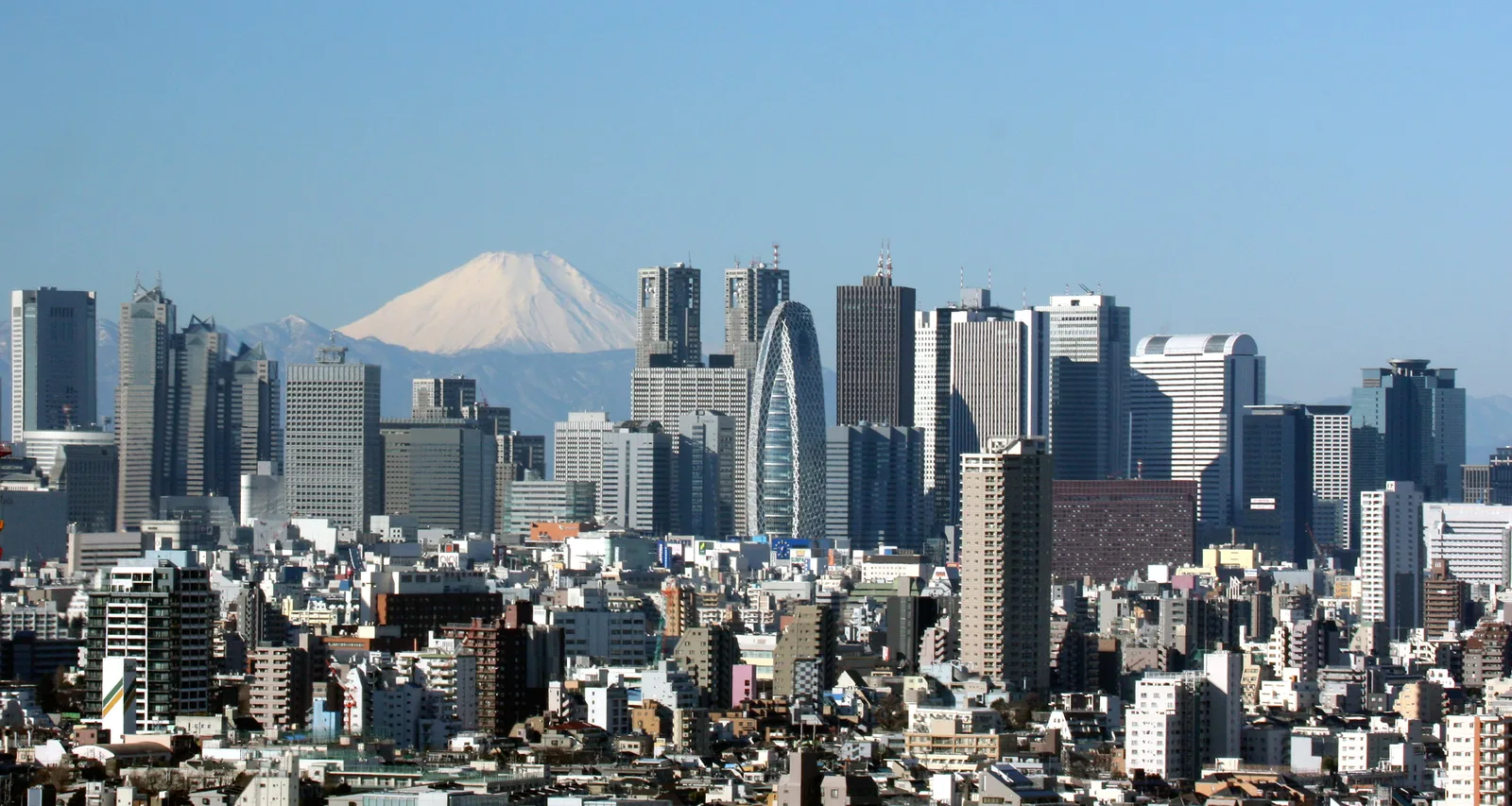
Four days across the two Tokyos: Asakusa and Ueno in the old east, Harajuku, Shibuya and Shinjuku in the west, a morning at the fish market and the bay, then Yanaka, Akihabara and a last night view. One train line at a time, paid with a tap of your phone.
Late March to early April for cherry blossom, and late October to November for clear skies and fall color. The rainy season runs from mid-June to mid-July, and August is hot and humid at around 95°F (35°C). Golden Week in early May fills the temples and the trains.
Where to base yourself
Shinjuku or Shibuya for the west side and late nights; Asakusa or Ueno for the east and lower prices; Ginza or Tokyo Station for the shinkansen. Every one of them sits on the Yamanote loop or a metro line, so each day starts with a single ride.
Getting around
The Yamanote loop and the metro cover everything in this plan. Tap a Suica or Pasmo card, or a Suica added to an iPhone wallet; Android visitors should buy a physical card and check that stations still have them. Most trains stop around midnight, and after that it is a taxi.
Tokyo's oldest temple. Go through the Kaminarimon gate and down Nakamise lane before the shops open and the tour groups arrive; the grounds are open all day and the main hall opens early, at 6 a.m. (6:30 from October to March).
Walk 40 minutes along the river to the tower, or take the train. The Tembo Deck is from ¥1,800 online (¥2,300 at the counter); go up on a clear day and skip it in haze.
Daikokuya near the temple serves tempura on rice and Unagi Irokawa serves eel, both in the old streets around Senso-ji. Expect a wait at peak lunch hours.
Walk Ueno Park past the shrine, then give the museum's Japanese gallery two hours for swords, screens and lacquer. Open 9:30 a.m. to 5 p.m., later on some Fridays and Saturdays; closed Mondays.
Enter from Harajuku station and walk the gravel path through the forest to the shrine. It is free and opens at sunrise, so go early before the tour groups.
Teen fashion and crepes on Takeshita Street, then architecture and flagship stores on Omotesando, a ten-minute walk away. Do Takeshita early, because it fills up by late morning.
Book the sunset slot online for the rooftop deck above Scramble Square: about ¥2,700 before 3 p.m. and ¥3,400 after. The open-air part can close in bad weather.
The wholesale market moved to Toyosu, but the outer market stayed: tamagoyaki on a stick, tuna bowls, knives. Most shops are cash only and close by early afternoon, and many close on Sundays and some Wednesdays.
A daimyo's garden on the bay with a teahouse on the pond. It costs ¥300 and is open 9 a.m. to 5 p.m., twenty minutes on foot from the market; the water bus to Asakusa leaves from its pier.
Digital art you walk through barefoot, partly in knee-deep water. Tickets are timed and sell out, so book before you fly; Borderless at Azabudai Hills is the alternative.
The neighborhood the war missed: wooden houses, cats, small shops on Yanaka Ginza and the cherry-lined cemetery. Walk it slowly in the morning before the shops fill.
The castle moats and stone walls, free to enter. Open from 9 a.m. and closing between 4 and 6 p.m. by season, with last entry 30 minutes before; closed Mondays and Fridays.
The free observation deck in Shinjuku, with Fuji visible on clear evenings. Hours and closing days differ by deck, so check the Metropolitan Government site before you go.
Loading the map…
Pins are approximate. Tap one for the stop; the directions links open Google Maps.
The practical bits
From the airport
From Narita, the Narita Express reaches Tokyo Station in about an hour for around ¥3,100, or the Keisei Skyliner reaches Keisei Ueno in 41 minutes. From Haneda, the Keikyu line or the monorail gets you to the city in about 30 minutes. A taxi from Narita runs past ¥20,000.
What a day costs
About ¥9,000 to ¥14,000 a day per person for meals, museums and trains. Sushi counters and teppanyaki are where it climbs; the Skytree deck is ¥1,800 online, Shibuya Sky ¥2,700 to ¥3,400, the Tokyo National Museum ¥1,000 and the Metropolitan Government deck is free.
Where to stay
Shinjuku
Every train line, thousands of restaurants and Golden Gai after dark. The easiest base for a first trip, and noisy at all hours.
Asakusa
Senso-ji, the old shopping streets and the river, with calmer evenings and cheaper hotels; about 20 minutes by train from the center.
Shibuya and Harajuku
The crossing, Meiji Jingu and the shops. Loud and young, and a good base if you want late nights close to day 2.
Got a day to spare?
Kamakura
The Great Buddha, Hase-dera and a beach. An hour on the JR Yokosuka line; add Enoshima if you have the afternoon.
Hakone
Onsen, the ropeway and Fuji on a clear day. 85 minutes on the Odakyu Romancecar; the Hakone Free Pass covers the loop.
Nikko
Toshogu shrine and the waterfalls. Two hours by Tobu train; a long day, best in fall.
Worth knowing
Add Suica to your iPhone before you land, through the Welcome Suica Mobile app (iPhone only) or Apple Wallet; it works from the airport train onward. Android phones need a physical card, so check that stations are selling them.
Most small restaurants seat you in order of arrival. Lines of ten people usually move in about twenty minutes, so join the line rather than walk on.
Tipping does not exist. Leave nothing and say gochisosama when you go.
7-Eleven ATMs take foreign cards, and the sandwiches and rice balls are better than you would expect. Take out ¥10,000 at a time for the cash-only counters.
Last trains leave around midnight, so put Golden Gai on the night before an easy morning. Waystop's hours check flags a stop placed on a closed day, such as the Imperial Palace East Gardens on a Monday or Friday.
Things you can ask once it’s in the app
Plans change. Ask Chat and it proposes a reshuffled day you can apply, or just answers the question.
Move the sushi lunch to day 2 and find ramen near Tsukiji insteadHow do I get from Meiji Jingu to Shibuya Sky?We have a 7 p.m. flight on day 4, cut the day to fitWhich of these stops need tickets booked ahead?Sam paid ¥12,000 for the sushi lunch, split it four ways
Questions
Is four days enough for Tokyo?
Yes, to get to know four neighborhoods well. Add a second evening in an area you liked rather than a fifth area.
Which day works in the rain?
Day 3: Ginza's department stores and teamLab Planets are mostly indoors, and the sushi lunch is under a roof. Day 1 has the Tokyo National Museum. Waystop's rain plan can add a wet-weather version of day 2, with Meiji Jingu swapped out, for you to switch to.
Which airport is better?
Haneda is about 30 minutes from the center by train or monorail; Narita is 60 to 90 minutes. Take Haneda when the fares are close.
Do I need cash?
Less each year, but small restaurants, shrines, Tsukiji shops and Golden Gai bars are still cash. Carry ¥10,000 and refill at a 7-Eleven ATM.
Add your dates, your hotel and who’s coming, then ask Chat to change anything: it proposes the edit and you tap Apply. Want a long lunch instead of a museum? Just ask. Every place is checked against Google Maps before it lands on your day, and Chat can tell you when to leave for the next stop. Going on to another city? Build a multi-city trip.