Day 1 rides the Hakone loop clockwise from Hakone-Yumoto: the Tozan train up to Gora, the cable car and ropeway over Owakudani for black eggs, the pirate ship across Lake Ashi, and a ryokan night with an onsen. Day 2 is Hakone Shrine before the crowds, the old Tokaido cedars, the Open-Air Museum, and back to Tokyo.
Got Waystop on this phone? The button drops the whole plan straight into the app. On a laptop, copy it now and paste it into Import later. Opening a plan in the app uses a little credit, and the $3 you start with covers a first try.
Checked November 17, 2026. That’s the day we last confirmed the hours, prices and closed days.
Late October to late November for maples on the hillsides and the clearest views of Fuji from the lake; December to February is cold and clear, with earlier ropeway closing. Late March to April brings cherry blossom along the Tozan line, and mid-June to mid-July the hydrangeas beside the tracks bloom in the rainy season. Avoid Golden Week (early May), Obon (mid-August) and autumn weekends if you can, when the ropeway lines run long.
Where to base yourself
One night in a ryokan with its own hot spring is the point of staying over. Moto-Hakone or the Hakone-machi end of Lake Ashi puts you a short walk from the shrine for day 2, which is how this plan is built. Gora and Miyanoshita are the alternative, on the Tozan line and nearer the museums; Hakone-Yumoto has the most inns and is easiest with luggage but is a ride from the lake. Send big bags ahead by takkyubin from your Tokyo hotel and travel with a day bag, because the loop is a string of transfers.
Getting around
The Hakone Freepass covers everything here: the Tozan train, cable car, ropeway, sightseeing cruise and the Tozan buses, and from Shinjuku it includes the Odakyu return. It is ¥7,100 for 2 days from Shinjuku since October 1, 2025, or ¥6,000 from Odawara; the Romancecar is extra. Without it, the Tozan train from Hakone-Yumoto to Gora is ¥460 and about 40 minutes, the cable car to Sounzan ¥430 and 10 minutes, the ropeway a flat ¥2,000 one way, and the cruise from Togendai to Moto-Hakone ¥1,700.
Day 1
The Hakone loop: train, cable car, ropeway and the lake
About 80 minutes direct, with the limited express ticket on top of the Freepass: ¥1,200 from Shinjuku, ¥50 less on EMot, on sale a month ahead at 10 a.m. Japan time. Book a seat on the right side going out for the Sagami river views near the end.
Cross the platform at Hakone-Yumoto for the mountain railway: about 40 minutes and three switchbacks up 8.9 km of steep track. Stand at the downhill end of the car to watch the driver change ends at each switchback.
The cable car leaves from the same building at Gora, 10 minutes to Sounzan, and the ropeway gondolas go about every minute from there, 15 minutes to Owakudani. From December 7 to 24, 2026 this section runs as a replacement bus, so use the lake end that week (see tips).
The steaming crater valley with the sulfur smell. Buy a bag of kuro-tamago, eggs boiled black in the hot springs, around ¥500, and look for Fuji to the west on a clear morning. The ropeway warns people with asthma or heart conditions about the gas, and the area closes when gas levels rise, so check the status page before you leave Tokyo.
The restaurant in the ropeway station, with windows over the valley. Order the Owakudani curry, black like the eggs, and go before 12:30 when the ropeway crowds arrive.
Change gondolas at Owakudani; Ubako and then Togendai on the lakeshore are about 30 minutes on. The second half looks down onto Lake Ashi with Fuji behind it on clear days.
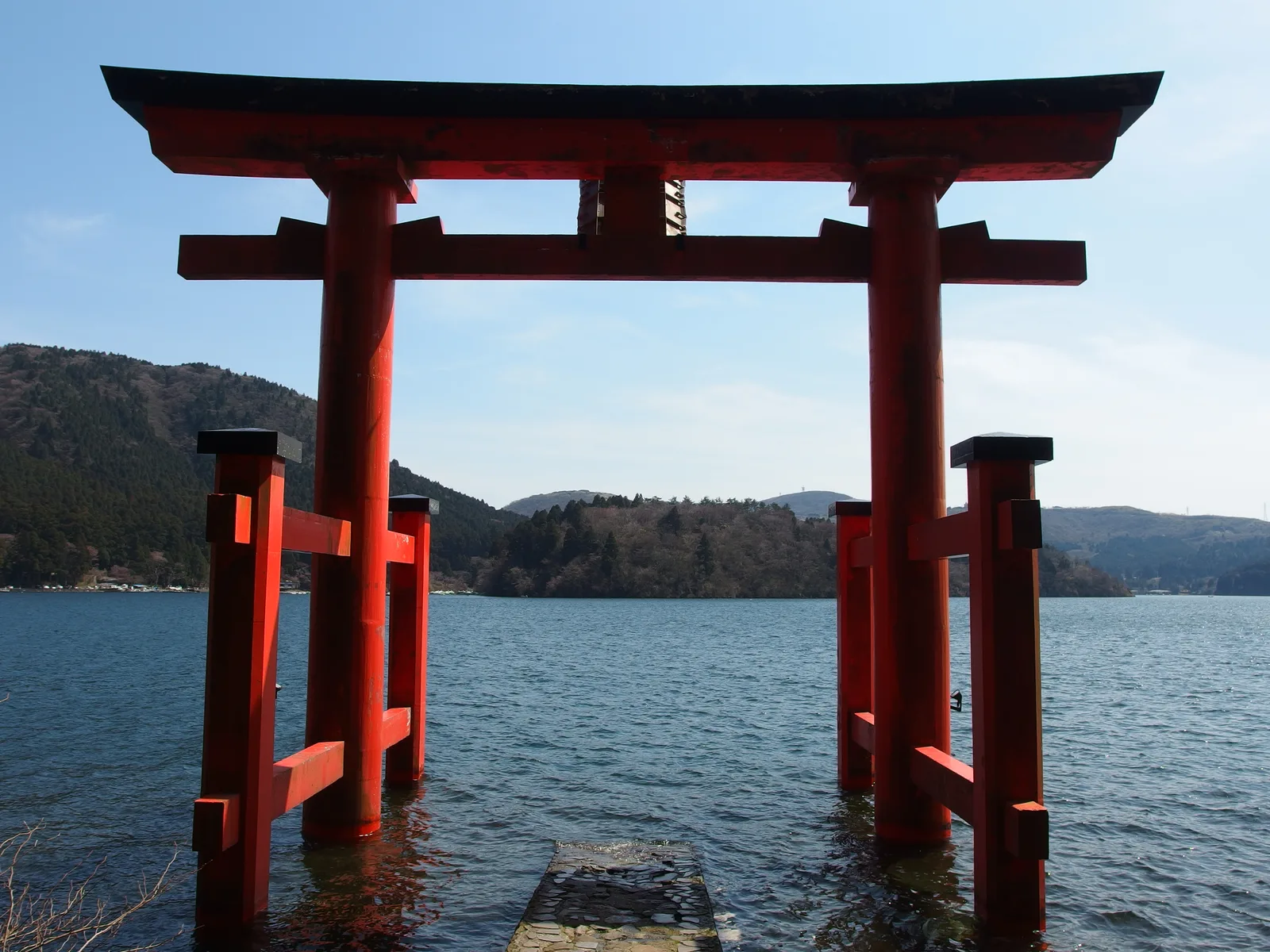
The pirate ships leave from the floor below the ropeway station, about 40 minutes down the lake; ¥1,700 one way without the pass. Sit on the left going south for the red torii of Hakone Shrine as you come into Moto-Hakone.
Walk or take a short bus to your ryokan near Moto-Hakone. Check-in is usually from 3 p.m.; bathe before dinner while the baths are quiet, wash at the stools first, and leave the small towel out of the water.
Most ryokan serve a set dinner in the room or a private dining room at a time you choose at check-in: many small courses with local fish and yuba. Tell the inn about allergies when you book, not on arrival.
Many inns swap the men's and women's baths overnight, so the second soak is a different bath. Wear the yukata the ryokan leaves out, left side over right.
Day 2
Hakone Shrine, the cedar avenue and the Open-Air Museum
The grounds are open early; go before breakfast, because by mid-morning the line for a photo at the red torii standing in the lake can take an hour. Climb the cedar-lined steps to the main hall; the amulet office opens at 8:15 a.m.
Ryokan breakfast is usually 7:30 to 9 a.m.; ask for a late slot the night before if the shrine runs long. Leave your bag at the front desk and collect it on the way to the bus.
The stretch of the Edo-period highway between Moto-Hakone and Hakone-machi, lined with cedars planted about 400 years ago, about 20 minutes on foot along the lake. At the Hakone-machi end is the rebuilt Hakone Sekisho checkpoint, with a small admission fee, if you want to see how travelers were searched.
Take the Tozan bus from Moto-Hakone toward Hakone-Yumoto as far as Miyanoshita, then the Tozan train two stops up to Chokoku-no-Mori. Both are on the Freepass; buses on this road crawl on autumn weekends, so allow extra time.
Sculpture on a hillside, a stained-glass tower you climb inside, and a Picasso pavilion; open 9 a.m. to 5 p.m. every day, last entry 4:30 p.m. ¥2,000 at the door, ¥1,800 online. Finish at the hot-spring foot bath. The Pola Museum of Art is the indoor alternative if it is raining.
Five minutes uphill from the museum toward Gora: plates of pan-fried or boiled gyoza with rice and soup. There is a line at noon; by this hour it is shorter.
About 40 minutes down the switchbacks from Gora. Allow half an hour at Hakone-Yumoto for the shopping street outside the station, then the Romancecar back to Shinjuku, booked for about 4 p.m. on EMot.
Loading the map…
Pins are approximate. Tap one for the stop; the directions links open Google Maps.
The practical bits
From the airport
From Shinjuku, the Odakyu Romancecar reaches Hakone-Yumoto in about 80 minutes without a change; the Freepass covers the base fare and you add ¥1,200 for the limited express seat. From Tokyo Station or with a JR Pass, take a Hikari or Kodama on the Tokaido shinkansen to Odawara (Nozomi trains pass through), about 35 minutes, then the Tozan line or the Freepass from Odawara (¥6,000) into Hakone. Hakone sits between Tokyo and Kyoto, so it chains well: go back down to Odawara at the end of day 2 and continue west on a Hikari to Kyoto in about 2 hours, around ¥12,000 reserved, instead of returning to Tokyo.
What a day costs
About ¥8,000 to ¥11,000 a day per person for meals, tickets and transport, with the ryokan's dinner and breakfast counted in the room. The 2-day Freepass from Shinjuku is ¥7,100 plus ¥2,400 for the Romancecar both ways; the Open-Air Museum is ¥1,800 online. Lunch at Owakudani or Gora is around ¥1,500. A ryokan with two meals is the big cost, typically from ¥25,000 per person a night.
Where to stay
Moto-Hakone and Hakone-machi
The south end of Lake Ashi: the shrine, the cedar avenue, the checkpoint and the boat piers, with lakeside ryokan. Quiet after the last boats leave.
Gora and Miyanoshita
Halfway up the Tozan line, with Gora Park, the museums and old hotels like the Fujiya. Good for a museum-heavy stay.
Hakone-Yumoto
The gateway at the bottom, where the Romancecar terminates: the most ryokan and day baths, a shopping street of snacks and souvenirs, and the easiest place to arrive and leave with bags.
Got a day to spare?
Odawara Castle
The rebuilt castle keep and its park are a 10-minute walk from Odawara Station, an easy hour on the way in or out, and the Freepass covers the ride down from Hakone-Yumoto.
Gotemba Premium Outlets and the Fuji side
Over the pass from Sengoku by Tozan bus, about 30 minutes; the Freepass covers the designated buses there. On a clear day Fuji fills the view from the car park.
Kamakura
The Great Buddha and the temples of the old capital, reached from Odawara on the JR Tokaido line to Ofuna or Fujisawa and then the Enoden or Yokosuka line. It makes a good stop on the way back toward Tokyo.
Worth knowing
The Hakone Freepass went up on October 1, 2025: ¥7,100 for 2 days from Shinjuku, ¥6,000 from Odawara. On this loop it still beats single tickets, and it saves queuing at every ticket window.
Check the Hakone Navi transportation status page the night before and the morning of day 1. The ropeway stops in winds of 30 m/s or more and for volcanic gas at Owakudani; when the Sounzan section is down, ride it from Togendai as far as it runs.
Ropeway maintenance in winter 2026 to 2027: Owakudani to Sounzan runs as a replacement bus from December 7 to 24, 2026, and Togendai to Owakudani from January 12 to February 26, 2027. The buses take the Freepass but fill up; reach Owakudani from the side that is still running.
Ropeway boarding stops at 5 p.m. from February to November and 4:15 p.m. in December and January. Do the loop clockwise from the morning so the ropeway is behind you by early afternoon.
Book the Romancecar both ways on EMot a month out for autumn weekends. The Freepass covers the Odakyu fare but not the limited express ticket, and the Shinjuku pass alone also works on the slower express trains with a change at Odawara.
Things you can ask once it’s in the app
Plans change. Ask Chat and it proposes a reshuffled day you can apply, or just answers the question.
Is Owakudani open today, or should we skip the ropeway and go straight to the lake?We arrive on December 10, how do we reach Owakudani with the ropeway section on buses?Can we fit the Pola Museum and the Open-Air Museum both into day 2?Which ryokan near Moto-Hakone have private baths we can book for two?We are going on to Kyoto after Hakone, which Hikari from Odawara should we take?
Questions
Is two days enough for Hakone?
Yes. The loop fills one day, and the second covers the shrine and a museum before heading back. A third day adds Gora Park, the Pola Museum and a hike, or a slower morning in the onsen.
Which way round should I do the Hakone loop?
Clockwise from Hakone-Yumoto, as here: train, cable car, ropeway, then the boat. You reach the ropeway before the afternoon crowds and its earlier closing, and finish at the lake where the ryokan is.
What if the weather is bad?
Ropeway and cruise both stop in strong wind and Fuji will not show, so on a wet day 1 ride the Tozan train to Gora and swap the loop for the Pola Museum or the Open-Air Museum's indoor halls, then a long onsen. The Tozan bus links Gora to the lake if you still need to reach the ryokan.
Do I need to book the Romancecar?
On weekends and in autumn, yes. Seats go on sale one month before at 10 a.m. Japan time on EMot. On a quiet weekday you can usually buy one at Shinjuku on the day.
From waystop.app/trips/hakone-2-days. Hours, prices and closed days checked November 17, 2026.
Your version
Now make it fit your trip.
Add your dates, your hotel and who’s coming, then ask Chat to change anything: it proposes the edit and you tap Apply. Want a long lunch instead of a museum? Just ask. Every place is checked against Google Maps before it lands on your day, and Chat can tell you when to leave for the next stop. Going on to another city? Build a multi-city trip.