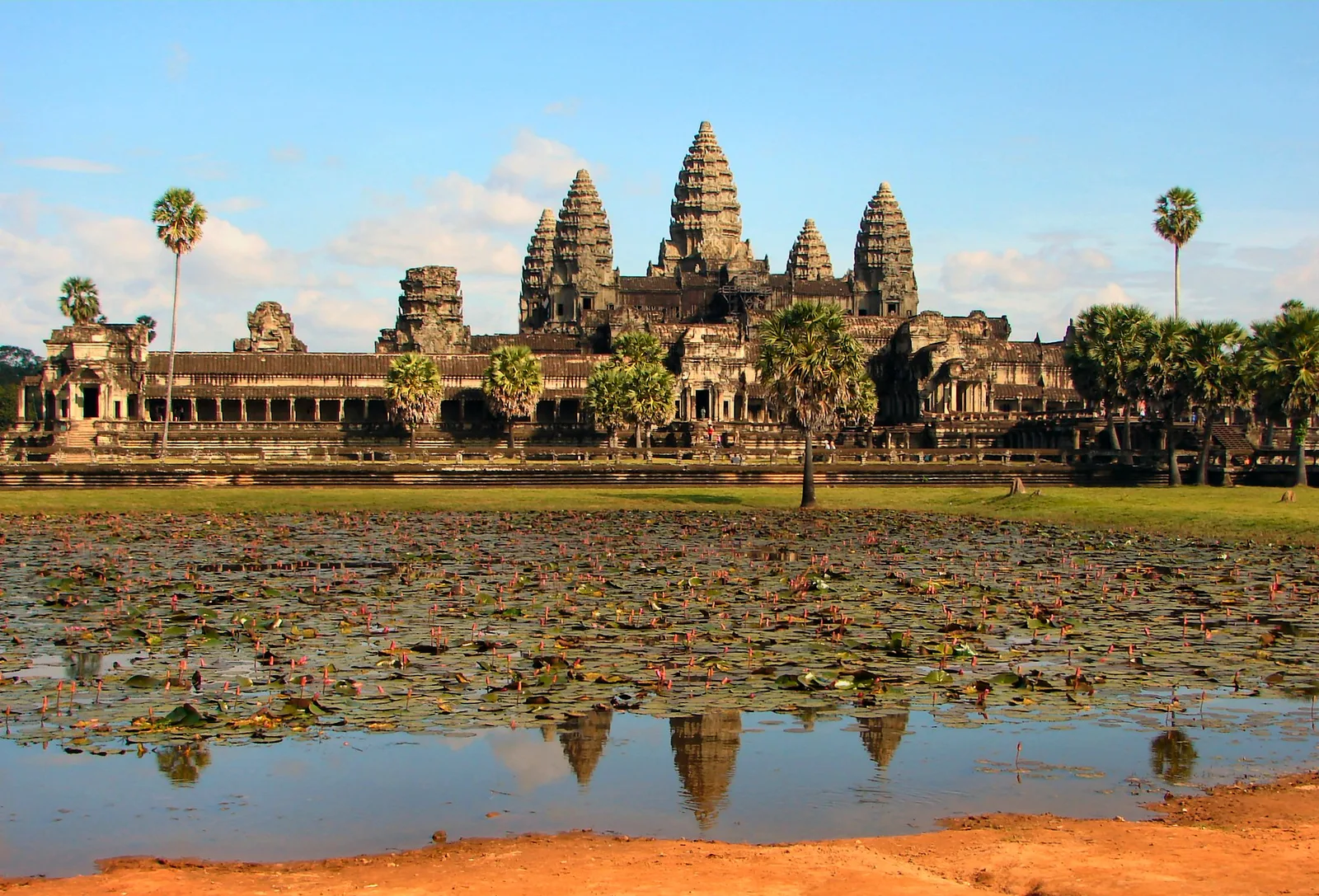
Three days built around the Angkor pass: the small circuit from sunrise at Angkor Wat to Ta Prohm, a long day out to Banteay Srei and the quieter temples with sunset at Pre Rup, then the lake, the museum and the town. One tuk-tuk a day, and you walk the rest.
November to February is dry and the coolest it gets, with the lake still high; it is also the busiest. March to May is very hot, 95°F (35°C) or more by noon, so the temples want early starts. June to October is rainy season: short heavy afternoon storms, green moats, fewer people and the flooded forest at Kampong Phluk at its fullest.
Where to base yourself
Sleep near the river between Psar Chas and Wat Bo for walkable dinners, or on the quieter lanes around Wat Damnak and Kandal Village. Hotels on the road north toward Angkor are closer to the temples but a tuk-tuk ride from everything else.
Getting around
Rent a tuk-tuk by the day: around $20 to $28 for the small circuit, $25 to $35 for the grand circuit, and $45 or so once Banteay Srei is added. Grab and PassApp work in town for $2 to $4 rides. Inside the park you walk from each gate to the temple; carry water and a hat.
Gates open at 5 a.m. Stand by the moat or the south pool rather than the crowded north pool, then walk the galleries while the tour groups eat breakfast; the Bakan upper level opens around 7:40 a.m. and guards turn away bare shoulders and knees.
Enter through the south gate for the causeway of gods and demons. The Bayon's 200-odd stone faces are best before 9:30 a.m., when the light is low and the buses have not arrived.
Walk north from the Bayon along the raised causeway to Baphuon, climb it for the view, then follow the Terrace of the Elephants to the Leper King terrace. All on foot inside the walls; ask the driver to wait at the Victory Gate.
Open-sided Khmer restaurants facing the royal bathing pool, opposite Banteay Kdei. Order fish amok or a plate of fried noodles, around $5, and sit through the hottest hour.
The temple left to the trees. Go in from the east gate and out the west so you walk toward the light; the big silk-cotton roots are near the central enclosure, and Banteay Kdei next door is quiet if you have energy left.
Plain Cambodian cooking a block from Pub Street, open 9 a.m. to 11 p.m. with no reservation needed. Order the amok in its banana leaf and a Khmer curry; beer is a dollar.
Day 2
Further out: Banteay Srei, the quiet temples, sunset at Pre Rup
The small pink sandstone temple with the finest carving at Angkor, about 35 km north, roughly an hour by tuk-tuk. Be inside before 9 a.m., when the stone glows in low light and the tour buses have not arrived.
Another 18 km on, then a shaded 1.5 km walk uphill to a riverbed carved with lingas and reclining Vishnus; allow 90 minutes round trip. If the heat is too much, Banteay Samré near the East Baray is the easy swap.
Simple Khmer places by the parking lot on the way back. Order lok lak, beef with a lime and pepper dip over rice, and a fresh coconut; expect $5 to $8 a head.
A sprawling monastery temple, mostly in shade, with a two-story building that looks almost Greek. Walk straight through from the west gate to the east and have the tuk-tuk meet you there.
A wooden boardwalk crosses the northern baray to a small island temple set in a pond; the dead trees and lilies on the walk are the point. Twenty minutes is plenty.
A temple mountain of warm brick and laterite, kept open past the others for sunset. The stairs are steep, so climb before 5:30 p.m. for a place on the top tier; ask your driver to confirm closing time on the day.
Cambodian home cooking in a garden by the river on Pokambor Avenue. Book a riverside table for the same evening; order the prahok ktis and a grilled fish.
A village on stilts about 30 km southeast, an hour each way by tuk-tuk. Boats cost $20 to $25 a person plus a $2 village fee, and a $5 rowboat through the flooded forest is worth it from September to January when the water is high.
The short lane of Hap Guan Street between the river and Sivatha Boulevard: coffee roasters, a few boutiques and lunch spots. The Little Red Fox Espresso does Australian-style brunch plates; Khmer noodle soups are two doors along.
Eight galleries explain the gods and kings you have been looking at for two days, including the hall of a thousand Buddhas. Open daily from 8:30 a.m. until 6 or 6:30 p.m. by season; around $12, with an audio guide for about $5.
Fresh food in the morning, krama scarves, spices and silver in the afternoon. Haggle gently, pay small notes, and walk the river bank north to the Royal Gardens as the heat drops.
Arrive from 6 p.m. for the Cambodian street-food stalls on site, then the 8 p.m. show: an hour of acrobatics, theater and live music by graduates of the Battambang arts school. Section B at $28 is the middle price; book online, because high season sells out.
$18 to $38
Loading the map…
Pins are approximate. Tap one for the stop; the directions links open Google Maps.
The practical bits
From the airport
Siem Reap-Angkor International Airport (SAI) opened in 2023 and replaced the old airport near town; it is about 50 km east, 45 to 60 minutes by road. The taxi counter in arrivals charges around $30 to $35 to the center, Grab cars run from about $19, and an airport shuttle bus leaves on a fixed schedule for about $8 but stops short of the center. Most hotels arrange a pickup for $15 to $25.
What a day costs
About $50 to $80 a day per person for a share of the tuk-tuk, the 3-day pass averaged over three days, two meals and a few dollars of water and coconuts. Phare adds $18 to $38 and the lake boat $25 to $30.
Where to stay
Psar Chas and Pub Street
The old market, the bars and most of the cheap restaurants. Loud until late and convenient for everything; stay a street or two back from Pub Street itself.
Wat Bo and the east bank
Across the river from the market: guesthouses in gardens, quieter streets and a short walk to dinner. The best compromise for most people.
Kandal Village and Wat Damnak
Cafes, galleries and small boutique hotels on leafy lanes south of the center. Still walkable to the market in ten minutes, and the tuk-tuk to the temples passes by.
Got a day to spare?
Beng Mealea
A jungle temple the size of Angkor Wat, left largely as found, about 65 km east. Covered by the Angkor pass or $10 on its own; a car and a half day, go early.
Phnom Kulen
The sacred mountain with the riverbed carvings, a reclining Buddha and a waterfall to swim under. Separate ticket, about 90 minutes each way, and the one-way road means arriving before noon.
The Roluos group
Bakong, Preah Ko and Lolei, the ninth-century temples that came before Angkor, 13 km east on the Phnom Penh road. On the Angkor pass; two hours and almost nobody else.
Worth knowing
Buy the Angkor pass online at ticket.angkorenterprise.gov.kh (Visa or Mastercard, passport photo uploaded, QR saved offline) or at the ticket office on Road 60, about 4 km from the center, open from before dawn to 5:30 p.m. A pass dated for tomorrow lets you in after 5 p.m. today for sunset without using a day.
Cover shoulders and knees inside the temples; a scarf over a vest does not count at the Bakan. Light long trousers and a loose cotton shirt beat shorts in the heat anyway.
US dollars are the tourist currency and riel the change: 4,000 riel to the dollar, with anything under a dollar given in riel. Bring clean, untorn notes; small bills still pass in Siem Reap even though Phnom Penh is dropping them.
Temples open at 5 a.m. (Angkor Wat) or around 6 to 7:30 a.m. (the rest) and close between 5:30 and 6:30 p.m. Do the climbing before 10 and the shaded temples after lunch.
Children under 12 enter the park free; keep a passport handy because staff ask. Drones need an APSARA permit and are confiscated without one.
Things you can ask once it’s in the app
Plans change. Ask Chat and it proposes a reshuffled day you can apply, or just answers the question.
We land at SAI at 3 p.m., can we still make sunset somewhere on day 1?Swap Kbal Spean for Banteay Samré and redo the timings on day 2Can we do Angkor Wat at sunrise on day 2 instead of day 1?How much cash in dollars should two of us carry for the three days?Is Kampong Phluk worth it in April when the lake is low?
Questions
Which Angkor pass should I buy?
The 3-day pass at $62 covers three visit days inside a week: days 1 and 2 are temples, and day 3 is the lake and the museum, so the third pass day is a spare. The 1-day pass is $37 and the 7-day pass $72 for seven days inside a month; all three are sold only by Angkor Enterprise.
Do I need a guide at the temples?
Not for the first day if you read a little beforehand. A licensed guide for day 1 costs around $45 and pays off at the Bayon and Angkor Wat, where the carvings tell stories you will otherwise walk past.
Which day works in the rain?
Day 3: Kampong Phluk is a boat trip in any weather, the museum is indoors and Phare is under a tent. Rain-season storms usually pass in an hour, so on temple days wait it out under a gallery; Waystop's rain plan keeps day 2 as it is and adds a museum version you can switch to.
Is sunrise at Angkor Wat worth the 4:30 a.m. alarm?
Yes, but less for the photograph than for the empty galleries afterwards. Skip the north pool crowd, stand by the moat, and be at the Bakan stairs when they open around 7:40 a.m.
Add your dates, your hotel and who’s coming, then ask Chat to change anything: it proposes the edit and you tap Apply. Want a long lunch instead of a museum? Just ask. Every place is checked against Google Maps before it lands on your day, and Chat can tell you when to leave for the next stop. Going on to another city? Build a multi-city trip.