Three days from the harbor outwards: Colaba and the Fort on foot with a Parsi lunch and the Marine Drive sunset, the first ferry to Elephanta then the old city's markets, and a local train north for Dharavi, the Dhobi Ghat and Bandra.
November to February is the season: dry, 77 to 90°F (25 to 32°C), cool enough to walk at midday. October is the awkward month, hot and humid after the rains with the sea still rough. June to September is the monsoon; July floods the streets and stops the trains for hours, and the Elephanta ferries do not run. March to May is hot and sticky but workable with indoor afternoons.
Where to base yourself
Colaba or the Fort for the sights on foot, the Gateway and the museum; Marine Drive or Churchgate for the sea and the Aqua Line; Bandra West for the restaurants, the lanes and a younger evening. Juhu for the beach, Andheri only for an early flight. Cross-town traffic is the enemy, so pick the end you will spend most time in.
Getting around
Local trains do the long hops: the Western line from Churchgate to Bandra, Juhu and Borivali, the Central and Harbour lines from CSMT. Second class is about ₹10 to ₹30 and first class several times that; every train has women-only coaches marked on the platform. Avoid southbound trains from 8 a.m. to 11 a.m. and northbound from 5:30 p.m. to 8:30 p.m. The Metro is clean and air-conditioned: Line 1 crosses the suburbs from Versova to Ghatkopar (₹10 to ₹40), Lines 2A and 7 run Dahisar to Andheri and Gundavali (₹10 to about ₹50), and the Aqua Line 3, complete since October 2025, runs underground from Cuffe Parade through Churchgate, CSMT, Grant Road, Mahalaxmi, Dadar and BKC to both airport terminals and Aarey for ₹10 to about ₹60. Uber and Ola work everywhere; black-and-yellow taxis are metered in the island city and autorickshaws are only allowed north of Bandra and Sion.
Go before the ferry crowds and the heat: the arch, the harbor and the fishing boats, with the Taj Mahal Palace facing it across the road. The Sea Lounge upstairs does an afternoon tea with the harbor view if you want a quiet hour another day.
Breakfast at Olympia Coffee House for keema pav in a room from 1918, or Café Mondegar under the Mario Miranda murals. The sidewalk stalls are still setting up, so look at the arcades now and come back for the bargaining after dark.
The old Prince of Wales Museum under its dome; the Indus Valley seals, the miniature paintings and the Nepali and Tibetan bronzes are the floors to spend time on. Open daily from 10:15 a.m. to about 6 p.m., with a few holiday closures, so check the museum's site.
Across the road: the Jehangir Art Gallery is free with new shows every week, and the lanes behind it hold the smaller galleries and the sidewalk artists. The National Gallery of Modern Art next door closes on Monday.
A twenty-minute walk north through the Fort for the berry pulao (mutton, chicken or vegetable), sali boti and a raspberry soda; expect a wait on the sidewalk. Lunch only, 11:30 a.m. to 4 p.m. on weekdays, until 5 p.m. on Saturday and closed Sunday, when Kyani and Co at Dhobi Talao is the swap for akuri, bun maska and mutton cutlets.
Walk back south past the Asiatic Society's steps, St Thomas Cathedral and Flora Fountain to the Oval Maidan, with cricket on the grass, the High Court, the University and the Rajabai Clock Tower on one side and the Art Deco row on the other. The whole ensemble is a World Heritage site, and the shade on the Art Deco side has the best view.
Taxi to the Nariman Point end and walk the three-kilometer curve north as the sun drops behind Malabar Hill, around 6:15 p.m. in October and closer to 6 p.m. in December. Chowpatty's licensed stalls at the end do bhel puri, sev puri and pav bhaji.
Bademiya's kebab rolls at the sidewalk grill behind the Taj from 7 p.m., Trishna for butter pepper garlic crab (book), or Ling's Pavilion for the Indian-Chinese Mumbai grew up on. Mahesh Lunch Home in the Fort if you want Mangalorean fish and gassi.
Buy a round-trip ticket at the booths by the Gateway for the first boat at 9 a.m., an hour's crossing; the last boat back is around 5:30 p.m. The service stops for the monsoon from June to September and the caves are closed on Monday, so this day cannot be a Monday.
A toy train or a ten-minute walk along the jetty, then about 120 steps up through the stalls to Cave 1: the six-meter three-faced Shiva and the Nataraja panel, carved in the sixth century. Open 9:30 a.m. to 5:30 p.m., closed Monday; hold on to bottles and food, since the monkeys are quick, and catch the 12:30 p.m. boat back.
Ten minutes by taxi from the Gateway to the lane opposite the station, for puri bhaji at shared tables since 1848, under ₹200 a head. Look up at the station on the way out; it is the other World Heritage building and a working terminus.
Five minutes on foot: the Victorian fruit hall with the Kipling friezes over the gate, the dry fruit and spice counters, and the pet section you may want to skip. Mangaldas across the road is a covered town of cloth shops, and Zaveri Bazaar's gold lanes start just north; Crawford Market is closed on Sunday.
Ten minutes by taxi into Bhendi Bazaar, where the thieves' market is now antiques and junk: gramophones, brass, Bollywood posters, ship fittings. Haggle to half and skip Friday, when most shops shut; the lanes are being redeveloped, so some shops have moved.
Twenty minutes by taxi up the coast to a shrine on an islet, reached by a 500-meter causeway that goes under water at high tide, so check the tide table and aim for low tide around sunset, when the mosque is lit from behind. Cover shoulders, knees and head, take your shoes off at the gate and expect no entry during prayers; Haji Ali Juice Centre opposite does a fruit cream afterward.
Thirty to forty-five minutes by Uber over the Sea Link to Pali Village Café for a candlelit bungalow and Mediterranean plates, Jai Hind Lunch Home for prawn gassi and neer dosa at family prices, or Lucky Restaurant by the station for the biryani. Walk Pali Naka's lanes afterward.
Day 3
The train north: Dharavi, the Dhobi Ghat and Bandra
The Western line's terminus: buy a first-class ticket northbound at the counter, because the morning rush runs the other way, and stand back from the open doors. If you pass through again between 11:30 a.m. and 12:30 p.m., the dabbawalas are sorting lunch boxes on the sidewalk outside; watch from the side and stay out of their way.
Whether to go is your call; if you do, Reality Tours and Travel uses local guides, bans cameras and gives 80 percent of post-tax profits to the Reality Gives schools in the area. The shared tour takes two and a half hours through the recycling yards, the pottery quarter and the leather and papad workshops, meeting at Churchgate at 9:15 a.m. or 1:45 p.m. and riding the train to Mahim with you.
Train back south from Mahim to Mahalaxmi, fifteen minutes, for the view over the open-air laundry, hundreds of concrete pens and the washing lines, free from the road bridge and the skywalk on the station's west side. The men who offer a walk down inside want a couple of hundred rupees, and mid-morning to early afternoon is when the lines are full.
Train on to Bandra, twenty minutes, then an auto up the hill to a rambling house of counters and terraces: Goan sausage pav, chicken cutlets and a brownie, all cheap and fast. Bandra's cafés on Pali Naka are the alternative if you want to sit longer.
Walk the lanes between Hill Road and Bandstand: Portuguese-era bungalows with wooden balconies, the Bollywood murals and street art along Chapel Road and Waroda Road, the wayside crosses, and Mount Mary church on the rise above. Shaded enough for the hot hours.
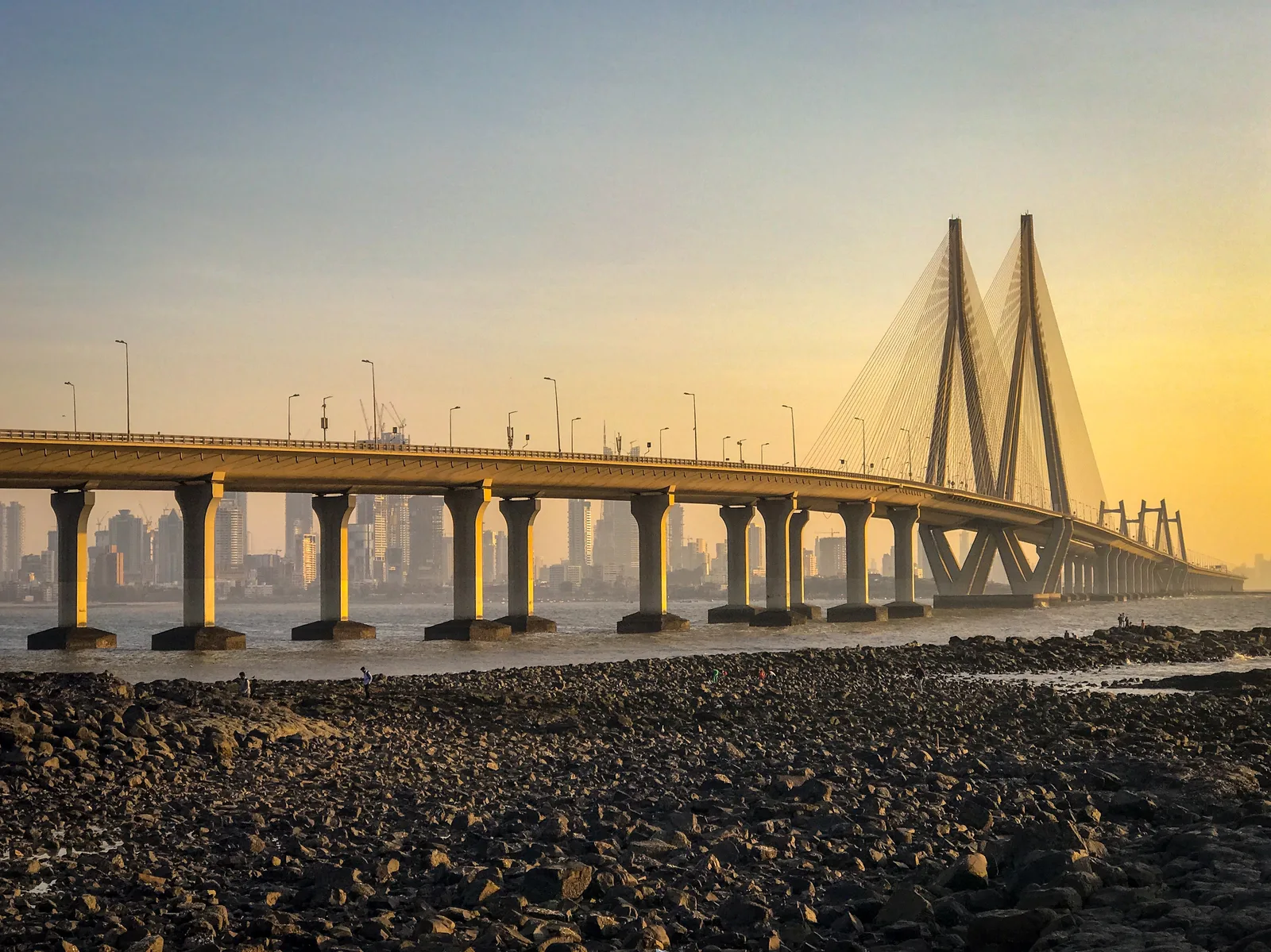
Down to the promenade, where the city sits on the stones with the sea and fans gather outside Shah Rukh Khan's house Mannat. The little Portuguese fort of Castella de Aguada is at the end, with the Sea Link stretched across the bay and the light going gold on the bridge.
Twenty minutes north by auto for sunset on the sand with the whole suburb, then the licensed stall row at the south end: pav bhaji, bhel, a gola ice. Pani puri is only worth it where the stall uses bottled water, and ₹200 feeds two.
Mahesh's Juhu branch for crab and tandoori pomfret without going back downtown. Or an auto to Bandra for Jai Hind Lunch Home if you missed it, and a drink on Linking Road's rooftops before the airport or the ride south.
Loading the map…
Pins are approximate. Tap one for the stop; the directions links open Google Maps.
The practical bits
From the airport
From Chhatrapati Shivaji Maharaj International (BOM), the Aqua Line 3 now runs from stations under both terminals to Churchgate and Cuffe Parade in about an hour for around ₹60, with no traffic to worry about; it is the best option with light luggage. The prepaid taxi counter in arrivals or an Uber from the signed pickup takes 45 minutes at dawn and 90 or more in the day, roughly ₹700 to ₹1,200 to Colaba. T1 handles some domestic flights and sits a short ride from T2.
What a day costs
About ₹2,500 to ₹4,500 a day per person for meals, tickets and trains; the ₹700 museum (audio guide included, camera pass ₹500) and the ₹600 caves are the big tickets. The Elephanta day costs about ₹900 more for the boat and the caves: the round-trip ferry is roughly ₹200 to ₹260 depending on the deck, plus a small village charge on the island. The Dharavi tour is ₹1,600, and a crab dinner at Trishna runs ₹2,500 a head.
Where to stay
Colaba and the Fort
The Gateway, the museum, the Causeway and the Victorian streets, with everything on day 1 and the Elephanta boat on foot. Old hotels; the Causeway end is loud into the night and the Fort is empty after dark.
Bandra West
Lanes of bungalows, cafés and bars, and the Bandstand sea front. Roughly halfway to the airport, a train or a Sea Link ride from the south.
Marine Drive and Churchgate
The sea wall, the Art Deco row and the Western line's terminus, with the Aqua Line underneath. Hotels with sea views, a walk to the Fort, and the sunset at your door.
Got a day to spare?
Kanheri caves, Sanjay Gandhi National Park
More than a hundred Buddhist caves cut into a forested hill inside the city's national park. Western line to Borivali in about 45 minutes from Churchgate, a small park fee at the gate, then a shuttle or a six-kilometer walk to the caves; foreigners pay a few hundred rupees for the ASI ticket and the caves close on Monday. Go early, before the heat.
Alibaug by ferry
Beaches, coconut groves and the Kolaba sea fort you walk to at low tide. The M2M ro-ro from Ferry Wharf to Mandwa takes about an hour, or a speedboat from the Gateway around 45 minutes, then a shared taxi to town; nothing sails in the monsoon.
Lonavala
The hill station on the Pune line, about two hours by train from CSMT or two and a half by road on the Expressway. Bhushi Dam, the Karla and Bhaja caves, and chikki from the sweet shops; green in the monsoon, dusty and quiet the rest of the year.
Worth knowing
Apply for the e-visa at indianvisaonline.gov.in between four and 120 days before you fly; the 30-day e-Tourist visa fee depends on the season (US$25 in the main season) plus a bank charge, and it is for arrival at Mumbai airport, not the port. Use the official site only.
Monday closes Elephanta and the NGMA, Sunday closes Britannia and Crawford Market, and Friday empties Chor Bazaar. Waystop's hours check flags a stop placed on its closed day. In July the monsoon can flood streets and stop the trains for hours, and the Elephanta boats do not sail.
Drink sealed bottled or filtered water and skip ice from carts. Street food here is good and licensed on Chowpatty (₹60 to ₹100 a plate) and Juhu; choose the busy stall, eat what is hot off the pan, and leave pani puri to stalls that show you the bottled water.
Tip around 10 percent in restaurants where no service charge is added, ₹50 to ₹100 for hotel porters, and round up taxis; Uber and Ola drivers do not expect one. Carry cash: taxis, autos, stalls and markets take notes, and UPI needs an Indian bank account.
Cover shoulders, knees and your head at Haji Ali and at temples, and wear shoes that slip off. October runs 91°F (33°C) and humid, so carry water and put the indoor stops in the afternoon.
Things you can ask once it’s in the app
Plans change. Ask Chat and it proposes a reshuffled day you can apply, or just answers the question.
We land on Sunday, so day 2 is a Monday. What replaces Elephanta?Rohan is vegetarian, what does he order at Britannia?When is low tide at Haji Ali on Thursday evening?We land at T2 with two big suitcases. Is the Aqua Line or a prepaid taxi the better ride to Colaba?Skip the Dharavi tour and give the morning to the Kanheri caves
Questions
Is three days enough for Mumbai?
Three days cover the south, the harbor and one day in the suburbs at a walking pace. The city is long and thin, so each extra day adds a neighborhood, not more sights: a fourth gets you the Kanheri caves or Alibaug.
Which day works in the rain?
Day 1: the museum, the Jehangir gallery and Britannia are under roofs and the Fort walk is short. Elephanta is a wasted day in rain and the boats may not sail; on day 3 the Bhau Daji Lad museum in Byculla (closed Wednesdays, so check its hours) is the indoor swap for the beach stops. Tell Waystop it is raining and it proposes a wet-weather day 2 next to the original.
Do I need to book Elephanta ahead?
No. Buy the ferry ticket at the Gateway booths and the cave ticket on the island. Be at the Gateway by 8:30 a.m. for the 9 a.m. boat, since the outbound boats stop in the afternoon, and avoid Monday, when the caves are closed.
Is a Dharavi tour the right thing to do?
It is a choice, not a sight. Reality Tours runs it with local guides, bans cameras and returns 80 percent of post-tax profits to its schools there; residents are used to the groups, and you book online a few days ahead. If it sits wrong with you, give the morning to the Dhobi Ghat and Bandra and nothing is lost.
Add your dates, your hotel and who’s coming, then ask Chat to change anything: it proposes the edit and you tap Apply. Want a long lunch instead of a museum? Just ask. Every place is checked against Google Maps before it lands on your day, and Chat can tell you when to leave for the next stop. Going on to another city? Build a multi-city trip.