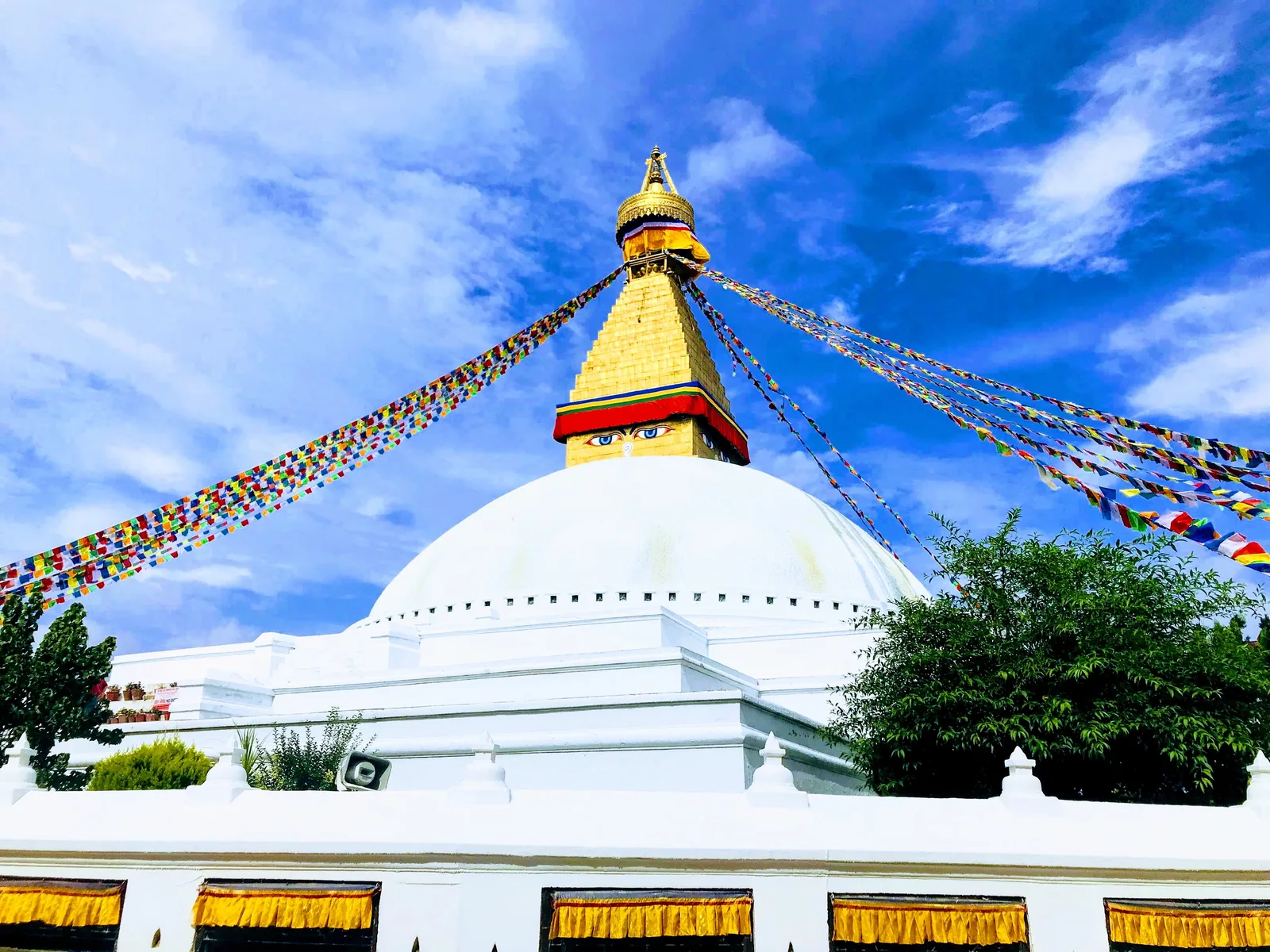
Three days across the Kathmandu Valley: the old royal square and the market lanes on foot, then Boudhanath, Pashupatinath and Patan, then a day in Bhaktapur with a Himalayan sunrise if you can face the alarm. Taxis between the sights and your feet inside the old towns.
October and November are the clear, dry weeks when the mountains show and the big festivals fall; book early. March and April are warm with rhododendrons on the hills but hazier. December and January are cold at dawn and smoggy by midday. June to September is monsoon: wet afternoons, low cloud, no views.
Where to base yourself
Thamel for the first visit: every taxi knows it, breakfast is on the doorstep and Durbar Square is a 20 minute walk. Patan is quieter and prettier, with the best Newari food, and Boudha is calm and monastic. Sleep in Bhaktapur on night two if you want Nagarkot without the two hour pre-dawn drive from the city.
Getting around
Taxis are small and everywhere; meters are rarely used, so agree the fare first or book through Pathao or inDrive, which fixes the price. Expect roughly Rs 300 to 800 for rides within the city and about 30 minutes to Patan or Boudha in traffic. The old towns are for walking; nothing in them is more than fifteen minutes from anything else.
Buy the Rs 1,000 ticket at any entrance; it covers the palace museum, which opens at 10. Take your passport to the office beside Kumari Ghar and the same ticket is extended for the length of your visa.
The house of the living goddess, on the south side of the square. You may enter the carved courtyard, and she appears at an upper window at set times; seeing her is free, and no photographs.
Walk the old trade route north from the square: bead sellers at Indra Chowk, then the spice, vegetable and brass stalls around the Annapurna temple at Asan. Mornings are the real market, and by afternoon it is motorbikes.
Trekking shops, bookshops, singing bowls and pashmina. Buy a down jacket here if you want one, not in Europe; haggle a little, but not over the price of tea.
Ten to fifteen minutes by taxi from Thamel. Take the eastern stairway, 365 steps, and keep snacks zipped away from the monkeys; the city turns gold below the stupa about an hour before dark.
Find a Thakali kitchen in Thamel and order the set: dal, rice, greens, gundruk soup and a curry, refilled until you say stop. Most Thamel kitchens close by ten.
Thirty minutes by taxi from Thamel. Walk the kora clockwise with the pilgrims while the butter lamps are still lit, then climb to a rooftop cafe on the ring for breakfast with the dome in front of you.
A 20 to 30 minute walk, or a short taxi, from Boudha. Non-Hindus cannot enter the main temple, so cross the Bagmati to the east bank terraces for the view; cremations happen on the ghats below, so stay back and keep the camera down.
Take a taxi across the river to Patan, about 30 to 40 minutes. Nandini, a few lanes north of Durbar Square, cooks bara and chatamari to order; finish with a yomari.
The Rs 1,000 ticket includes the Patan Museum and lets you come and go all day. Krishna Mandir, the stone temple of 1637, is fully restored; ask for the passport extension if you will be back.
Inside the old palace at Keshab Narayan Chowk: a fine bronze and repoussé collection, well lit and labeled, with a quiet garden cafe at the back. Go in by four, because it keeps shorter hours than the square.
Hiranya Varna Mahavihar, five minutes north of the square, is a working Buddhist courtyard with a small fee of about Rs 100; leave leather shoes and belts at the door. Then wander the courtyards west toward Pimbahal pond as the lamps come on.
A hole-in-the-wall behind the temple that has fed Patan for generations: choila, piro aalu, wo and a tin cup of aila. It shuts early, so eat at six, not eight; Honacha II beside Bhimsen Mandir is the fallback.
Optional: leave Bhaktapur or Thamel by 4 a.m. in a pre-booked taxi (roughly 1.5 to 2 hours from Kathmandu, 30 to 60 minutes from Bhaktapur) to reach the view tower at about 2,200 m before first light. The sun clears the ridge between 5:30 and 6:30 a.m. depending on the season, and only October to December and March to April give a reliable view.
The Rs 1,800 ticket covers the whole old town; show your passport at the counter and it is extended to a week for nothing. The 55 Window Palace and the Golden Gate are intact, and Vatsala Durga, rebuilt in 2021, was the last temple on the square to go back up.
Nepal's tallest pagoda, five tiers of 1702, came through 2015 with little more than cracks. Climb the plinth past the wrestlers and elephants, and sit with tea in the cafe in the pagoda opposite.
Eat a Newari set in one of the traditional houses around Taumadhi: samay baji, choila, bara and aloo tama, with a veg chatamari for vegetarians. Newa Lahana itself, the community-run kitchen this stop is named for, is in Kirtipur across the valley (see day trips), so it does not fit this day.
Two minutes south of Taumadhi. Wheels in the courtyard, rows of pots drying in the sun, and a kiln smoking in the corner; buy a small oil lamp straight from the maker.
Walk east through Tachupal Tole to the oldest of Bhaktapur's three squares. The Peacock Window is in a lane behind the Pujari Math, which also holds a small woodcarving museum with its own cheap ticket.
King curd, sweet and set in a clay pot, from any shop stacking the pots in its window; eat it there, and the pot is yours to keep. Then take a taxi back to Kathmandu, 30 to 45 minutes and about Rs 900 to 1,500, before the evening traffic.
Steamed buff or chicken momo with sesame chutney, then jhol momo in broth if it is cold. Any busy Tibetan kitchen on the back lanes will do, and the one with a line of Nepalis is the one.
Loading the map…
Pins are approximate. Tap one for the stop; the directions links open Google Maps.
The practical bits
From the airport
From Tribhuvan (KTM), use the prepaid taxi counter in the arrivals hall: about Rs 1,000 to Thamel, 20 to 30 minutes outside rush hour, no haggling. Pathao and inDrive cars cannot enter the airport, so an app ride means walking out to the Ring Road to save Rs 400. Buy a Ncell or NTC SIM at the airport counters; bring a passport photo for it and for the visa.
What a day costs
About Rs 4,000 to 7,000 a day per person, roughly US$30 to 50, for Newari meals, taxis and the heritage tickets, which are the big line: Rs 1,000 to 1,800 a site for foreigners. A Nagarkot taxi or a guided day adds Rs 3,000 to 5,000.
Where to stay
Thamel
The travelers' quarter: trekking shops, bakeries, bars and every kind of hotel. Noisy, convenient and twenty minutes on foot from Durbar Square.
Patan
The craftsmen's city across the river, with the valley's best food and courtyards that empty after dark. Quieter and lovelier than Thamel; thirty minutes from the airport.
Boudha
Monasteries, Tibetan kitchens and the stupa at the end of every lane. Calm from dusk to dawn and the right base if you want the morning kora without a taxi.
Got a day to spare?
Changu Narayan
The oldest temple in the valley, on a ridge above Bhaktapur with fine Licchavi stone carving. A 20 minute taxi from Bhaktapur; combine it with Nagarkot on the way down.
Kirtipur
A Newari hill town 20 minutes south-west of the city that the tour buses skip. Climb to Bagh Bhairab and Chilancho stupa, then eat at Newa Lahana, the community-run Newari kitchen by Bagh Bhairab.
Dhulikhel and Namobuddha
An hour east by taxi for a mountain horizon and the Namobuddha monastery, where the Buddha is said to have fed a tigress. Sleep in Dhulikhel for the sunrise if Nagarkot is full.
Worth knowing
Carry rupees in small notes. Every heritage ticket, taxi and khaja ghar is cash, and change for Rs 1,000 notes is hard to find in the morning.
Each Durbar Square ticket extends for free if you show your passport. Ask at the counter; it is never offered.
Early morning is the best hour in the valley, with clear air, pilgrims at the stupas and markets at full tilt. Put the walks before ten and the museums after.
Dust and traffic fumes are real from November to March. A mask for the taxi rides and the Ring Road helps more than you expect.
Shoes off and clockwise at every stupa and shrine, keeping the stupa on your right, and do not step on the thresholds.
Things you can ask once it’s in the app
Plans change. Ask Chat and it proposes a reshuffled day you can apply, or just answers the question.
Make a rain plan for day 3Is the Nagarkot sunrise worth it in late December?Which of these sites can a non-Hindu actually enter?What should a vegetarian order at the Newari places?How do I get from Pashupatinath to Patan by bus?
Questions
Is three days enough for Kathmandu?
Enough for the seven World Heritage sites at a real pace. A fourth day buys Changu Narayan and Kirtipur; a fifth, a night in Nagarkot or Dhulikhel with a proper mountain morning.
Do I need a visa in advance?
Most nationalities get a visa on arrival at the airport: US$30 for 15 days, US$50 for 30, US$125 for 90, paid in cash dollars at the bank counter. Fill in the online arrival form at nepaliport.immigration.gov.np within 15 days of flying and keep the barcode receipt; a dozen nationalities must apply at an embassy instead.
Which day works in the rain?
Day 2: the Patan Museum fills a wet afternoon, and Boudhanath's rooftop cafes are a good place to sit when it pours. Waystop's Chat can build a rain version of day 2 with the museum in place of the Swayambhunath climb.
How much of the earthquake damage is still visible?
Less each year. Boudhanath was rebuilt by 2016, Bhaktapur's last fallen temple went back up in 2021, Kasthamandap reopened in 2022 and Maju Dega in 2025. In 2026 you will still see scaffolding on a few temples in Patan and on the east side of Kathmandu's palace.
Add your dates, your hotel and who’s coming, then ask Chat to change anything: it proposes the edit and you tap Apply. Want a long lunch instead of a museum? Just ask. Every place is checked against Google Maps before it lands on your day, and Chat can tell you when to leave for the next stop. Going on to another city? Build a multi-city trip.