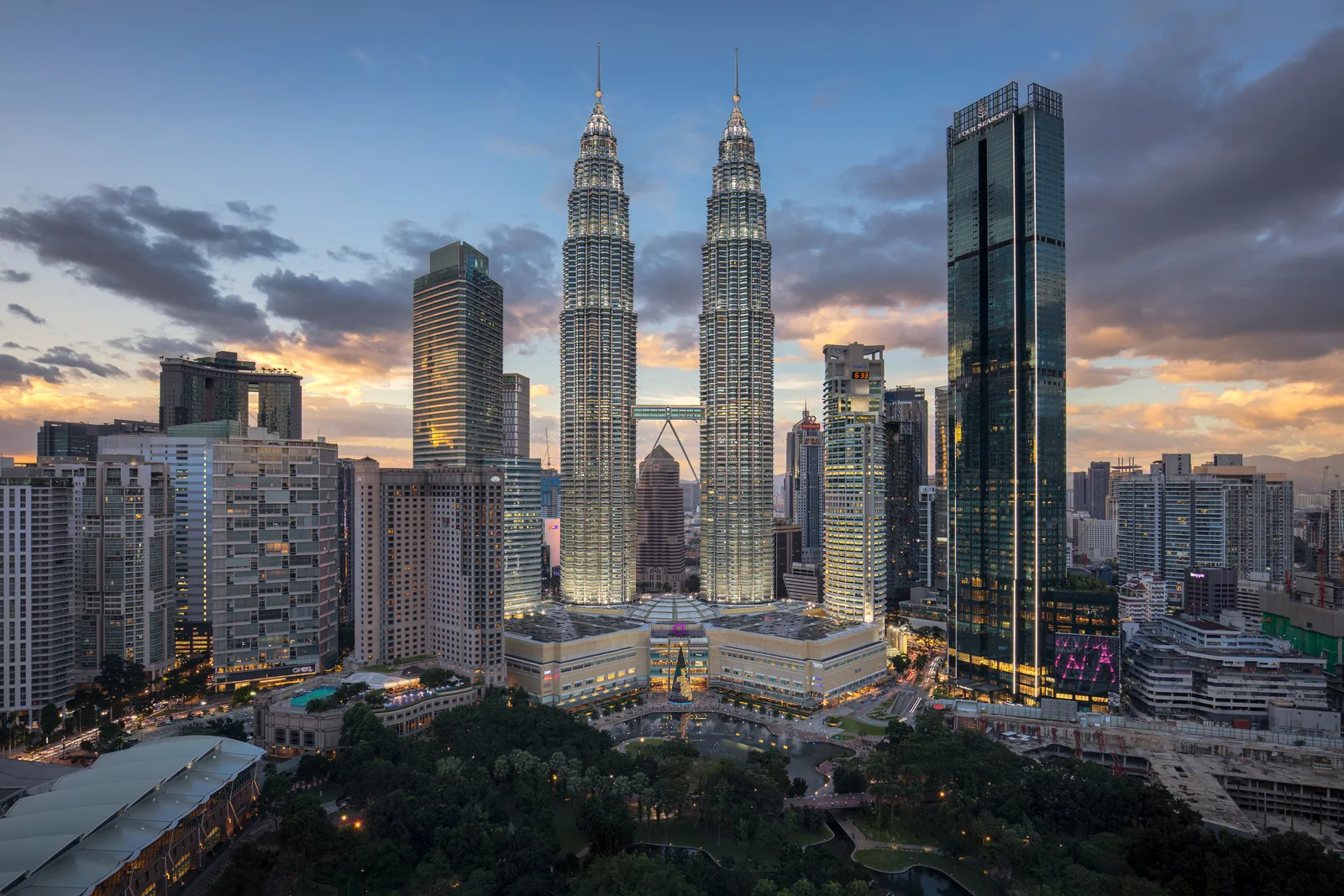
Three days built around the heat: the colonial core and Chinatown on foot, Batu Caves at opening and the Petronas skybridge after lunch, then a hilltop temple and a banana leaf lunch in Little India. Plan to be indoors for the afternoon storm.
It is 90 to 91°F (32 to 33°C) and humid in every month; the difference is the rain. Expect a storm most afternoons, heaviest from October to December and again around April. June to August is slightly drier. Thaipusam (January or February) fills Batu Caves with a million pilgrims, so go for the procession or avoid that week. During Ramadan the evening bazaars are worth planning around.
Where to base yourself
Bukit Bintang for food streets, malls and the Monorail and MRT; KLCC for the towers and the park; Chinatown around Pasar Seni for the old core and the LRT and MRT interchange. Bangsar is quieter and ten minutes by Grab from everything.
Getting around
Buy a Touch 'n Go card (RM 10) at any station or 7-Eleven and tap it on the MRT, LRT, Monorail, KTM and buses; most rides across the center cost RM 1 to RM 5. From January 2026 the tourist pass is the Rapid Kembara at RM 25 for a day or RM 55 for three, so it only pays if you ride a lot. Grab fills the gaps for RM 10 to RM 20 a hop; the lines do not reach Thean Hou or Kampung Baru's lanes.
The padang where the flag went up in 1957, with the Moorish clock tower across the road. Come early for shade and empty photos; Block 1 of the building reopened in 2026 after a year of restoration.
The 1909 mosque at the meeting of the two rivers. Visitors are admitted from about 10 a.m. to 12:30 p.m. and again mid-afternoon, never during prayers; robes are lent at the gate for covering shoulders and knees.
The cleaned-up confluence below the mosque, with a promenade along both banks. Walk south along the Klang toward Pasar Seni; the blue lights and mist are an evening thing if you come back.
A restored back lane off Lorong Panggung with murals of 1960s Chinatown and cafés in the shophouses. It is free and a twenty-minute wander, so pair it with a coffee when the rain comes.
Monorail from Maharajalela to Bukit Bintang, or a ten-minute Grab. Grilled chicken wings at Wong Ah Wah, satay from a cart, char kuey teow, then a plate of cut fruit; tables fill after 8 p.m.
RM 40
Day 2
Batu Caves at opening, then the gardens and the towers
Take the KTM Komuter from KL Sentral (about 30 minutes, RM 2.60, roughly half-hourly on weekdays) to arrive before the coaches and the heat. The 272 rainbow steps up to the Temple Cave are free; cover knees and shoulders (a sarong is sold or lent at the foot of the stairs) and hold your bag and sunglasses, because the macaques snatch.
Back on the train to KL Sentral, then a Grab or a fifteen-minute walk into the old Lake Gardens. Free, open 7 a.m. to 8 p.m., with the orchid and hibiscus gardens as the shaded part.
Across the road from the gardens: Qur'ans, architecture models and textiles under a tiled dome, and the coolest room in the city. Open 9:30 a.m. to 6 p.m. daily, last entry 5:30 p.m.
LRT from KL Sentral to KLCC in about 15 minutes, then a timed slot booked online a few days ahead. Hours are roughly 9 a.m. to 9 p.m. Tuesday to Sunday with a break for Friday prayers, and Monday is closed or limited, so confirm on the official site.
The mall at the foot of the towers, which is where you want to be when the storm breaks. Kinokuniya on the fourth floor for books, Aquaria KLCC in the convention center if you have children.
The lawn behind the mall with the towers lit above it. The fountain and light shows run from dusk into the evening; stand on the mall-side steps for the usual photograph.
Mamak food five minutes from the park: rice with curries you point at, roti canai, teh tarik, open round the clock. Or cross the Saloma Link to Kampung Baru for a Malay dinner under the towers.
RM 20
Day 3
Kampung Baru, Thean Hou, Little India and Bukit Bintang
LRT to Kampung Baru. Coconut rice with sambal, a fried egg and a boiled egg, eaten on a plastic chair with office workers; the chicken rendang is the one to add.
A Malay village of wooden stilt houses on the most valuable land in the country, with the towers rising behind the fruit trees. Walk Jalan Raja Muda Musa and the lanes off it; it is residential, so greet people and keep the camera low.
A twenty-minute Grab to the six-tiered temple to Mazu on Robson Heights; nothing else reaches it. Free, open 8 a.m. to 8 p.m., with the city laid out from the upper terrace and lanterns strung over the courtyard.
Downhill from the temple, a twenty-five-minute walk or a short Grab. Banana leaf rice comes as rice, three vegetables and curry spooned on, with fried chicken or fish on the side, eaten with the right hand if you like; fold the leaf toward you when you are done.
Jalan Tun Sambanthan under the painted arches: flower garland stalls, sari shops, the Sri Kandaswamy Kovil. Fifteen minutes on foot to KL Sentral when you are done.
Monorail from KL Sentral to Bukit Bintang in about 15 minutes. Pavilion and Lot 10 for the air-conditioned storm hours, Jalan Bukit Bintang for the people-watching once it clears.
A basement food court that gathered the city's old hawker names under one roof: Soong Kee beef noodles, Ho Weng Kee wantan mee, Campbell popiah. Order from three stalls and share.
A helipad turned rooftop bar on Jalan Sultan Ismail, with the towers at eye level; the cover charge includes a drink and it is dressy. The free version is the Saloma Link, the lit pedestrian bridge from Kampung Baru to KLCC, which glows from about 7 to 10 p.m.
Loading the map…
Pins are approximate. Tap one for the stop; the directions links open Google Maps.
The practical bits
From the airport
From KLIA (either terminal), the KLIA Ekspres runs non-stop to KL Sentral in 28 minutes for RM 55 one way; buy on the platform or in the app and tap through. KLIA Transit on the same line is slower and cheaper, and the Transit also stops at Putrajaya. A Grab takes 45 to 60 minutes and costs roughly RM 70 to RM 100 depending on the hour; the budget airlines use Terminal 2, which the train also serves.
What a day costs
About RM 150 to RM 250 a day per person for meals, tickets and transit. Hawker meals are RM 10 to RM 25, a mall restaurant RM 40 to RM 60, trains RM 1 to RM 5 a ride; the Petronas ticket at around RM 100 or more is most of the top end on day 2.
Where to stay
Bukit Bintang
Food streets and malls, on the Monorail and MRT. Jalan Alor is loud until around midnight, so ask for a room away from the street.
KLCC
The towers, the park and KLCC station on the LRT. The offices empty after about 6 p.m., and Kampung Baru is across the Saloma Link.
Chinatown and Pasar Seni
Shophouses, temples and Kwai Chai Hong, with Pasar Seni station on both the LRT and the MRT. Most of the old core is a short walk from there.
Got a day to spare?
Melaka
A Portuguese and Dutch port with Peranakan shophouses and a night market on Jonker Street at weekends. About two hours by bus from TBS; go early, back for dinner.
Genting Highlands
A cool hilltop of casinos and a theme park, reached by a cable car over the rainforest. About an hour by bus and gondola from KL Sentral; bring a jacket.
Putrajaya
The planned capital with the pink Putra Mosque and the bridges over the lake. About 20 minutes on KLIA Transit from KL Sentral, then a Grab around the sights; half a day.
Worth knowing
Plan the day around the weather, not the map: outdoors before 11 a.m., indoors from about 2 to 5 p.m. when the storm usually breaks, outdoors again at dusk.
A Touch 'n Go card does every train and bus; a Grab does the rest. Taxis at the curb will ask for a fixed price, so open the app instead.
Cover shoulders and knees for every mosque and temple, carry a scarf, and wear shoes that slip off. Mosques close to visitors around prayer times and all day on Friday.
Friday prayers run from about 12:30 to 2:30 p.m. Malay-run restaurants may shut briefly and Grab demand spikes, so put a museum or a mall in that slot.
Malay and mamak places are halal and serve no alcohol; Chinese and Indian restaurants and the bars do. Beer is taxed hard, so a pint in a rooftop bar costs what a dinner for two does on Jalan Alor.
Things you can ask once it’s in the app
Plans change. Ask Chat and it proposes a reshuffled day you can apply, or just answers the question.
Day 2 is a Monday, can we still go up the Petronas towers?We have a toddler, what is a gentler morning than Batu Caves?Where can we get a halal dinner near our hotel in Bukit Bintang?We finish at Thean Hou around noon, what is the easiest way down to Brickfields for lunch?It is pouring on day 1, which stops can we do indoors instead?
Questions
Is three days enough for Kuala Lumpur?
Yes. Three days covers the old core, Batu Caves, the towers and the neighborhoods that matter. With another day, go to Melaka or the Genting cable car; with five, Penang makes a long weekend.
Do I need to book the Petronas skybridge ahead?
Yes, the timed slots sell out on weekends and holidays. Book online a few days out for a mid-afternoon slot; a non-Malaysian adult pays roughly RM 100 or more, and Monday is closed or limited, so check the official calendar.
Which day works in the rain?
Day 2 after Batu Caves: the Islamic Arts Museum, its restaurant, the towers and Suria KLCC are all indoors. Tell Waystop it is pouring on day 2 and its Chat proposes an indoor version as a card, which you accept without touching the main plan.
Is Kuala Lumpur expensive?
No. Hawker meals are RM 10 to RM 25, trains are a few ringgit and most sights are free. The exceptions are the Petronas ticket at around RM 100 or more and anything with alcohol.
Add your dates, your hotel and who’s coming, then ask Chat to change anything: it proposes the edit and you tap Apply. Want a long lunch instead of a museum? Just ask. Every place is checked against Google Maps before it lands on your day, and Chat can tell you when to leave for the next stop. Going on to another city? Build a multi-city trip.