Which gives better odds: Iceland or Finland?
Finnish Lapland, for most people. The lights over Rovaniemi and Reykjavik come from the same band around the magnetic pole, and both cities sit under its southern edge in a normal winter: Reykjavik at about 64°N, Rovaniemi right on the Arctic Circle at 66.5°N. What decides your trip is how often you can see through the cloud to it.
The Finnish Meteorological Institute’s own figures make the point. It counts auroras on roughly 50% of nights at Lapland resorts like Levi and Ylläs and about three nights in four in the far north, on the condition that the night is dark and cloudless.
Iceland gets as much aurora overhead. The difference is weather. Reykjavik sits on the Atlantic, in the path of the lows that roll in from Greenland, so cloud and wind come and go in hours and whole weeks can stay overcast. Inland Lapland is drier and colder: when high pressure settles in, it can stay clear for days. The FMI’s advice says it plainly: a dark, cloudless night in Finland is almost always a cold one.
How the forecasts work in each country
In Iceland, use the Icelandic Met Office aurora forecast at vedur.is. Its map shows cloud cover across the country for up to six days ahead (green is cloud, white is clear), with an aurora activity score from 0 to 9 for midnight. The real use of the map is finding the clear hole: tours and drivers chase it, which is why an Iceland night can mean driving 90 minutes east to Hella or west to the Reykjanes peninsula.
In Finland, the FMI runs the space weather pages and a nowcast that can warn of a storm a few hours ahead. Because the sky is clear more often, Rovaniemi guides tend to drive 20 to 40 minutes to a lake or a hill rather than across the country.
Whichever you pick, give it at least three nights. One night is a coin toss in either place.
Light pollution and how far tours drive
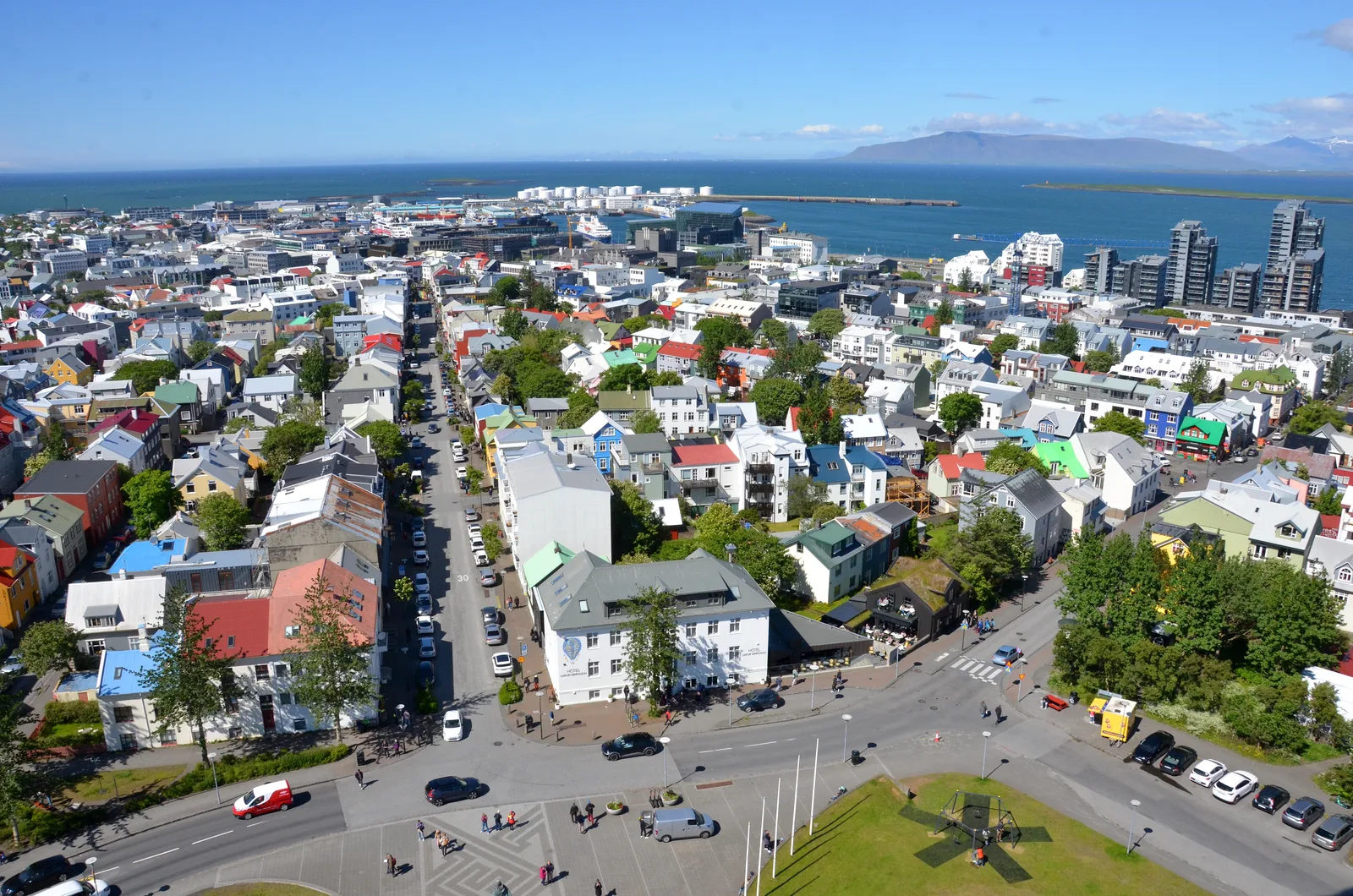
Reykjavik’s lights spread along the whole bay. On a strong night you can see the aurora from Grótta lighthouse at the tip of Seltjarnarnes, 15 minutes by bus or taxi from the center; most nights you need to be out of the capital area entirely. Without a car that means a tour.
Rovaniemi is darker sooner. Visit Rovaniemi lists Ounasvaara hill, the Arctic Garden behind Arktikum and Lake Olkkajärvi as public viewing areas, and frozen lakes with no lights at all start a short drive out.
Cold, daylight and what else the trip gives you
Rovaniemi is properly cold. Visit Rovaniemi gives January days of -22 to 5°F (-30 to -15°C) and December days of -4 to 14°F (-20 to -10°C). A midnight lake in that needs thermal layers, insulated boots and hand warmers, or a tour that lends you a snowsuit. In exchange you get snow that stays, huskies, reindeer, Santa Claus Village on the Arctic Circle and, in December, the full Christmas trip. Our Santa Claus Village in December guide has the hours.
Reykjavik hovers around freezing in winter, 32 to 37°F (0 to 3°C), with wind and rain or ice rather than deep cold. Days are short too, about four or five hours of light in December. What you get by day is the Golden Circle’s rift, geysers and waterfall, hot pools, lagoons and a lively small capital. If the aurora nights fail, the trip still works.
Reykjavik also has direct flights from many US cities; Rovaniemi needs a connection, usually through Helsinki.
Costs, loosely
Both are expensive. Meals and drinks cost more in Reykjavik; December hotels and glass igloos in Rovaniemi cost more than almost anything in Reykjavik. A standard aurora tour is similar in each: around ISK 10,000 to 15,000 for a big bus from Reykjavik, which Reykjavik Excursions rebooks for free if you see nothing, and usually around €90 to €150 for a smaller group hunt in Rovaniemi.
Which one we would pick
Pick Rovaniemi if seeing the lights is the main point, you are traveling with children, or you want snow and the winter activities, and you can take real cold. February and March are the best balance of dark nights, clear spells and daylight.
Pick Reykjavik if the aurora is one part of a wider trip, you want a city with food and pools, you hate deep cold or you have a long weekend from the US East Coast. Plan for some cloudy nights and keep each evening free so you can go when the map clears.
If you want the odds of Lapland with Iceland’s coastal scenery, Tromsø in Norway is the third answer; see our Tromsø northern lights tour guide.
On the day
Check the cloud forecast first and the aurora score second; a clear sky with a low score beats a high score under cloud. The best window is roughly 9 p.m. to 2 a.m. Wear more than you think: a hat, two pairs of gloves, wool socks and boots that grip ice. In Iceland, book a tour with a free retry and do it on your first night so you have spares. In Rovaniemi, keep phones warm in an inside pocket, as batteries die fast below 5°F (-15°C). Waystop’s Chat can move a dinner or a husky ride when the forecast shows the clear night is tomorrow.