Is Medellín safe right now?
Safe enough for an ordinary trip, if you treat it as a big city with specific risks. The US State Department rates all of Colombia Level 3: Reconsider Travel, in an advisory issued March 31, 2026, for crime, terrorism, civil unrest, kidnapping and natural disasters. That level has not changed since; the embassy’s own banner still shows it in November 2026.
The Level 4 Do Not Travel areas are Arauca, Cauca (outside Popayán), Valle del Cauca (outside Cali), Norte de Santander and the strip within 10 km of the Venezuelan border. Antioquia and Medellín are not on that list. The Guatapé day trip on the plan stays inside Antioquia.
Level 3 is a country rating. For a visitor to Medellín it comes down to two crimes: phones taken on the street, and people drugged and robbed after a date or a night out.
The dating-app and drugging warning
On July 22, 2026 the US Embassy in Bogotá sent a security alert called “Straight Talk About Crime in Colombia.” It repeats a warning the embassy has given since a run of deaths of US citizens in Medellín in late 2023, and it is blunt.
Criminals use dating apps to choose victims for robbery, sexual assault and other violent crime. Both men and women have been targeted, alone and in groups. The usual pattern: a match suggests a drink, then a move to the visitor’s rental or hotel, where a sedative goes into a drink and the room, phone and bank apps are emptied. The embassy says these drugs cannot be seen, smelled or tasted and are especially dangerous mixed with alcohol; some victims have died.
The drug people name is scopolamine (burundanga), though other sedatives are used too. Local press has reported scopolamine robberies in Medellín rising in 2026, with El Poblado and Laureles among the neighborhoods named; we could not check those figures against an official count, so treat them as a trend, not a number.
The embassy’s own advice, in short:
- Meet anyone new in a public place and tell a friend your plan.
- Screenshot the person’s profile, photos and ID and send them to that friend.
- Think hard before bringing a date to your room; make any visitor register at reception with a physical cédula, not a photo.
- Never leave food or a drink unattended, and do not accept a drink from someone you do not know well.
It also reminds visitors that soliciting sex from a minor is a crime in Colombia and that not knowing someone’s age is no defense.
Where to take care: El Poblado, Parque Lleras, Provenza
Parque Lleras is the center of the problem. The bars around it run until 3 a.m., and it is where drink spiking and dating-app meetings cluster. Go with people you know, keep your glass in your hand and leave by app taxi.
Provenza and Manila, a few blocks away, are restaurant streets: busy, lit and calmer. They are fine for dinner and a walk, which is how day 2 of the plan ends. Laureles is quieter and residential, with the same rules after midnight.
El Centro is a daytime place. Plaza Botero and the museums are crowded with vendors and pickpockets by day and empty after dark; the plan has you there in the morning and gone by late afternoon.
Getting around safely
Phone snatching is the most common crime a visitor will see. The embassy’s line is plain: do not use your phone on the sidewalk or near the curb; step into a shop first. Keep it in a front pocket, carry a bag in front and leave jewelry at home. If someone does rob you, hand it over; the embassy says robberies escalate fast.
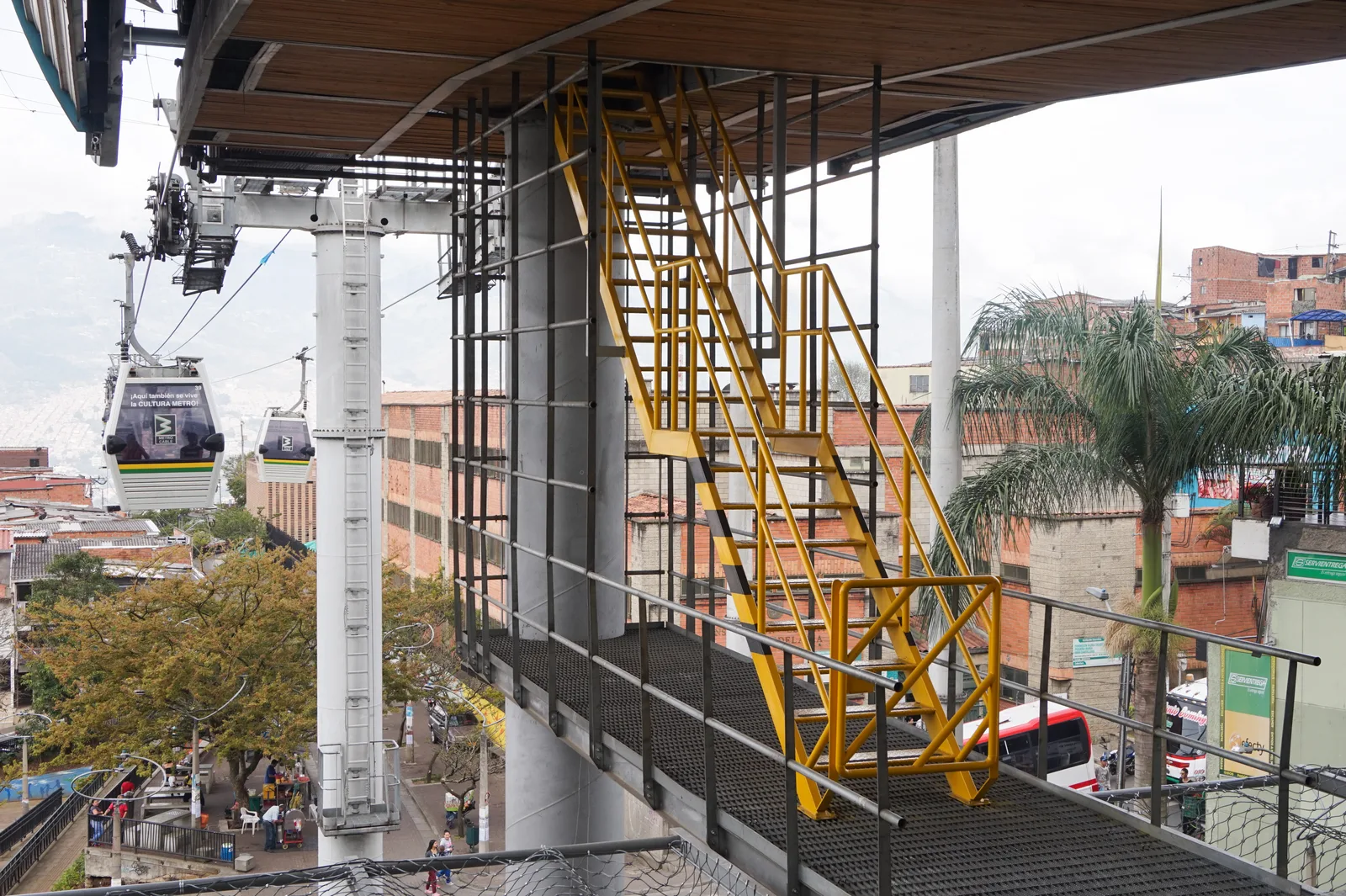
The Metro and Metrocable are clean, staffed and the easiest way across the city by day. Ride them in daylight and early evening, keep the phone away in crowded cars, and stay inside the system when you change to the cable lines.
At night, use an app taxi (Uber, Cabify, DiDi, inDrive) instead of hailing one on the street. US government staff in Colombia are barred from hailing street taxis and from public transport altogether, which says how seriously the embassy takes it.
Comuna 13 is safe by day with a guide. Go with a collective from the neighborhood such as Casa Kolacho, as the plan does, stay on the route around the outdoor escalators and leave before dark.
If something goes wrong
Call 123, the single emergency number for police, fire and ambulance in Medellín, answered 24 hours a day. If you think you were drugged, get to a clinic first; Colombian hospitals ask for payment up front, so carry travel insurance. File a police report for any theft, call your bank to freeze cards, and for a lost passport contact the US Embassy in Bogotá on +57 601 275 2000.
On the day
Carry one card and a little cash; leave the passport in the hotel safe with a photo on your phone. Enroll in STEP so embassy alerts reach you; the embassy posts new ones for strikes and protests, including one set for November 19, 2026. Plan the ride home before the first drink. Waystop’s Chat can tell you which stops on your day are best done before dark.