How the viewing works
The Chouara tannery is a working tannery, not a museum. It is a yard of stone vats in the medina of Fes el-Bali, the walled old city that UNESCO lists as a World Heritage site, where hides are soaked, scraped and dyed by hand much as they have been for centuries. Morocco’s tourism board lists the leather tanneries among the top sights in Fes, but there is no entrance, no ticket and no official viewing platform.
Instead, the tannery is ringed by tall leather shops, and each one has a roof terrace looking down on the pits. You walk in, climb three or four floors past the bags and jackets, and look out from the top. Someone will hand you a sprig of mint for the smell and explain the process: lime and pigeon droppings to clean and soften, then the colored vats.
Then comes the shop. The deal is unspoken but clear: the view is free, and in return you listen to the sales pitch on the way down and leave a small tip for the man who showed you up. Around 10 to 20 MAD a person is fair; no official page sets a figure. You do not have to buy anything. Say thank you, tip and leave.
How to find it
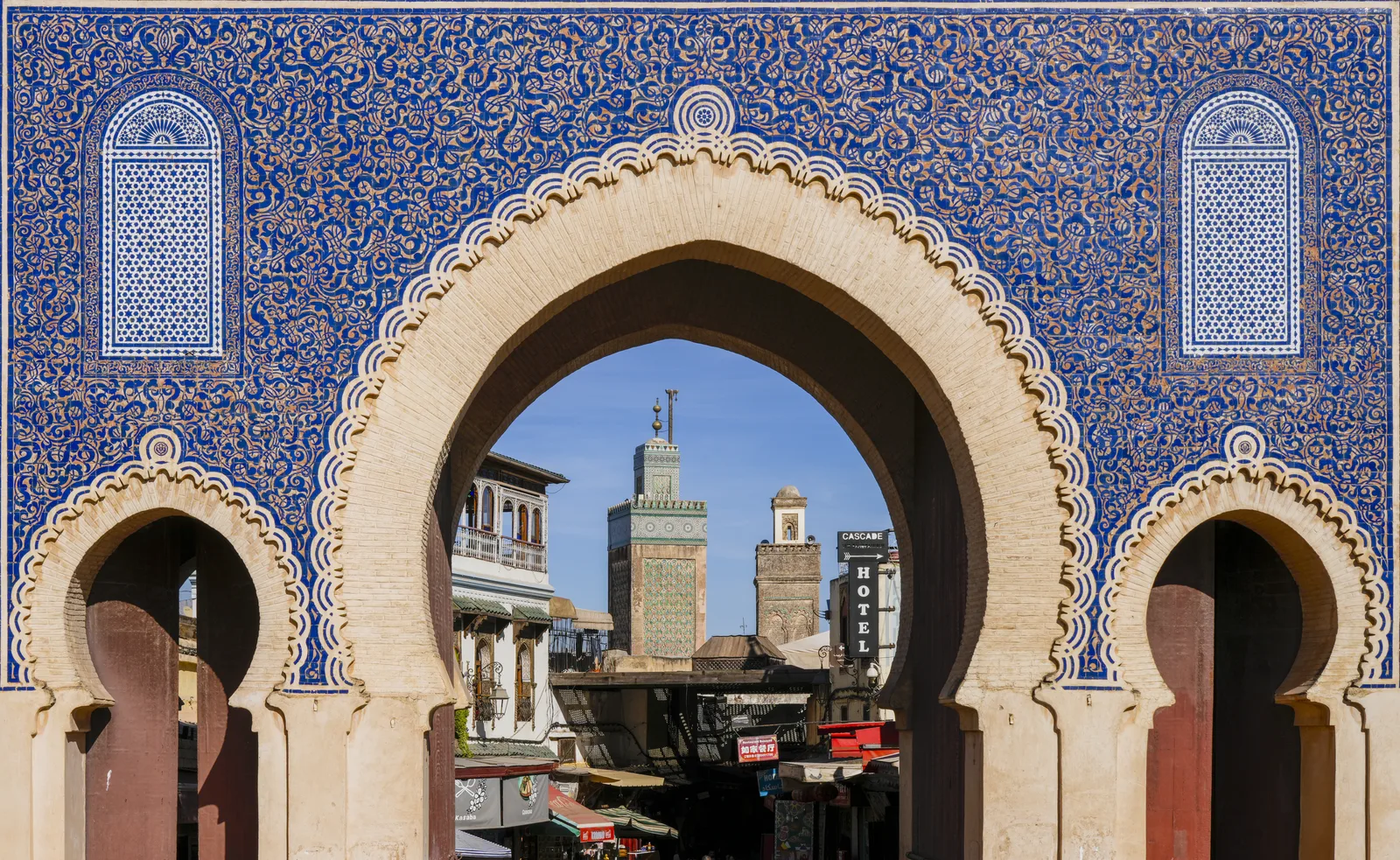
The tannery sits on Derb Chouara, a lane behind Place Seffarine, the square where the coppersmiths hammer pots all morning. From Bab Boujloud, walk downhill on Talaa Kebira to the Al-Attarine area, then follow the signs to Seffarine; it takes about 30 minutes at a sightseeing pace. Your map will be unreliable in the last few hundred meters. Listen for the coppersmiths, then follow your nose.
Any shop on the lane with “terrace” painted by its door gives the same view. Some terraces sit higher and face the larger vats; if the first one is crowded with a tour group, try the next door.
The “it’s closed” line and the touts
The most common trick at Chouara is a stranger telling you the tannery is closed today, or that this is the wrong way, or that today is the Berber tannery’s one open day. He then walks you somewhere else and asks for money at the end, or steers you to a shop that pays him. The tannery is not closed. Say “la, shukran” (no, thank you) and keep walking toward Seffarine.
Boys and young men near the lane will also offer to show you to “the best terrace.” If you accept, they will want paying too. You do not need them; every shop door on Derb Chouara leads up.
Best time to go
Morning. The tanners start early, the vats are full and the sun reaches the yard from mid-morning, which is when the colors photograph best. Aim to be on a terrace between about 9 a.m. and noon. In the afternoon the work slows and some pits are drained.
Season matters for the smell. From May to September the heat makes it strong enough that some visitors leave after five minutes. On a cool spring or fall morning it is much milder.
Quiet days. Friday is the weekly day of prayer; the shops usually open but there is less work in the pits, especially around midday. During Eid holidays and in Ramadan the rhythm changes again. None of this is published on an official page, so treat it as a rule of thumb and plan Chouara for a weekday morning.
Prices for leather
The shops are not cheap and open with a high price. Treat the first figure as a starting point and expect to settle well below it. Slippers (babouches) and small bags are the easy buys; jackets are where quality varies most, so check the stitching and smell the leather. Pay in dirhams, and do not feel obliged to buy at the shop whose terrace you used.
Hiring a licensed guide
Official guides in Morocco carry a badge, and in Fes you book one through your riad or the tourist office rather than in the street. The rate for a half day is a few hundred dirhams per group, not per person; the official figure is not published on a government page, so confirm the price before you set off. A guide will take you through the medina, the madrasas and the Kairaouine area and finish at a tannery terrace, usually a partner shop’s.
On the day
Carry small notes and coins for the tip, wear shoes you do not mind getting dusty and keep your phone or camera on a strap if you lean over the terrace edge. Arrive before noon. If anyone tells you the tannery is closed, it is not. On Waystop’s Fes itinerary, Chouara is the third stop of day 1, after breakfast at Bab Boujloud and the Bou Inania madrasa, so you reach it at the hour the light is best.