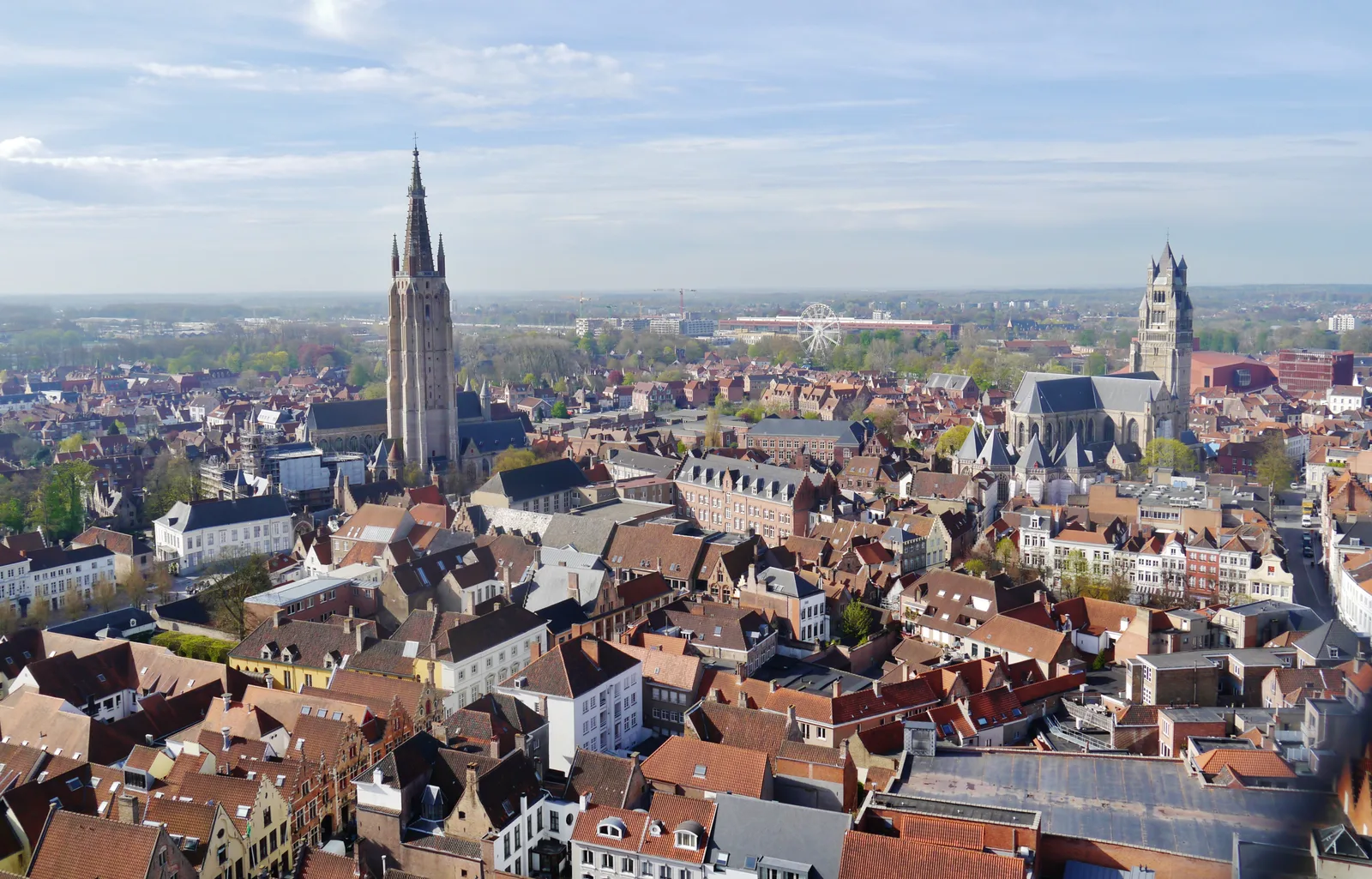
Two days in Bruges and one in Ghent, 25 minutes apart by train: the Belfry, a canal boat and the Flemish primitives, then the Begijnhof before the tour buses and a flat ride to Damme, then the Gravensteen and the Mystic Lamb before the last train. Mostly on foot, with a train to Ghent and a bike to Damme.
April to June and September to October are the sweet spots: long days, boats running, fewer tour buses than July and August. Bruges' Christmas market runs from late November into early January and the canals in frost are the best photographs of the year. Ghent empties and fills for the Gentse Feesten, ten days of street festival around the third week of July; book beds early or stay away. It rains in every month, so pack for it.
Where to base yourself
Sleep inside the Bruges ring, ideally east of the Markt around Sint-Anna or south toward the Minnewater, where the day-trippers do not reach and the evenings are quiet. Near the Markt is handsome and loud until midnight. The station area is practical and dull. Staying in Ghent instead is cheaper and livelier, with Bruges as the day trip; this itinerary works either way.
Getting around
Bruges is a walk: the ring is 2 kilometers across and nothing on these days is more than 20 minutes from the Markt. Bikes do the Damme ride; a day's rental is about €20. Ghent uses tram 1 from Sint-Pieters station to the Korenmarkt, about 15 minutes, and you can tap a bank card on De Lijn trams and buses. Between the cities the SNCB train runs at least every half hour, 22 to 28 minutes, about €8 one way; buy in the SNCB app, there is no tap-in with a bank card at Belgian stations.
Day 1
Bruges' center: the Belfry, the Burg and the canals
Book the first slot online the night before; the line builds from 10. It is 366 steps, opens 9 a.m. from April to early November (10 a.m. on winter weekdays), costs €15 in winter and €16 in summer, and is closed October 19 to 22, 2026.
Round the corner from the Markt: the gilded Stadhuis and the double-decker basilica. The upper chapel is free, 10 a.m. to 5:15 p.m.; the relic is out daily 2 to 4 p.m. and Friday mornings, and the treasury is €5.
Thirty minutes on the water from one of five landing stages, all the same price and none bookable; pay at the jetty. Boats run March to November, roughly 10 a.m. to 6 p.m., and the Huidenvettersplein stage lines less than the Rozenhoedkaai one.
A frituur by the Sint-Salvator cathedral, five minutes from the Burg; order a large cone with stoofvleessaus (beef stew gravy) on top and a side of andalouse. 't Brugsch Friethuys on Oude Burg is the back-up when the line is long.
The 115-meter brick tower; the nave is free. The museum section at the east end (around €8, opens after lunch on Sunday, covered by the Musea Brugge Card) holds Michelangelo's Madonna and Child and the tombs of Mary of Burgundy and Charles the Bold.
Across the Dijver, closed Monday; open 10 a.m. to 6 p.m. in summer, 9:30 a.m. to 5 p.m. from November to March. Six centuries of Flemish painting, with Van Eyck's Madonna with Canon van der Paele and a Bosch Last Judgement; ninety minutes is enough.
The postcard corner where the Dijver meets the Groenerei, 200 meters from the museum. The coaches leave around 4 p.m. and the light goes gold on the water; stay until the lamps come on, then walk the Groenerei.
Down an alley off Breidelstraat, between the Markt and the Burg: order the house Tripel van de Garre, 11 percent, with cheese cubes; they stop you at three. No reservations; 't Brugs Beertje on Kemelstraat has 300 beers if the alley is full.
Flemish cooking in a tiled room on Helmstraat: stoofvlees cooked in brown beer with frites, waterzooi, or rabbit with prunes. Book a day ahead, as it is small; Cambrinus on Philipstockstraat does the same stew with a 400-beer list for a cheaper night.
Day 2
Bruges' edges: the Begijnhof, Memling, Damme by bike and the brewery
The gate opens at 6:30 a.m. and the courtyard is yours until the groups arrive around 10; silence is asked for inside. Walk out the back gate to the Minnewater and over the bridge to the swans.
Five minutes up Mariastraat: an 800-year-old hospital ward with Hans Memling's six paintings in the old chapel, including the Shrine of St Ursula. Closed Monday; around €15, or free with the Musea Brugge Card.
Dominique Persoone's shop on Simon Stevinplein, three minutes from the hospital, with fillings like bitter cola and wasabi; buy a small box, not the big one. Dumon on the Eiermarkt is the classic alternative, pralines by weight.
Rent at Fietsen Popelier on Mariastraat: about €20 for the day, €15 for four hours, with a map. Ride out past the Kruispoort gate and follow the Damse Vaart, 6 flat kilometers to Damme in about 25 minutes.
A town of 11,000 that was Bruges' seaport in the Middle Ages. Tante Marie on Kerkstraat for a quiche or a croque; De Lieve on the Jacob van Maerlantstraat for a longer Flemish lunch.
Ride back along the canal and turn right onto the Kruisvest, where four windmills stand in a line. The Sint-Janshuismolen opens in the summer months for a few euros (closed Monday); return the bike on the way to the brewery.
The family brewery on Walplein, home of Brugse Zot and Straffe Hendrik: the 45-minute tour is €16 with a beer at the end; book online, as slots fill. Weekends add a 90-minute XL tour with three beers for €26.
Dinner in Sint-Anna, the quiet quarter east of the center, where locals eat. Rock Fort on Langestraat does small plates, so book; In 't Nieuw Museum on Hooistraat grills steak and ribs and takes walk-ins.
Day 3
Ghent by train: the castle, the Lamb and the lit-up quays
IC trains leave Brugge at least every half hour and take 22 to 28 minutes; about €8 one way in the SNCB app. From Sint-Pieters take tram 1 to the Korenmarkt (15 minutes, tap a bank card), then walk five minutes north to the castle.
The counts' castle, a 12th-century stone fort: opens 10 a.m. daily, last tickets 4:40 p.m., €15 with an audio guide that is funny about the counts. Book online for the first slot; the ramparts have the view over the three towers.
Two minutes south: the old grain port, guild houses on both banks of the Leie and students on the steps. Walk the Graslei side, cross Sint-Michielsbrug for the view down the river to the three towers, and come back along the Korenlei.
Back behind the castle, the Patershol is a knot of medieval lanes full of restaurants. 't Klokhuys on Corduwaniersstraat for Ghent stoverij or waterzooi at lunch prices; Souplounge on Zuivelbrugstraat for a big bowl of soup with bread and fruit for a few euros.
The Van Eyck brothers' altarpiece of 1432, with a timed ticket: €12.50 for the panels, €16 with the 60-minute augmented-reality tour, last AR entry 4 p.m. (Sunday only from 1 p.m.). The upper panels are away for restoration until spring 2027; the restored originals are at the MSK museum in the Citadelpark.
Across the square, the middle of the three towers, €13. There is an elevator from the first floor, so this is the climb for anyone who skipped the 366 steps in Bruges.
Both close Wednesday, so swap this stop for the MSK that day. The Design Museum on Jan Breydelstraat is €15 with Art Nouveau rooms; STAM, the city museum at the Bijloke, is €14 and lays Ghent out on a giant aerial photo.
On the Vrijdagmarkt, 250 beers and a ritual: order the Max, 1.2 liters on a wooden stand, and they take one of your shoes hostage in a basket until you return it. Het Waterhuis aan de Bierkant on the Groentenmarkt is the quieter choice.
A converted warehouse on Schuurkenstraat off the Korenmarkt: a long brasserie menu, oysters and a decent steak, open late and big enough for walk-ins. Balls & Glory on Jakobijnenstraat is the cheap alternative, with stuffed meatballs and stoemp.
Ghent lights its monuments after dark: stand on Sint-Michielsbrug for the three towers, walk the Graslei, then go back past the Belfry. Take tram 1 to Sint-Pieters; trains to Bruges run until around 11:20 p.m.
Loading the map…
Pins are approximate. Tap one for the stop; the directions links open Google Maps.
The practical bits
From the airport
From Brussels Airport (BRU), direct IC trains run from the station under the terminal to Bruges in about 90 minutes, roughly hourly, around €23 including the airport's €6.90 Diabolo supplement; otherwise change at Brussels-Midi, where trains to Bruges leave every half hour. From Charleroi (CRL), the Flibco bus to Brussels-Midi takes an hour, then the train. From London, the Eurostar reaches Brussels-Midi in 2 hours and any Belgian station is included in the fare if you book it that way.
What a day costs
About €90 to €130 a day per person for meals, tickets and trains. Museums and towers are €13 to €16 each, a canal boat €15, a beer €5 to €7, frites €5, a brasserie lunch €15 to €20 and dinner €30 to €45. The Ghent day costs €16 for the train plus whatever you climb.
Where to stay
Markt and Burg
The two squares, the Belfry and the canal corners everyone photographs. Everything is five minutes away, and so is everyone else; loud until the bars close.
Sint-Anna
East of the center inside the ring: the windmills on the Kruisvest, the Jerusalem Chapel, local restaurants on Langestraat and Hooistraat. Quiet streets, ten minutes to the Markt, where this plan eats on night two.
Minnewater and Walplein
The south of the city around the Begijnhof, the lake and the Halve Maan brewery. Residential, pretty, ten minutes from the station and fifteen from the Markt, with the early-morning Begijnhof on your doorstep.
Got a day to spare?
Antwerp
The cathedral's four Rubens altarpieces, the MAS museum on the docks and the station itself, one of Europe's grandest. An hour by direct train from Bruges; the Rubenshuis is closed for rebuilding until around 2030.
Ypres
The rebuilt Cloth Hall with the In Flanders Fields Museum, Tyne Cot cemetery outside town and the Last Post at the Menin Gate at 8 p.m. every night since 1928. About 1 hour 45 by train with a change at Kortrijk; a car or tour reaches the cemeteries.
The coast tram
Fifteen minutes by train to Ostend, then the Kusttram, the longest tram line in the world, 67 kilometers along the whole Belgian coast from De Panne to Knokke. Tap a bank card on board; ride to De Haan for the Belle Époque villas and a walk on the sand.
Worth knowing
Buy train tickets in the SNCB app and skip the machines. A Weekend Ticket is half price on any return from Friday 7 p.m. to Sunday night, which covers a Saturday in Ghent. Nothing is tapped with a bank card at Belgian stations yet, so have the ticket on your phone before you board.
Monday closes the Groeninge, Sint-Janshospitaal and the rest of Musea Brugge (the Belfry stays open); Wednesday closes the Design Museum and STAM in Ghent. Put Bruges' museums on days 1 and 2 and Ghent on a day that is not a Wednesday, or let Waystop's hours check flag the clash.
Bruges belongs to tour buses from about 10:30 a.m. to 4 p.m. The two hours before and the evening are the city in the photographs, which is why this plan starts at 8:30 a.m. and keeps the canals for dusk. The Musea Brugge Card (€49, 72 hours) pays off from four paid sites; for two or three, pay as you go. The €64.95 Museumpas pays off only if you are in Belgium for longer.
Frites are fried twice in beef fat and served in a paper cone with a sauce; a frituur with a line of locals is the sign. Waffles come in two kinds: the rectangular Brussels waffle, light, dusted with sugar, and the dense caramelized Liège waffle eaten plain and warm. The ones buried in strawberries and whipped cream are for tourists.
Service is included everywhere, so no tip is needed; round up a few euros if you want. Tap water is safe and Bruges has free fountains outside the winter months, though restaurants will try to sell you a bottle. Hotels add a tourist tax of €4.20 per adult per night, usually settled at checkout.
Things you can ask once it’s in the app
Plans change. Ask Chat and it proposes a reshuffled day you can apply, or just answers the question.
Our Ghent day lands on a Wednesday, what do we swap for the Design Museum?Rain on day 2, is the Damme bike ride still worth it?Book the Belfry and the Mystic Lamb slots for us, which times fit the plan?We do not drink beer; what replaces the brewery tour and De Garre?Can we fit Antwerp in on the way back to Brussels airport?
Questions
Is one day enough for Ghent?
Yes, for the castle, the Lamb, the Belfry, one museum and the quays at night; it is a compact center. A second day buys the MSK, the Vrijdagmarkt's market and a slower Patershol. Many people prefer sleeping in Ghent and giving Bruges the day trip instead.
Which day works in the rain?
Day 1 with the boat skipped: the Belfry, the basilica, the Groeninge and the Church of Our Lady are all under roofs within 300 meters. In Ghent, the Gravensteen, the cathedral crypt and the Design Museum are indoors. Waystop can build a rain plan: a second version of this day that you swap in when the forecast turns.
Do I need to book anything ahead?
The Belfry in Bruges, the Mystic Lamb's timed ticket and the Halve Maan tour all sell out on busy days, so book them a few days out. The Gravensteen is worth booking for the first slot. Boats, bars and most restaurants here take walk-ins.
Is the Musea Brugge Card worth it?
Only from four paid sites: three at about €15 each is €45, less than the €49 card. The card also covers the Belfry, the Gruuthuse and the windmills. For two or three sites, pay as you go.
Add your dates, your hotel and who’s coming, then ask Chat to change anything: it proposes the edit and you tap Apply. Want a long lunch instead of a museum? Just ask. Every place is checked against Google Maps before it lands on your day, and Chat can tell you when to leave for the next stop. Going on to another city? Build a multi-city trip.