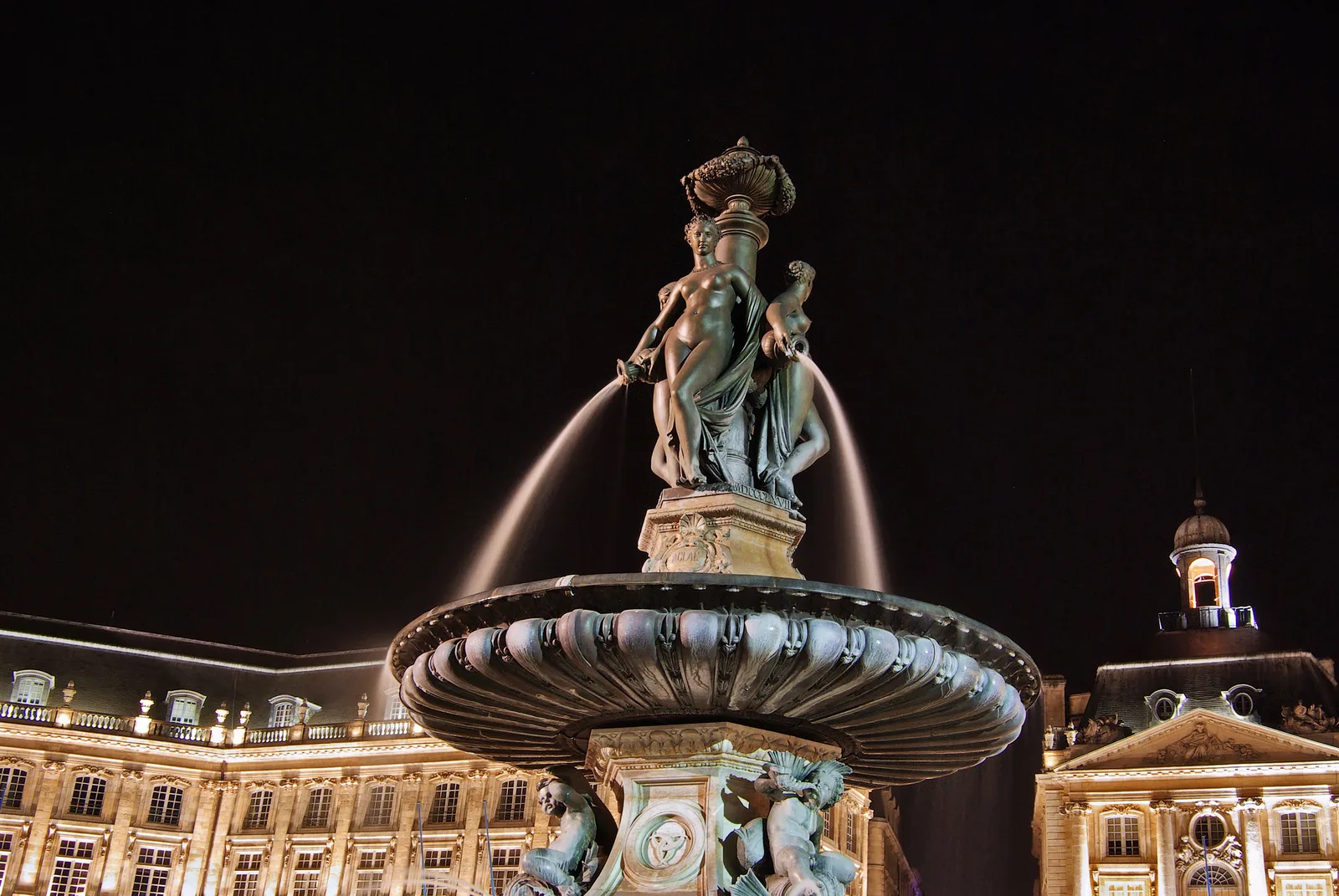
Three days on the Garonne: the old town on foot from the Miroir d'Eau to the Pey-Berland tower, a wine day from the Cité du Vin to a Saint-Émilion estate by train, then the Dune du Pilat and Arcachon oysters, or a Médoc château if you would rather drink than climb.
May, June and September are the months: warm, long evenings, the Miroir d'Eau running. Harvest is late September into October and the estates are busy but at their best. July and August are hot and the coast is packed; Bassin oysters are at their least good then too. Winter is mild and quiet, with the mirror switched off and short hours at the tower.
Where to base yourself
Saint-Pierre or around Place de la Bourse for the old town on foot and the river at night. Chartrons for wine bars and a calmer street life ten minutes north. Near Saint-Jean station is practical for the day trips but a tram ride from everything else.
Getting around
TBM trams A, B, C and D cross the center; a ticket is €1.90 and good for an hour of connections, €2.10 if you buy it from a bus driver. Buy in the TBM app or at the platform machines and validate on board; tapping a bank card on the validator was only being trialled on a couple of bus lines at the last check, so do not count on it. The old town, Chartrons and the right bank are all walkable from the quays.
The 18th-century square with a two-centimetre sheet of water in front. The mist cycle runs roughly every quarter hour from spring to fall, off in winter; go early for the reflection without the crowd.
Rue du Parlement Saint-Pierre, Place du Parlement, Rue des Bahutiers: the medieval port quarter behind the river façade. Coffee on Place du Parlement, then drift south toward the Porte Cailhau.
The 15th-century belfry over Rue Saint-James, the last gate of the old walls. Free to walk under and photograph; the inside opens only on tourist-office visits in summer.
The cathedral is free; the separate bell tower is 229 steps and €9 (free under 26), by timed e-ticket from pey-berland.fr, so book the day before. Summer hours are 10 a.m. to 6 p.m.; it shuts over lunch in winter.
The covered market ten minutes south, open Tuesday to Sunday mornings, shut Monday, with stalls closing around 1:30 p.m. Order oysters and a glass of white at Chez Jean-Mi's counter, or a plat du jour at a tapas or Basque stand.
Just over a kilometer of pedestrian street, Place de la Victoire to the Grand Théâtre. Chains at the south end, Galeries Lafayette in the middle; the side streets around Cours de l'Intendance have the better shops.
The city's rum-and-vanilla cake, caramelized outside and custardy inside. Baillardran is the famous name and on every corner; La Toque Cuivrée is cheaper and locals will argue for it.
The Girondins monument at the top of one of Europe's largest squares, then the river path north toward Chartrons or back south past the Bourse as the light drops.
One dish, no choice and no reservations: walnut salad, a sliced entrecôte in the secret sauce, thin fries, seconds brought to the table. Doors open at 7 p.m. and the line forms before; stand in it, it moves fast.
Tram B to the stop of the same name; open 10 a.m. to 7 p.m. April to October, 6 p.m. in winter, with a short closure in late January. The self-guided tour takes a good two hours and ends with a glass at the eighth-floor Belvedere.
Ten minutes on foot along the docks: the wartime submarine base turned into a projection hall. The 2026 program is Matisse and Frida Kahlo; buy a timed ticket online, most days close at 6 p.m. or 7 p.m.
Tram B two stops back to Chartrons, or a 20-minute walk down the quay. The antique dealers' street has a row of bistros: order the plat du jour and a glass of Côtes de Bourg.
The TER from Saint-Jean takes about 35 minutes and runs roughly hourly, around €10 each way; buy in the SNCF Connect app. The station is 1.5 kilometers below the village, a 20-minute uphill walk through the vines or a short tuk-tuk ride in season.
Château Villemaurine and Château Guadet are a few minutes' walk from the center and run visits with a tasting of two or three vintages; book a late-afternoon slot online a week or two ahead. Expect an hour and around €20 to €30.
The 12th-century church is seen only on the tourist office's guided tour from Place des Créneaux, around €10 to €15 and an hour, tickets on the day. Check the last departure on arrival; if you missed it, climb the bell tower above.
A wine bistro beside the church with a long list by the glass: duck, a cep omelette in fall. Check the last train back before you sit down, usually mid-evening; otherwise eat in Chartrons.
About 50 minutes from Saint-Jean, roughly twice an hour, around €12 each way. For wine instead, take the Médoc line: Margaux is 45 minutes, and Château Marquis de Terme or Château Ferrière are a walk from the station, booked ahead.
From the stop outside Arcachon station, 25 minutes to Dune du Pilat; it runs all year except Sundays and public holidays, with a 101 Express in July and August. Pay the driver or tap the Baïa app; the dune itself is free.
Europe's tallest sand dune, around 100 meters, with the Atlantic on one side and pine forest on the other. A staircase goes up from April to the fall, otherwise it is a slog in soft sand; carry water and go barefoot.
Bus back to the station, then two minutes to the covered market, where oyster stands serve six or a dozen with bread, butter and a glass of white for under €20. In July and August the oysters are milky from spawning.
Walk the Jetée Thiers and the beach, then up the hill behind the casino into the Ville d'Hiver, the 19th-century villa quarter built for winter cures. The Parc Mauresque viewpoint looks over the whole Bassin.
A former barracks on the Quai des Queyries turned into a street-art yard, indoor skatepark, workshops and organic grocery; free to walk around. Cross the Pont de Pierre on foot and look back at the left bank façade as the lights come on.
The big organic canteen in the old warehouse, open late Thursday to Saturday and until early evening the rest of the week. Burgers, a plat du jour and craft beer from the hall; eat outside in the yard when it is warm.
€25
Loading the map…
Pins are approximate. Tap one for the stop; the directions links open Google Maps.
The practical bits
From the airport
From Bordeaux-Mérignac (BOD), tram A runs from outside the terminal to the center in around 40 minutes for a normal €1.90 ticket; it is the option most people should take. The 30'Direct shuttle goes straight to Saint-Jean station in about half an hour for around €9 online or €10 on board, useful if you are connecting to a train. From Paris, the TGV from Montparnasse is just over two hours.
What a day costs
About €70 to €110 a day per person for meals, tickets and trams. A Saint-Émilion or Arcachon day adds €20 to €25 in trains, and an estate visit with a tasting €20 to €30 a head.
Where to stay
Saint-Pierre and the quays
The old port quarter behind Place de la Bourse: lanes, squares, the best evenings. Noisy on weekend nights around Place du Parlement; perfect for a first visit.
Chartrons
The old wine merchants' quarter north of Quinconces. Rue Notre-Dame's antique shops and bistros, the Sunday market on the quay, and a quieter night than the center.
Saint-Michel and Capucins
The basilica, the flea market under its spire, North African bakeries and the covered market. Cheaper rooms and the most mixed streets in the city; ten minutes' walk from the river.
Got a day to spare?
The Médoc by train
The TER stops at Margaux in 45 minutes and Pauillac in about an hour. Château Marquis de Terme and Château Ferrière are walkable from Margaux station; the Maison du Vin in Pauillac arranges visits. Book the classified growths two weeks ahead.
Cap Ferret
Across the Bassin from Arcachon by the summer boat from the Jetée Thiers, about 30 minutes. Oyster huts at L'Herbe and the lighthouse; the Atlantic beaches are a ten-minute cycle across the peninsula.
Blaye
Vauban's citadel on the right bank of the estuary, an hour by bus or a longer drive. Walk the ramparts over the Gironde and eat at one of the restaurants inside the walls; a half day is enough.
Worth knowing
Buy tram tickets in the TBM app or at the platform machine and validate every time; inspectors ride the trams and the fine is steep. A ticket covers an hour of changes.
Book the Pey-Berland tower's timed slot and the Saint-Émilion estate before you fly. The tower sells out on fine weekends and the good estates fill a week or two ahead.
Markets shut early. Capucins stops serving around 1:30 p.m. and is closed on Monday; the Sunday market on the Chartrons quay is a morning thing too.
Check the last train back from Saint-Émilion and Arcachon in the SNCF Connect app before you leave Bordeaux; evening services are thin.
Order a glass, not a bottle, in Bordeaux's wine bars: the list by the glass is how you learn the appellations in three days, and nobody blinks at a €5 glass of Médoc.
Things you can ask once it’s in the app
Plans change. Ask Chat and it proposes a reshuffled day you can apply, or just answers the question.
Swap day 3 to the Médoc; which château can I reach by train and book for two?What time is the last train back from Saint-Émilion on a Saturday?Is the Miroir d'Eau running in November?What can I eat at the Capucins market if I do not like shellfish?Rain on day 2: can I move the Bassins des Lumières and the Cité du Vin to fill the afternoon?
Questions
Is three days enough for Bordeaux?
Enough for the old town, one wine day and one day out. Add a fourth day for the Médoc as well as the coast; a fifth, the Bassin's oyster villages or a night in Saint-Émilion.
Do I need a car for the vineyards?
Not for Saint-Émilion or Margaux: both have TER stations within walking distance of estates that take visitors. Pomerol, Sauternes and the far Médoc are easier with a car or a small-group tour from the tourist office.
Which day works in the rain?
Day 2 in the city: the Cité du Vin and the Bassins des Lumières are indoors and take most of a day together, with a Chartrons wine bar after. In Waystop, ask Chat for a rain plan and it adds a second version of the day you can switch to.
Can I eat oysters in summer?
Yes; they are sold all year on the Bassin and at the Capucins. In July and August they are milky and softer because they are spawning, which is why locals wait for September.
Add your dates, your hotel and who’s coming, then ask Chat to change anything: it proposes the edit and you tap Apply. Want a long lunch instead of a museum? Just ask. Every place is checked against Google Maps before it lands on your day, and Chat can tell you when to leave for the next stop. Going on to another city? Build a multi-city trip.