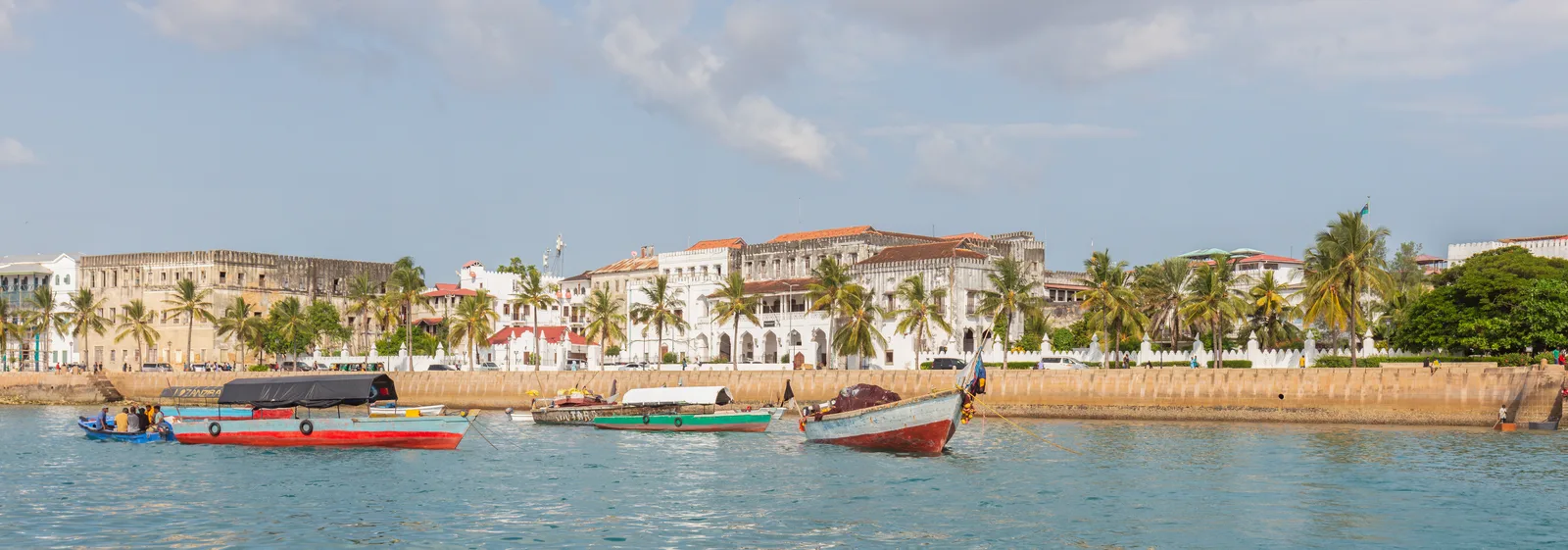
Two nights in Stone Town for the lanes, the night market and the islands offshore, then two on the coast: Nungwi or Kendwa for a beach that swims at every tide, and Paje for the low-tide flats and the kite lagoon.
June to October is the dry, cooler season: about 82°F (28°C), a steady south-east wind, little rain and the best months for the beaches. December to February is hot and humid, 90 to 93°F (32 to 34°C) with the north-east wind that brings the kiters, and the two weeks around Christmas is the busiest and priciest of the year. The long rains run from mid-March to the end of May, when some hotels close or discount hard; the short rains are brief afternoon downpours through November and early December. Ramadan moves 11 days earlier each year and falls in February and March in 2027: Stone Town is quiet by day, many cafes shut until sunset, and Forodhani comes alive after dark.
Where to base yourself
Two nights in Stone Town, in Shangani or Hurumzi so the lanes, the seafront and the night market are on foot. Then two nights in the north: Kendwa if you want to swim at any hour and watch the sunset from the sand, Nungwi if you want the dhow yard, the turtles and more restaurants. Paje or Jambiani on the east coast is the alternative base for the last two nights if you kite or want quiet and do not mind planning your swims around the tide.
Getting around
Taxis are priced per car, not per person, and quoted in dollars: about $35 to $50 from Stone Town to Nungwi (1 hour 15), about $40 to Paje or the airport (1 hour), and $50 to $60 across the island from the north coast to the east. Agree the price before you get in and have your hotel call the driver. Dala-dalas, the shared minibuses, leave from Darajani in Stone Town when full: TSh 3,000 to Nungwi or Paje, 1.5 to 2 hours, no room for suitcases. Ride-hailing apps barely work outside town. Stone Town itself is a maze of lanes a few hundred meters across; walk it, and let yourself get lost, because every lane ends at the sea or at Creek Road.
Day 1
Stone Town on foot: the fort, the doors, the market and the rooftop
FromYour hotel in Stone Town: Shangani and Hurumzi
The Omani fort on the seafront is free to walk: an amphitheater, craft stalls, a cafe in the courtyard. The House of Wonders next door lost its front in the December 2020 collapse and is still scaffolded with no reopening date, so look from Forodhani and move on.
Walk inland from the fort with no map and look at the carved doors: square-framed Arab doors with Koranic script, Indian ones with rounded tops and brass studs. Jaws Corner, a small square where men play dominoes, pours kahawa chungu, bitter spiced coffee, for a few hundred shillings.
The Anglican cathedral stands on the site of the last open slave market in East Africa. The $5 ticket (about TSh 12,000) includes a guide, the two underground holding chambers and the chained figures in the pit outside; go in the morning for an hour, before the tour groups.
A canteen a few steps from the cathedral where Stone Town eats lunch: point at the trays of pilau, biryani, octopus in coconut, grilled fish and spinach, and pay in shillings, around TSh 10,000 to 15,000 a plate with a juice.
The covered market on Creek Road: the fish hall is loudest at 8 a.m., so by early afternoon you get the spice stalls, the fruit and the fabric with half the people. Buy cloves or a kanga here rather than on a spice tour, and hold your bag in front of you.
The heat peaks now and the lanes empty. Rest, then walk the seafront past the Tembo House and the Africa House to the little beach where the boats to Prison Island wait; you will need it tomorrow.
The stalls light up at sunset in the gardens below the fort. Order a Zanzibar pizza (a stuffed crepe fried in front of you), sugar cane juice and grilled cassava, and skip the seafood skewers and lobster on the tables, which were cooked hours ago.
A set three-course Swahili dinner on floor cushions on the roof, $45 a head without drinks. Guests go up from 6 p.m. for the sunset and service starts at 7 sharp, so arrive by 6:45 p.m.; reserve with a deposit the day before, as seats are limited.
$45
Day 2
Spices inland, tortoises offshore, a dhow at sunset
FromYour hotel in Stone Town: Shangani and Hurumzi
The farms are 20 minutes inland; book through your hotel or an agent on Kenyatta Road the day before, about $25 a head in a small group, three to four hours with transport. You crush cloves, cinnamon bark and vanilla and finish with a fruit tasting; buy spices at Darajani, not at the farm gate.
A local canteen on Malawi Road by the port, back in town: fish or chicken pilau, beans in coconut, a chapati, a passion juice, for a few thousand shillings. Cash only.
Boats wait on the beach between Forodhani and the Tembo House: about $20 to $30 per boat for the round trip, 20 to 30 minutes each way, and they wait while you visit. Budget $10 to $15 a head in cash for the island fee; the giant tortoises eat spinach from your hand, and the island closes around 4:15 p.m.
On Kenyatta Road in Shangani, the house where Farrokh Bulsara's family lived before he became Freddie Mercury. The museum inside is open daily 9 a.m. to 8 p.m. for a small fee in dollars; twenty minutes of photographs and letters.
A shared sunset sail on a traditional dhow from Shangani beach takes about 90 minutes and costs $15 to $20 a head with a drink; book with the same captains in the morning. The Africa House terrace is the dry-land version with a beer.
Three floors and a roof terrace a street back from the seafront, where you can walk in for grilled changu (snapper) or kingfish, an octopus curry and Swahili and Indian dishes, mains around $8 to $15. 6 Degrees South on the seafront is the pricier alternative with cocktails.
Day 3
North to Nungwi and Kendwa: a beach that swims at every tide
FromYour hotel in Stone Town: Shangani and Hurumzi
A taxi up the one good road north is about $35 to $50 per car and 1 hour 15; the dala-dala (route 116 from Darajani) is TSh 3,000 and about two hours, with no room for suitcases. Check out, and send the bags with the taxi if you ride the bus.
At the northern tip the sand drops straight into deep water, so unlike the east coast you can swim here at any hour. Walk north past the hotels to the fishing village, where men still build dhows by hand with adzes and no plans, and the fleet comes in mid-morning.
A natural tidal pool below the lighthouse where injured and hatched green and hawksbill turtles are kept until release; about $10 (around TSh 25,000), open 9 a.m. to 6 p.m., with a guide and seaweed to feed them. It is the more conservation-minded of the two turtle pools in Nungwi; skip the one that sells swimming with the turtles.
Kendwa is 3.5 kilometers south. At low tide you can walk it along the sand in about 45 minutes under the cliffs; at high tide the beach is cut off in places, so take a taxi or a bajaji for about TSh 10,000, then swim on the wider, west-facing beach.
The sun drops into the sea at about 6:30 p.m. in front of the whole beach. Take beanbags and a cold Kilimanjaro at Kendwa Rocks or any bar along the sand; the full-moon party at Kendwa Rocks is the loud night of the month.
Tables on the beach, grilled kingfish, prawns or a seafood platter for two, cooked over coals; around $15 to $25 a head with a beer. Agree the price of a whole fish or lobster before it goes on the grill, as everywhere on the island.
Day 4
East: the monkeys, the tide and the kite lagoon on the way to the flight
FromYour hotel in Stone Town: Shangani and Hurumzi
A taxi from Kendwa to Paje with a stop at Jozani is about $50 to $60 per car and two hours of driving in all, through the middle of the island past rice paddies and clove villages. Leave the bags in the trunk for the day.
The red colobus, a monkey found nowhere else, sits in the trees a few meters from the path and does not run. The fee is about $10 to $12 for foreigners, paid by card at the gate, and includes a guide for the 40-minute forest loop and the mangrove boardwalk; open about 7:30 a.m. to 5 p.m.
Twenty minutes on, a cafe on the beach at the south end of Paje: proper coffee, a fish taco or a salad, a fresh juice, with the lagoon in front of you. Around $10 a head.
The east coast sits inside a reef, so twice a day the sea drains across the flats and the beach becomes sand and rock pools. Swim within about two hours of high tide and walk out to the reef at low; check a tide table the night before, because it shifts by about 50 minutes a day.
At low tide the plots of the women's seaweed farms show as rows of stakes in the shallows, and the Seaweed Center in Paje village runs a short tour and sells soap made from the harvest. If the tide is high, walk south toward Jambiani instead: an hour of sand, fishing boats and village life.
Paje to the airport is about an hour and $40 per car. Eat before you go, at Blue Oyster in Jambiani (grilled fish on the terrace) or back at Mr Kahawa; international flights leave from Terminal 3 and domestic ones from Terminal 2, so be there two and a half hours early.
Loading the map…
Pins are approximate. Tap one for the stop; the directions links open Google Maps.
The practical bits
From the airport
Abeid Amani Karume International (ZNZ) is 6 kilometers south of Stone Town; international flights use Terminal 3, opened in 2021, and domestic ones Terminal 2. The taxi counter in arrivals charges about $15 to $20 per car to Stone Town for a 15-minute ride, about $40 to Nungwi or Kendwa (1 hour 15) and about $40 to Paje (1 hour); most hotels send a car for the same money if you ask. From Dar es Salaam the Azam Marine ferry runs four or five times a day, takes about two hours and costs $35 one way in economy for non-residents; you need your passport to board and to clear Zanzibar's own immigration desk.
What a day costs
About $40 to $70 a day per person for meals, tours and shared taxis. A canteen lunch is TSh 10,000 to 15,000, a beach restaurant dinner $15 to $25 with a beer, the spice tour about $25, Prison Island about $25 with the boat split two ways, and a cross-island taxi $50 shared. The $44 insurance and the $50 to $100 visa are on top, once.
Where to stay
Stone Town: Shangani and Hurumzi
The lanes, the doors, the rooftops and the night market. Hot by day, quiet by night, and the only part of the island where you walk to everything.
Nungwi and Kendwa
Deep water at every tide, dhows on the beach, bars on the sand and the sunset. The busiest coast, and the one that suits a first visit.
Paje and Jambiani
The kite lagoon, seaweed farms, village life and a beach that comes and goes with the tide. Kite season is mid-December to February (north-east wind) and June to September (south-east); April, May and November are flat.
Got a day to spare?
Mnemba snorkeling
The atoll off the north-east coast, with the island's clearest water and a good chance of dolphins on the way. Shared boats leave from Nungwi, Kendwa or Matemwe for about $30 to $50 a head including a marine reserve fee; you cannot land on the island. Go in the morning before the wind.
Safari Blue
A full day on a dhow from Fumba, 45 minutes south of Stone Town: snorkeling on the reef, a sandbank at low tide, a seafood lunch on Kwale island and a swim in the mangrove lagoon. $85 an adult on the original operator's own site, transfers extra; book a day or two ahead.
Nyerere (Selous) or Mikumi safari
Light aircraft fly from Zanzibar to the Nyerere National Park airstrips in about 45 minutes, and to Mikumi a little further. A fly-in day is possible but rushed and costs several hundred dollars; two nights in a camp on the Rufiji is the version that works, and you fly back to Zanzibar or Dar for the flight home.
Worth knowing
Zanzibar's mandatory travel insurance, introduced in October 2024, is $44 per visitor for a stay of up to 92 days. Buy it at inbound.visitzanzibar.go.tz before you fly, pay by card and keep the QR code on your phone for arrival; it can be bought at the airport, but that is one more line. Your own policy does not replace it.
Most passports need a Tanzania visa: apply for the e-visa at visa.immigration.go.tz two to three weeks ahead, $50 for a single entry and $100 for US citizens, who are issued a multiple-entry visa. Visa on arrival still exists at the airport for cash dollars, but the line is long after a night flight.
Cover shoulders and knees in Stone Town and in the villages, and keep swimwear for the beach. Zanzibar is almost entirely Muslim; in Ramadan do not eat, drink or smoke in the street by day, expect many cafes to close until sunset, and dress a notch more carefully.
Carry both currencies. Hotels, taxis, tours and island fees are quoted in dollars and want clean notes printed in 2009 or later; food, dala-dalas, markets and tips are in shillings, at roughly TSh 2,500 to the dollar. ATMs are reliable in Stone Town (CRDB, NMB, with a TSh 400,000 limit per withdrawal) and thin on the coasts, so draw cash before you leave town. Tip about TSh 5,000 to 10,000 for guides and boat crews, $5 to $10 a day for a driver and 5 to 10 percent in restaurants.
Malaria is present across the island all year. Take the prophylaxis your doctor prescribes, use repellent from dusk and sleep under the net. Plastic carrier bags are banned in Tanzania and can be confiscated at the airport, so pack a cloth bag.
Things you can ask once it’s in the app
Plans change. Ask Chat and it proposes a reshuffled day you can apply, or just answers the question.
Swap Nungwi for Paje on day 3 and tell me when high tide isFind a spice tour that picks up from our hotel in ShanganiRain is forecast for day 1, what moves inside in Stone Town?We fly out at 11 p.m. on day 4, is there time for Jozani and a swim?Add a Mnemba snorkeling morning from Kendwa
Questions
Is four days enough for Zanzibar?
Yes, for Stone Town and one coast, with the east seen on the way to the flight. A fifth day adds Mnemba or Safari Blue; a week lets you sleep on both coasts and add two nights of safari on the mainland.
Do I still need the Zanzibar insurance if I have travel insurance?
Yes. The $44 policy from the Zanzibar Insurance Corporation is compulsory for every visitor and is checked at arrival; no other insurer's policy is accepted in its place.
Which day works in the rain?
Day 1: the cathedral, the market and the lunch are covered, the lanes are fine under an umbrella and the Tea House dinner has a roof. Waystop's rain plan can add a version of day 2 that holds Prison Island for a dry window, because the boats do not run in a squall.
North coast or east coast?
North if you want to swim whenever you like: Nungwi and Kendwa face deep water and the sunset. East if you kite, want quiet and the long low-tide walks, and can plan your swims around a tide table. Nungwi and Paje are two hours apart by taxi, so most people choose one.
Add your dates, your hotel and who’s coming, then ask Chat to change anything: it proposes the edit and you tap Apply. Want a long lunch instead of a museum? Just ask. Every place is checked against Google Maps before it lands on your day, and Chat can tell you when to leave for the next stop. Going on to another city? Build a multi-city trip.