Finding your riad. Taxis stop at the medina edge. Send the riad your arrival time and most will meet you at the nearest gate or square and walk you in. Save the pin and a photo of the door, because signal drops under the roofs.
Dirhams. A closed currency: you cannot buy it before you go and may take only 2,000 MAD out, so draw what you need and spend it down. Bank ATMs give around 2,000 MAD a go, and since January 2026 every Moroccan bank adds a fee on foreign cards, usually about 35 MAD. Cards work at riads, Gueliz restaurants and online for Majorelle; souks, taxis, food stalls and most ticket desks are cash.
Bargaining and the helpful stranger. Souk prices are opening bids: start around a third, settle near half, walk away once; check the Ensemble Artisanal’s fixed prices first. The man who says the lane is closed or the tannery is open today will walk you somewhere and expect to be paid; licensed guides carry an official badge. Say “la, shukran” and keep moving. A photo of a snake, a monkey or a henna hand is a transaction, so agree 20 MAD first.
Jemaa el-Fnaa at night. The food stalls set up at dusk. Pick a numbered stall with Moroccans at it, read the board, and wave off the bread and salads if you do not want them on the bill; a plate is 50 to 100 MAD. Bags in front; pickpockets work the crowd.
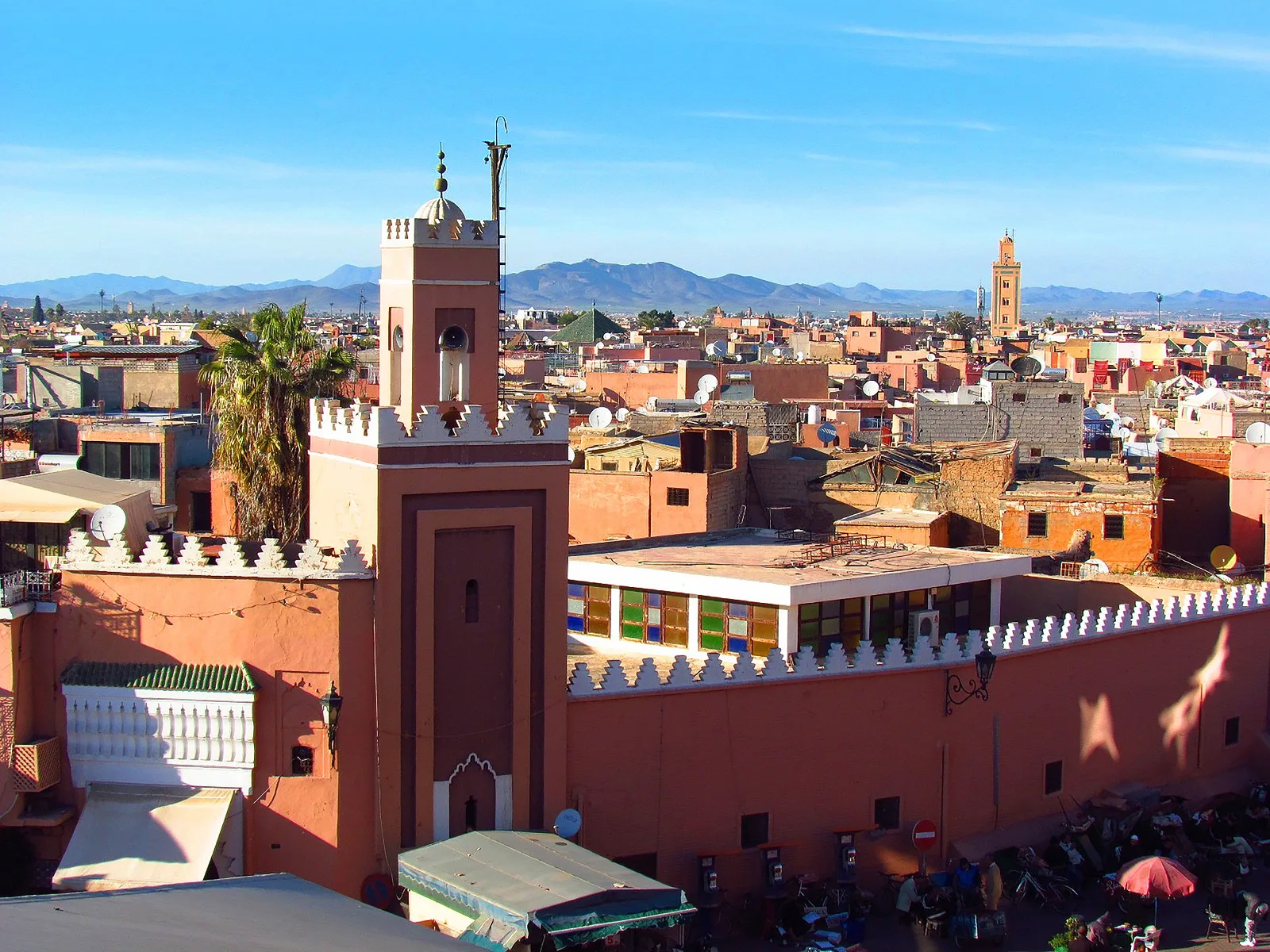
Mosques and dress. Non-Muslims cannot enter working mosques anywhere in Morocco; the Koutoubia is admired from the rose gardens on its south side, and the one exception is the Hassan II Mosque in Casablanca, by guided tour for 140 MAD. Cover shoulders and knees in the medina, men too; it is not a law, it is how you get left alone.
Friday and Ramadan. Friday is the holy day: souk stalls thin around the midday prayer and reopen by mid-afternoon; palaces and museums stay open. Ramadan is expected from about February 8 to March 9, 2027: sights close early, medina cafés go quiet by day and the square fills after sunset. Do not eat, drink or smoke in the street in daylight.
Petit taxis. Beige, three passengers, and metered if you say “compteur” before you get in. Across town is rarely more than 30 MAD by day and about half again after 8 p.m.; the airport is officially 70 to 100 MAD and the taxi stand asks double.
On the day. Draw cash at a bank ATM as you need it, pin the riad door, decline the first three offers of help, and let Waystop’s hours check flag any museum on its closed day.