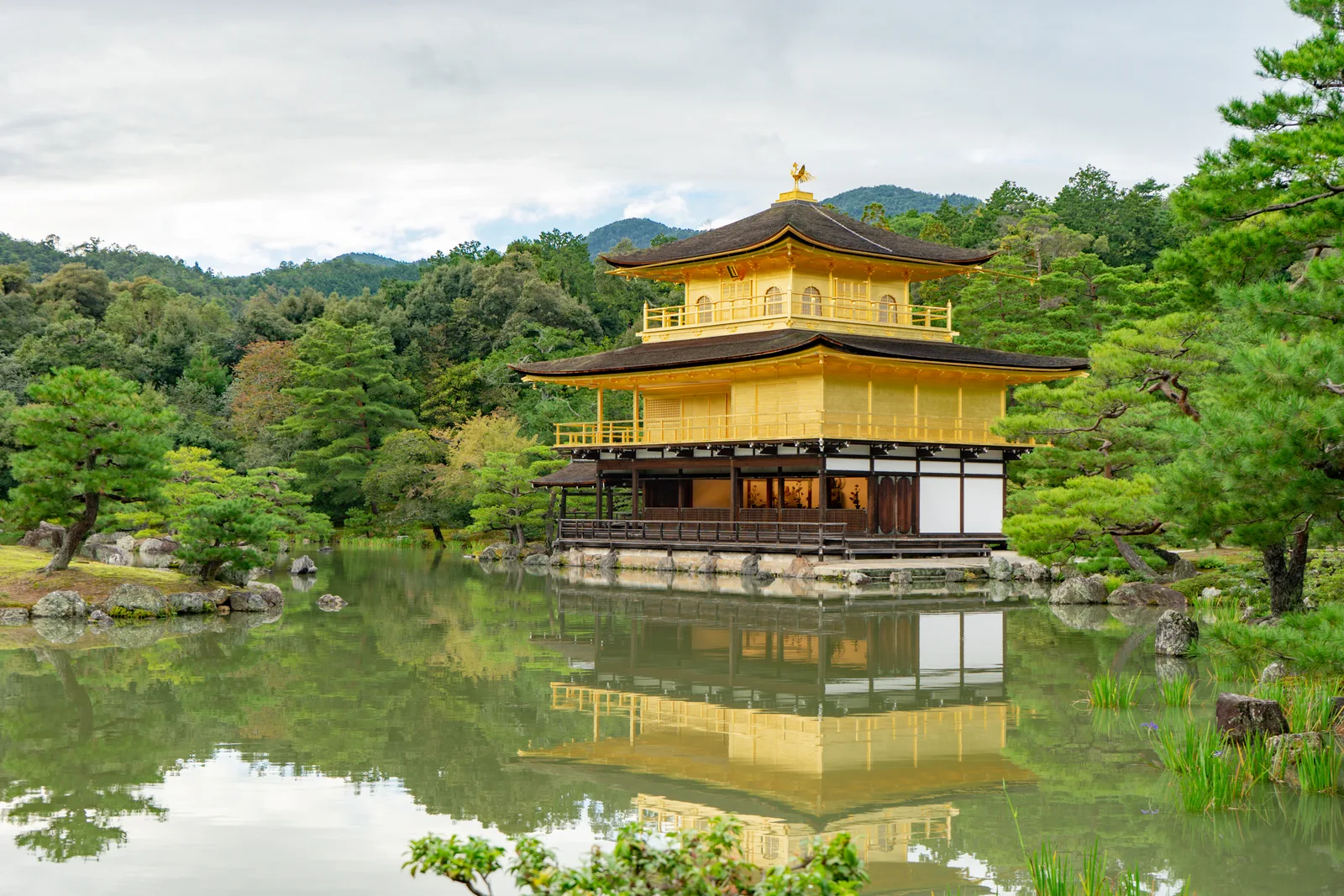
Shrines and temples are different. A torii gate means a Shinto shrine (Fushimi Inari, Yasaka, Heian). A temple is Buddhist (Kiyomizu-dera, Kinkaku-ji, Tenryu-ji). The manners overlap; the buildings do not.
At a shrine. Bow once at the torii, walk to the side of the path (the center is for the kami), rinse at the water basin: left hand, right hand, a sip from your left palm, then tip the ladle to rinse its handle. At the altar, drop a coin, ring the bell if there is one, bow twice, clap twice, pray, bow once.
At a temple. Bow at the gate, rinse if there is a basin, and at the hall put your hands together without clapping. Incense is bought, lit, and its smoke waved toward you. Shoes come off wherever there is a step up onto wood; carry them in the bag provided.
Dress. Nothing is enforced the way it is in Thailand or Rome, but bare shoulders and short shorts will draw looks. Socks without holes matter more than anything else, because they are what people see.
Photographs. Fine in the grounds and the gardens. Not inside the halls where a sign shows a camera crossed out, and not of the geisha in Gion, who are people going to work. Kiyomizu-dera and Fushimi Inari allow photos outdoors.
Timing. Most temples close at 4:30 p.m. or 5 p.m. Fushimi Inari never closes and is empty at 7 a.m. Put the temples in the morning and the shops in the afternoon; Waystop’s hours check will flag a temple placed after closing.