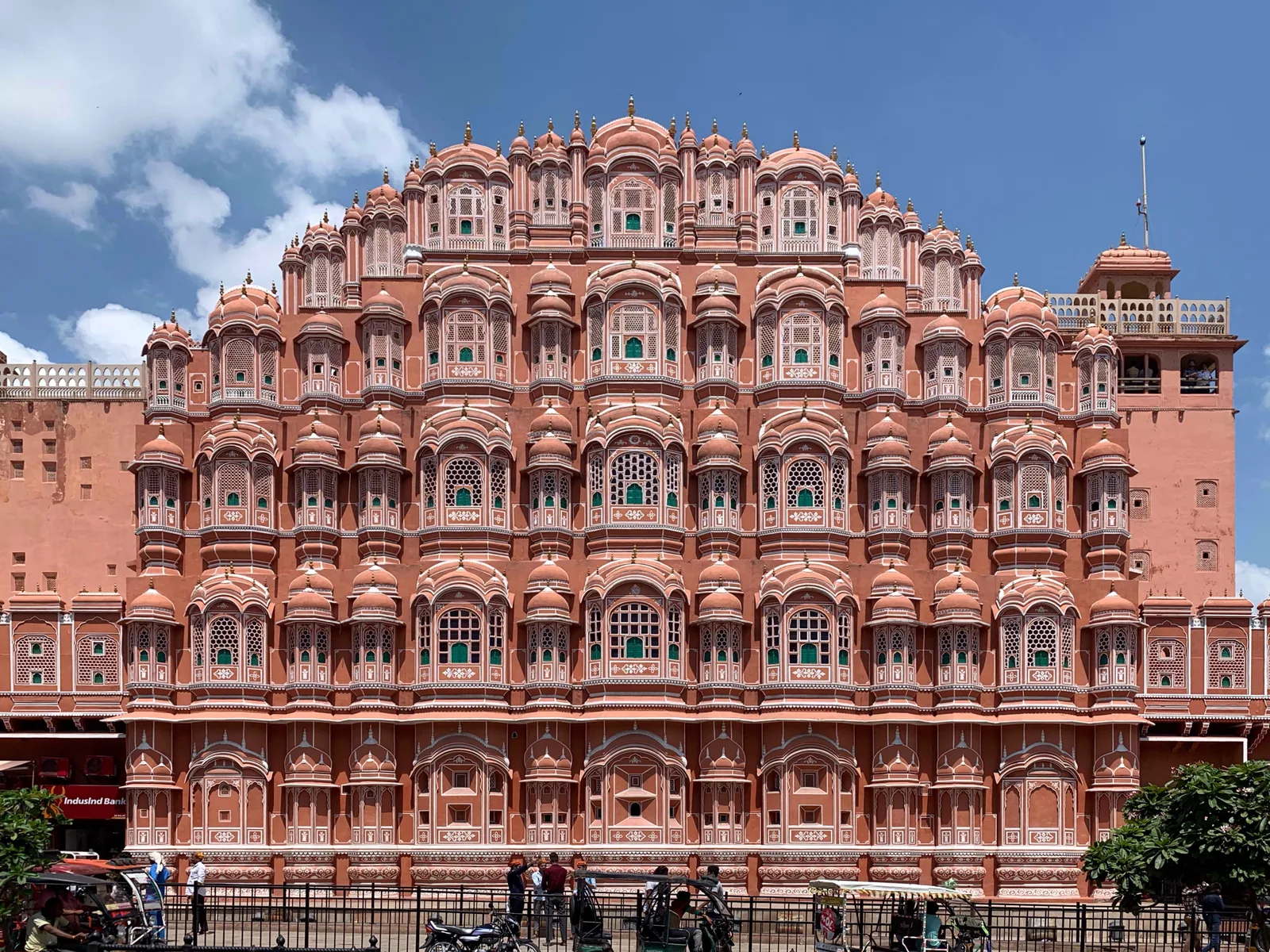
The composite ticket. The state raised its monument fees in January 2026. Hawa Mahal, Jantar Mantar, Nahargarh and Albert Hall are now ₹600 each for foreign visitors and Amber Fort ₹1,000; the composite ticket, around ₹1,700, covers all five plus Sisodia Rani garden and Isarlat for two days from the first scan. Buy it at the Hawa Mahal counter and carry your passport or a photo of it. Albert Hall on day 3 falls outside the two days, so that is a separate ₹600.
The City Palace is separate. It belongs to the royal family’s trust, not the state, so the composite ticket does not cover it: around ₹1,000 for foreign visitors. Jaigarh is private too, around ₹200, and free within two days of the City Palace ticket.
Amber Fort and the elephants. Rides up the ramp still run in the morning. Welfare groups and the Animal Welfare Board of India have asked for them to be phased out. Do not ride. Walk up from Maota Lake in ten minutes or take a jeep, and be at the gate at 8 a.m. when it opens; the tour buses arrive at 10 a.m.
Getting between the forts. Autos are everywhere and the fare is agreed before you sit down, ₹100 to ₹200 across the center; Uber and Ola fix the price in town. For the Amer day hire a car and driver through your hotel, about ₹2,000. The Pink Line Metro runs from Sindhi Camp to Badi Chaupar beside Hawa Mahal for ₹10 to about ₹30, and goes no further.
The heat. October to March is the season, with dry afternoons of 72 to 82°F (22 to 28°C). April and May pass 104°F (40°C) and stay there into June, and the forts are stone bowls with no shade. In those months do Amber at 8 a.m., be indoors from noon to 4 p.m. and keep Nahargarh for sunset. Carry two liters of water and a scarf for the dust.
Dress, water and the scams. Shoulders and knees covered and shoes off at Galta Ji and any temple. The gem scam starts with a friendly stranger and ends at a cousin’s shop with stones to sell at home for a profit; there is no profit. The helpful guide at a fort gate earns commission from the shops he steers you to, so hire from the official counter. For block printing go to the workshops in Sanganer, or Bagru further west, and buy from the printer.
On the day. Save the composite ticket’s QR code and the City Palace stub in Waystop’s Documents, where they open offline, because the counters scan from the screen. Carry small notes and a scarf.